


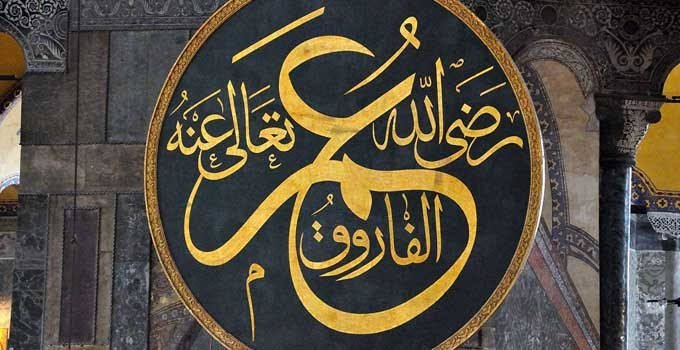
Hazrat Umer Farooq (RA) was one of the close companions of Prophet Muhammad (PBUH) and the second of Khulfa e Rashideen after Hazrat Abu Bakar (RA). He reigned for ten long years and during his tenure, the Islamic empire extended up to twenty three lakh square miles. He had a great political vision and conquered the world’s largest powers of Rome and Iran without any bloodshed. His politeness is an unbeatable and unique example of the world’s politicians, and the world’s great writers have admired him for his political strategies. Important countries like Iraq, Iran, Egypt, Libya, and Armenia were conquered during the reign of Hazrat Umer (RA). Jerusalem was also conquered for the first time during this period. Besides conquering different countries and extending the then Islamic empire, Hazrat Umer (RA) set up an exemplary administration with different departments to take care of different aspects of human affairs and to serve his people in the best possible way. He appointed various supervisors to take care of various departments in his government and he also used to take accountability for these supervisors himself. A brief introduction to the various cadres and departments during his governance is given below.
System of Justice
There was a totally unique system of justice during the tenure of Hazrat Umer (RA) as the Khalifa of Muslim Ummah. Not even a single case of injustice was reported in such a large empire. Justice was not restricted to only Muslims, but non-Muslims were also treated equally and fairly. They were given their rights with justice and there was no difference in justice on the basis of religion. Rich and poor, known and unknown people were treated equally in his government. During his reign, many non-muslims converted to Islam because of the system of justice that prevailed during his reign. Special courts of justice were established in various districts to deal with corrupted people and for their punishment. Hazrat Abu Huraira (RA) was appointed to check the accountability of shopkeepers and deal with people involved in various wrong acts or who would misuse government property. The punishment of expatriation was also invented by Hazrat Umer (RA).
Department of Accounts
There was a strict system of accountability during the khilafath of Hazrat Umer (RA). Hazrat Umer (RA) used to take accountability for his family members also, and there was no system of corruption in his government. There are reports in history in which he took accountability for his son and daughter and warned them about misusing government property. Every single person has the right to enquire about government policies and complain about wrong doers and dishonest officials. It was during this period that the census for the whole Arab world was conducted in a phased manner and special incentives were allotted to the disabled and widows. The tax system for foreign trade was created during this period.
Police and Militancy Department
When the Islamic empire was sprawling its dimensions and became bigger and greater than the Roman empire by conquering countries like Rome, Iran, and Syria, the establishment of a military force was necessary to protect it from enemies. It was during this period that a military force was established to protect the empire from enemies and special training was given to them. Military barks and cantonments were constructed in various important places, like Kofa, Basra, Palestine etc. People engaged in the service of the empire were paid fairly and pensions were given to their family members. A pension was allotted to the widows of martyrs in earlier wars. Hazrat Umer (RA) established an invariable and reputed police department in his reign, which used to serve the common masses and maintain discipline. This department also takes care of public properties and maintains peace. High officials were assigned the task of looking into different matters of the common masses and avoiding them from un-Islamic and immoral activities. Various jails were constructed and many large buildings were converted into jails for the punishment of culprits. First of all, the house of Safwan Ibn Ummaya in Mecca was purchased for four thousand Dirhams and was used as a prison for culprits. Besides this, many prisons were constructed in other cities in Mecca.
Irrigation System
Many canals were constructed for irrigational purposes and a broad system of irrigation network was established during the reign of Hazrat Umer (RA). One lakh and twenty thousand workers were engaged in Egypt’s canal construction during the reign of Hazrat Umer (RA). [Tareekh e Islam page 175]
Establishment of Govt. Depositories (Baitul Maal)
There was no permanent system of government depositories before this period. Hazrat Umer (RA) extended the system of government depositories during his reign, and government depositories were established in every city and every division to help the poor and needy people. Huge buildings were constructed for depositories and honest people were given charge of these depositories. Hazrat Abdullah Bin Arkam (RA) was appointed as the first finance minister.
Department of Education
It was Hazrat Umer (RA) who established the system of teaching Quran in every conquered region and the people well versed in the knowledge of Quran were engaged in the duty of teaching Quran. Learning Quran was essential and mandatory during the period of Hazrat Umer (RA). Hazrat Abu Sufiyan (RA), along with other Sahabas, were sent to tribal areas to test the Quranic knowledge of people, and those who couldn’t read or memorize the Quran were punished. Even a syllabus for teaching was framed for the madrassas.
Department of Public Constructions
Though there wasn’t any permanent department for this purpose during this period but roads, buildings, bridges, mosques, guest houses, cantonments were constructed in different regions under the guidance of government officials during the reign of Hazrat Umer (RA). Some canals, like the canal of Abi Mosa, were constructed to provide drinking water for the common masses. New colonies and new cities like Basra, Kofa, and Mosal came into existence during the reign of Hazrat Umer (RA).
In short, the period of Hazrat Umer (RA) was a progressive and enlightening period for the Muslim Ummah during the Khilafath e Rashideen in which the Islamic state was established in a practical form. Despite being the emperor of such a vast Islamic state, Hazrat Umer (RA) was a simple, God-fearing person with high morale who always tried to make his lord happy and serve his people. He had a passion for serving mankind and always preferred it equally to his people. Serving his people was mandatory for Hazrat Umer as he always kept his doors open for the service of the common masses. Further, Hazrat Umer (RA) always advised his governors and other ministers to be ready for the service of the people. These are the reasons why the khilafath of Hazrat Umer (RA) is still a milestone for the present world and works as a beacon light for present day politicians. May Allah be pleased with him.


The author is a columnist and teaches Geography at GDC, Kulgam. He can be reached at rather1294@gmail.com