

During Friday prayers, bombs blasted through a Shiite mosque in Kandahar, Afghanistan, killing at least 32 people and injured 53 more. “Thirty-two bodies and 53 wounded individuals have been brought to our hospital so far,” a doctor at the city’s prominent Mirwais hospital told AFP.
The cause of the explosions was not immediately known, but they occurred a week after the Islamic State claimed responsibility for a suicide attack on Shiite worshippers at a mosque in the northern city of Kunduz.
A toll of more than 30 was confirmed by other medical sources and a provincial official, and at least 15 ambulances were racing to and from the area.

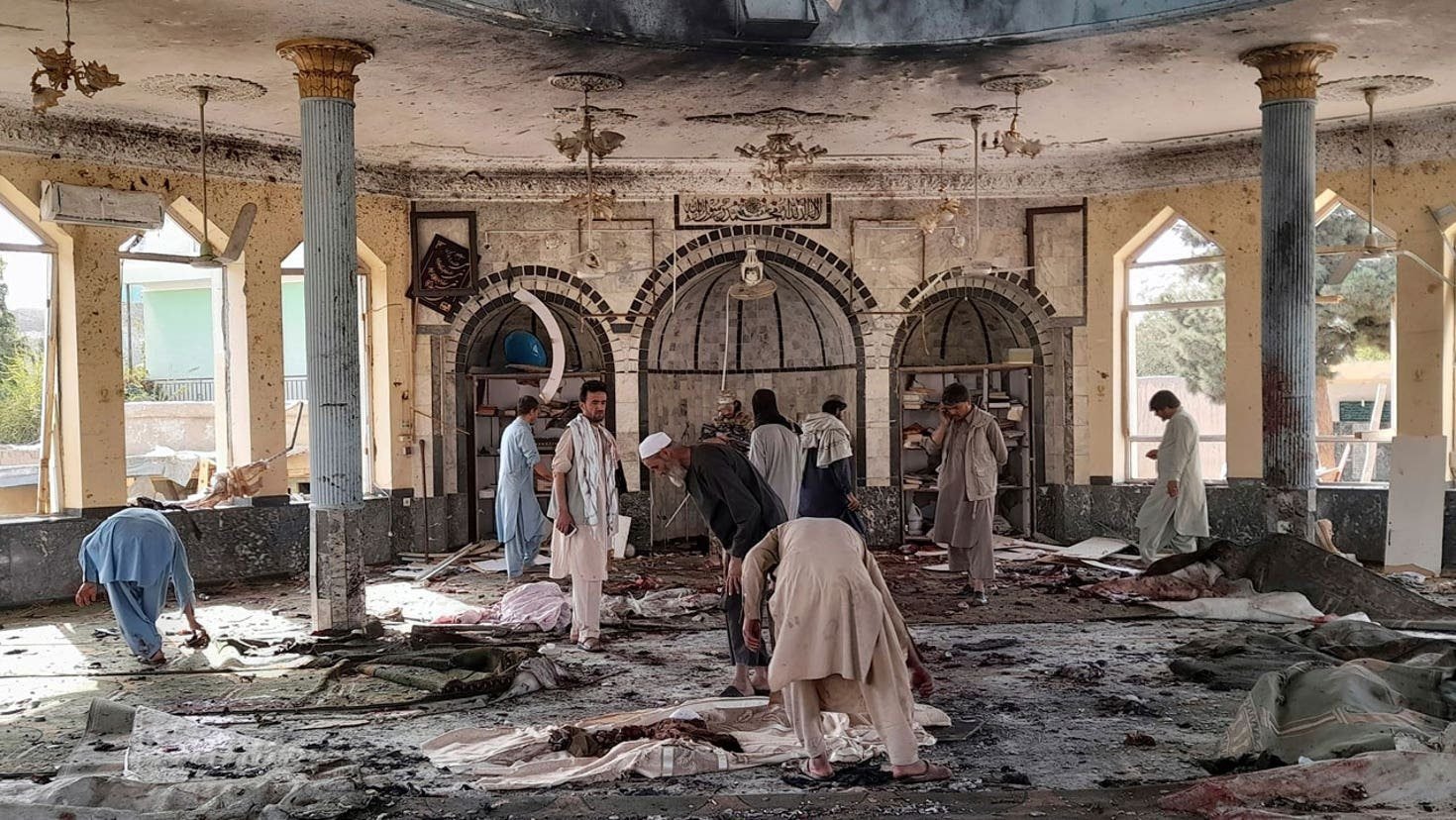
People view the damage inside of a mosque following a bombing in Kunduz, province northern Afghanistan, Friday, Oct. 8, 2021. A powerful explosion in the mosque frequented by a Muslim religious minority in northern Afghanistan on Friday has left several casualties, witnesses and the Taliban’s spokesman said. (AP Photo/Abdullah Sahil)
A blood donation plea was posted on the mosque’s Facebook page.
Three explosions were heard, according to an eyewitness, one near the mosque’s front door, another in a southern region, and a third where worshipers wash before their prayers.
Another witness claimed that three bombs shook the mosque in the town’s centre during Friday prayers, which are the busiest of the week.
“We are horrified to learn that an explosion occurred at a Shiite brotherhood mosque in Kandahar city’s first district, in which a number of our compatriots were slain and wounded,” said Qari Sayed Khosti, a spokesman for the Taliban movement, which rules Afghanistan.
“The Islamic Emirate’s special forces have arrived in the area to ascertain the nature of the incident and apprehend the offenders.”
Body parts were seen laying on the floor of the Fatemieh mosque in graphic photographs posted to social media, which could not be authenticated right away.
Last Friday, a suicide bomber from the Islamic State of Khorasan (IS-K) attacked a Shiite mosque in Kunduz, killing dozens of worshippers.
The group, which is a bitter enemy of the Taliban, a Sunni Islamist movement, claimed responsibility for the attacks on Shiite worshippers, whom it considers heretics.
The Taliban, who overthrew the US-backed government in mid-August and took control of Afghanistan, has a history of abusing Shiites.
The new Taliban-led government, on the other hand, has promised to stabilise the country and, in the aftermath of the Kunduz attack, has pledged to safeguard the Shiite minority that now lives under its control.
Shiites make up about 10% of Afghanistan’s population. Many of them are Hazara, an ethnic group in Afghanistan that has been oppressed for decades.
In October 2017, an IS suicide bomber targeted a Shiite mosque in Kabul’s west, killing 56 people and injuring 55 more.
(With inputs from AFP)


The Chenab Times News Desk