


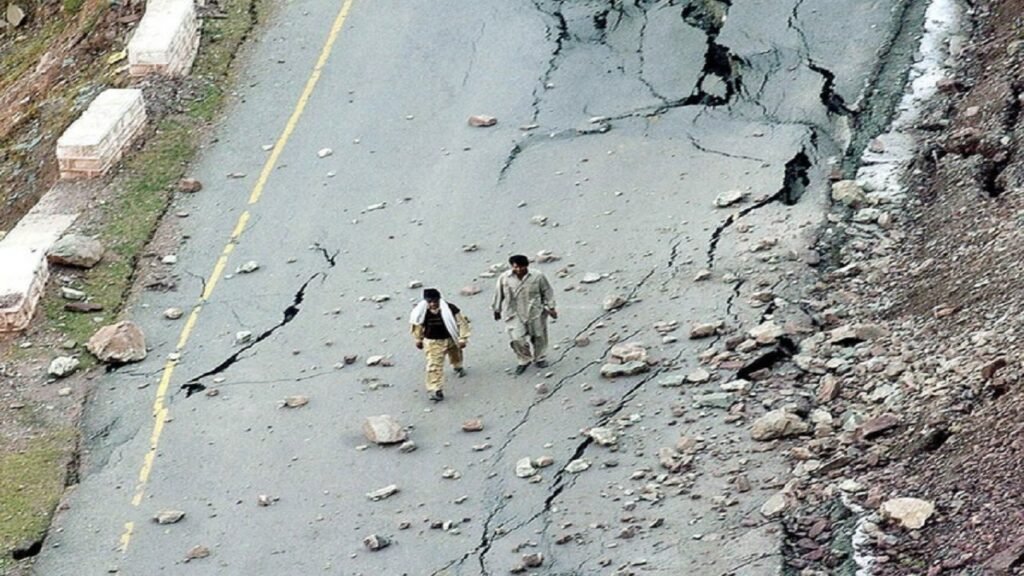
At least 1000 people were killed and about 600 more were injured early on Wednesday in Afghanistan as a result of a magnitude 6.1 earthquake, according to officials. The number is expected to rise as word comes in from isolated mountain villages, Reuters reported.
Taliban leader Hibatullah Akhundzada said hundreds of houses were destroyed and the death toll was likely to rise.
His deputy minister for disaster management Sharafuddin Muslim told a news conference at least 920 people had been killed and a further 600 injured, making it Afghanistan’s deadliest earthquake in two decades.
According to the US Geological Survey (USGC), the earthquake occurred around 44 km (27 miles) from the city of Khost, close to the Pakistani border.
A Kabul, Afghanistan, resident wrote on the European Mediterranean Seismological Centre’s website, “Strong and long jolts” (EMSC).
It was powerful, according to a Peshawar, Pakistani city resident.


Images posted on Afghan media showed houses in ruins and bodies lying on the ground with blankets over them.
The USGC reported a magnitude of 5.9, but the EMSC reported a magnitude of 6.1.
According to Salahuddin Ayubi, an official with the interior ministry, the most of the fatalities were reported in the eastern Afghan province of Paktika, where 255 people had died and more than 200 had been injured.
He reported that 25 fatalities and 90 hospitalizations had occurred in the province of Khost.
Since some of the villages were in remote mountainous areas and it would take some time to gather information, he predicted that the death toll will grow.
Helicopters were being utilised by the authorities to reach the injured and provide food and medical supplies, he added.
According to the EMSC’s Twitter post, 119 million people in Pakistan, Afghanistan, and India experienced shaking.
No early reports of damage or casualties in Pakistan were available.
The disaster occurs as US-led foreign forces are leaving Afghanistan, which has been in a deep economic crisis ever since the Taliban seized power in August.
Many governments have put restrictions on Afghanistan’s banking sector and reduced billions of dollars’ worth of development aid in response to the Taliban takeover.
The nation is still receiving humanitarian aid, and foreign organisations like the United Nations are active there.
Any assistance from international organisations would be welcome, according to a spokesman for the Afghan foreign ministry.
A tectonic plate known as the Indian plate is pushing against the Eurasian plate from the north, which is causing seismic activity across significant portions of south Asia.
In 2015, an earthquake in the far-flung northeast of Afghanistan killed hundreds of people there as well as in neighbouring northern Pakistan.


The Chenab Times News Desk