


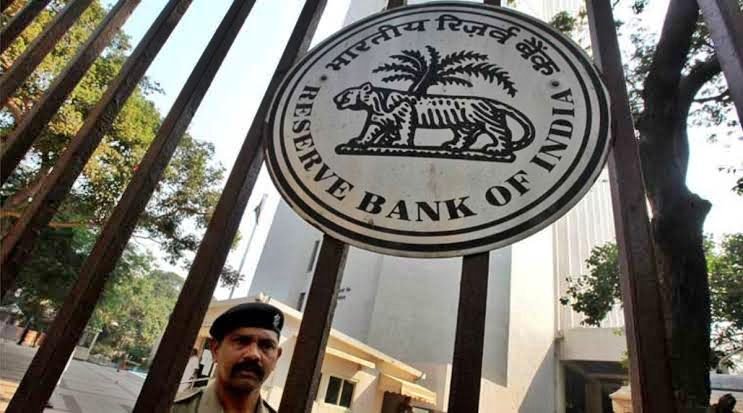
The Reserve Bank of India (RBI) has announced the implementation of a mechanism for settling international trade in the national currency.
The central bank’s move, which it claimed was to promote global trade growth and support rising global interest in the rupee, comes as the Indian currency faces increased pressure in the aftermath of Russia’s invasion of Ukraine.
Furthermore, the move to facilitate trade settlement in rupees may allow India to avoid certain orders that prohibit the use of a global currency such as the US dollar in trade with certain countries. For example, following Russia’s attack on Ukraine, several countries imposed sanctions on the former, with the United States cutting off Russia’s access to the dollar. As a result, Indian companies looking to take advantage of lower Russian commodity prices have begun to consider alternative modes of payment for imports.
The RBI announced today, July 11, that authorised banks would need to seek its permission before implementing the rupee trade settlement mechanism.
Exports and imports under the arrangement will be denominated and invoiced in rupees, with the exchange rate between the currencies of the two trading partners determined by the market.
To settle these trade agreements, authorised Indian banks will need to open Special Rupee Vostro Accounts with the banks of the partner trading countries. Indian importers who use this mechanism must pay in rupees. This will be credited to the partner country’s correspondent bank’s special vostro account against invoices for the supply of goods or services.
Indian exporters, on the other hand, will be paid in rupees from the balance in the partner country’s correspondent bank’s designated special vostro account.
Under this mechanism, Indian exporters can also be paid in advance in rupees. However, before making such an advance payment, banks must ensure that funds available in the relevant accounts are first used to pay for previously executed export orders.
According to the RBI, surplus rupees in a special Vostro account can be used for certain capital and current account transactions by mutual agreement. According to the central bank, these excess rupees can be used to fund projects and investments in government securities, among other things.
If a bank from a trade partner country approaches an authorised Indian bank about opening a special rupee Vostro account, the Indian bank must seek RBI approval and provide details about the arrangement.
“The AD (Authorised Dealer) bank maintaining the special Vostro Account shall ensure that the correspondent bank is not from a country or jurisdiction listed in the updated FATF (Financial Action Task Force) Public Statement on High Risk and Non-Cooperative Jurisdictions on which FATF has called for countermeasures,” the RBI stated in a July 11 notification.
The new trade settlement mechanism comes amid reports that India’s central bank is attempting to establish a rupee-ruble trading system. However, the mechanism announced today covers a much broader range of currencies.


The Chenab Times News Desk