


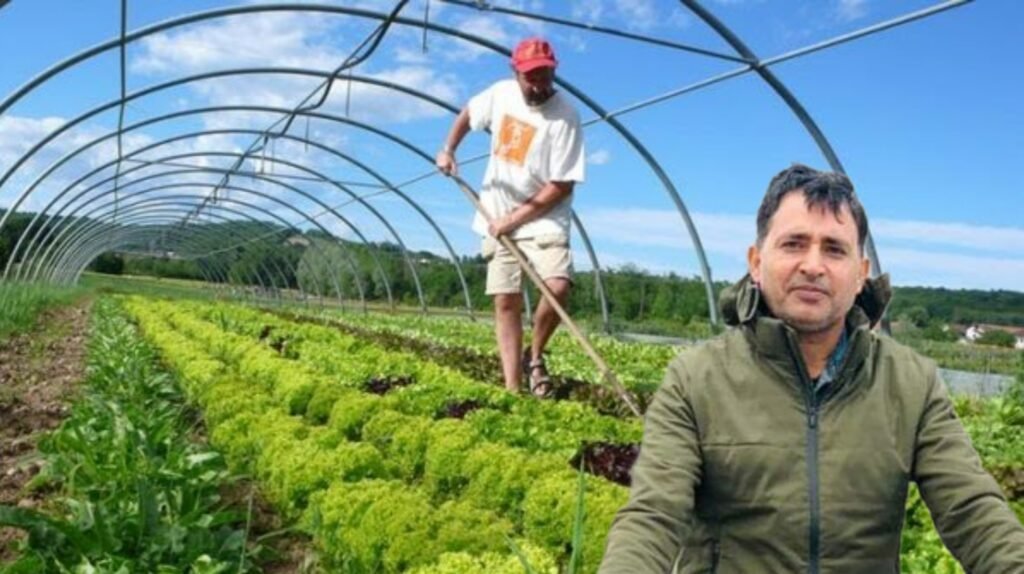
During a brief conversation with Dr. Balbir, Associate Professor of Organic Farming at SKUAST Jammu regarding organic and inorganic farming in Jammu and Kashmir, we got some important information which we thought that the viewers of The Chenab Times should be aware of. As most of us know, in inorganic or conventional farming, chemical fertilisers promote plant growth.
Insecticides are sprayed to reduce pests and diseases. Chemical herbicides are used to manage weeds. Animals are given antibiotics, growth hormones, and other medications to prevent diseases. On the other hand, in organic farming, natural fertilisers such as manure or compost are used to feed soil and plants. Crop rotation, tilling, hand weeding, or mulching are done to manage weeds. Insects and birds are used to reduce pests and diseases. Animals are given organic feed and allowed access to the outdoors. Preventive methods such as rotational grazing help to minimise disease.
Organic farming is a production system which avoids or largely excludes the use of synthetically compounded fertilizers, pesticides, growth regulators, genetically modified organisms, and livestock food additives. To the maximum extent possible, organic farming systems, use of crop residues, animal manures, legumes, green manures, off-farm organic wastes, biofertilizers, mechanical cultivation, mineral bearing rocks, and aspects of biological control to maintain soil productivity and tilth to supply plant nutrients and control insects, weeds, and other pests.
Organic methods can increase farm productivity, repair decades of environmental damage and knit small farm families into more sustainable distribution networks, leading to improved food security if they organise themselves in production, certification and marketing. During the last few years, an increasing number of farmers have shown a lack of interest in farming, and the people who used to cultivate are migrating to other areas.
Organic farming is one way to promote either self-sufficiency or food security. The use of massive inputs of chemical fertilisers and toxic pesticides poisons the land and water heavily. The after-effects of this are severe environmental consequences, including loss of topsoil, decrease in soil fertility, surface and ground water contamination, and loss of genetic diversity.
Organic farming, which is a holistic production management system that promotes and enhances agro-ecosystem health, including biodiversity, biological cycles, and soil biological activity, is hence important.
According to Dr. Balbir, the various advantages of organic farming are that it helps to maintain environmental health by reducing the level of pollution,reduces human and animal health hazards by reducing the level of residues in the product, helps in keeping agricultural production at a sustainable level, reduces the cost of agricultural production and also improves the soil health. It ensures optimum utilisation of natural resources for short-term benefit and helps in conserving them for future generations.
Organic Manures
Commonly available and applied farm yard manure (FYM), and vermicompost, etc., are generally low in nutrient content, so high application rates are needed to meet crop nutrient requirements. However, in many developing countries, including India, the availability of organic manures is not sufficient for crop requirements, partly due to its extensive use of cattle dung in energy production. So green manuring with Sesbania, cowpea, green gram, etc is quite effective to improve the organic matter content of soil. However, use of green manuring has declined in the last few decades due to intensive cropping and socioeconomic reasons. Research and studies have indicated that organic farming can eliminate about 500 million pounds of chemicals and pesticides from entering the environment. The lack of pesticides and chemicals enhances biodiversity, resulting in a better quality of soil and reduced pollution from pesticides and fertilizers.
According to Dr. Balbir, the steps for starting organic farming in India as well as in Jammu and Kashmir are as follows
• Get Organic Certification.
• Selecting Site for Organic Farming.
• Prepare the soil and make good compost.
• Select suitable crop.
• Start looking for Markets.
• Take care of what you plant.
• Water Management for Organic Farming etc.
At the end, Dr. Balbir concluded the conversation and requested the farmers to prefer organic farming instead of conventional organic farming as organic farming is good for health and can provide us with all the nutrition necessary for good health.


Saqib Zargar is a The Chenab Times staff reporter.