


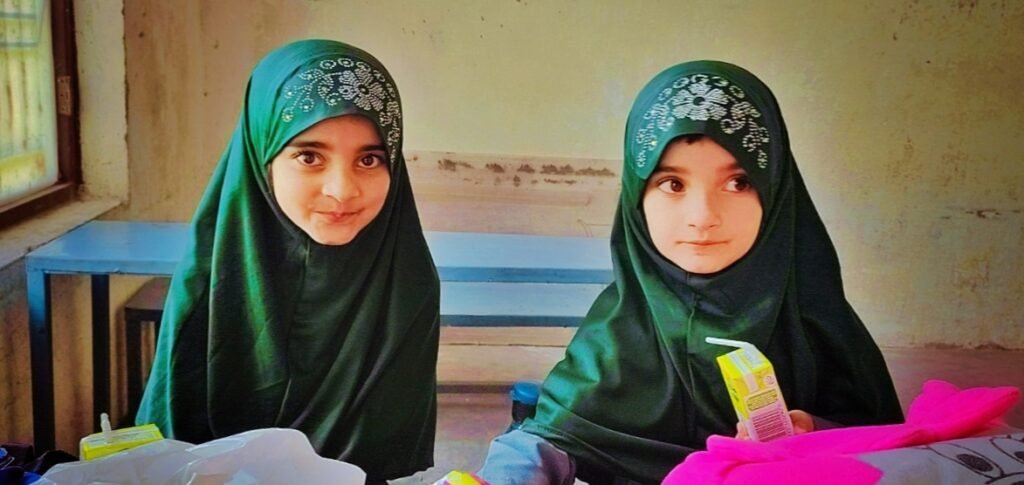
As I am typing this article, the first thing that comes to my mind, perhaps in every mind, is Why do Muslim women cover their heads with a hijab, scarf, niqaab, or burqa?
Muslim women wear the hijab as a symbol of their faithfulness to their religion. It is more than just clothing; it is also a modesty symbol. For Muslim women, it is the most significant and respected aspect. Like many other Islamic practises, the hijab is essential. Hijab is one of the identifications of Muslims and that is empowering.
“Hijab doesn’t mean wearing a black gown, it means to cover yourself”
If a woman wearing a hijab is present. You must understand that she is a woman who is aware of her value, who upholds her moral principles, who possesses enormous strength, courage, and integrity. She won’t tell a lie. She won’t commit fraud. She won’t be deceitful.
As a Muslim woman, wearing the hijab is a source of pride for me. I also think that wearing the hijab is a personal decision. Women can choose to cover their heads out of respect for their religion. It never was, is, or will be a sign of oppression. Some women wear the hijab as a symbol of respect, while others do not. It’s about hidayat (God’s will), making hijab a choice for one and all.
Wearing the hijab has given me the freedom from constant attention to my physical self. My beauty, or possibly lack thereof, has been removed from the range of what can be legitimately addressed because my appearance is not scrutinised.
I am confident in my beliefs because of my hijab. Not only does it conceal my hair, but it also serves as a symbol of who I am and where I’m from. In the midst of the pandemonium around me, my hijab gives me peace and confidence. Now, hijab is like my identity. It represents the love I have for my God. For me, wearing a hijab is a symbol of empowerment. I am a proud Muslimah. In my opinion, if someone wants to wear hijab or dress modestly, an essential practise of Islam preventing them from doing so is against the fundamental and constitutional rights.
People assume you are religious if you wear a hijab. I wore a hijab because it helped me feel grounded and complete, not because it was a symbol of my moral character, my intelligence, my “backwardness” or my modernity. It is a component of who I am and my personality. That does not give me the right to judge women who do not wear the hijab, nor does it elevate me above other non-hijab-wearing women as Muslims.
I have occasionally worn it in situations where it was important to confirm my identify as a Muslim woman. A lot of people find it difficult to understand that I picked it as a choice rather than as a requirement. I believe it to be my most effective tool for building bravery and overcoming fear. It makes me feel I have a voice. It is entirely up to me what I choose to do with my body; nobody else has the right to tell me what I should or should not be doing. I should also not dismiss but rather accept and respect my intelligence. The hijab is my right, my choice, and my life. I want to tell you all through The Chenab Times that Hijab serves as a weapon of empowerment for Muslim girls rather than a symbol of oppression. This is the crown.
The decision to wear the hijab is viewed as more of a religious one because it is such a deeply personal choice and display of faith. Women are free to wear it as they see fit; it is not illegal. By Islamic precepts it is related to Chastity and Modesty, Known as HAYA. That apply to both men and women.
The Quran commands both men and women to dress modestly and cover.
The most cited verse of QURAN (33:59) states, “Oh, Prophet tell the wives and the daughters and the believer women to draw their jilbab close around them, this will be better so that they be recognized and not harmed and God is the most forgiving, most merciful.” According to Arabic dictionaries, jilbab means “long, overflowing gown”.
Another verse (24:31) is also widely used, stating, “And tell the believing women to lower their gaze and guard their chastity, and do not reveal their adornment except what is already shown, and draw their khemar over their neck.” the khemar was a fancy silk scarf.
Hijab is that priceless item of clothing that allows us to choose what we want the outside world to see. It serves more as a modesty symbol than anything else. We have the fundamental right to dress however we like. We are not being compelled to do anything; it is a personal decision. Hijab ban in the name of uniformity is communal hatred-inciting propaganda. You cannot force Muslim women to dress in a certain way, just as you cannot force men and women to follow the same dress code.
I find it surprising that society tolerates those who wish to walk about topless yet finds it difficult to accept a woman who chooses to wear the hijab.
In a few situations, Muslim women have been forbidden from using head coverings. Due to their hijab, they have experienced harassment, job terminations, access denials, and other forms of discrimination. Muslim women who wear the hijab are especially vulnerable to discrimination because of their visibility and have become more and more the targets of harassment. Although it is challenging to gather precise data on discriminating acts, recorded cases of discrimination seem to be rising.
The hijab does not symbolize oppression. Even in nations where women have never heard of the hijab, women are nevertheless oppressed for socioeconomic reasons. The practise of using images of nearly naked women in western ads, billboards, and the entertainment industry, on the other hand, is a clear manifestation of oppression.
Muslim women contend that the hijab has been misrepresented as something demeaning and backwards for more than ten years, despite the fact that Muslims make up the second majority of the population in India. They think that outlawing the hijab or forbidding women from donning it will restrict their freedom. Additionally, it directly affects these women’s mental health. They may also be denied their fundamental rights, such as the right to an education, as in the instance of the Karnataka girls who were denied an education for nearly a month. Even though the judiciary and the constitution support no restrictions on religious practises, such incidents are unconstitutional.
Everyone has the right to practise and propagate their religion, according to the constitution. Everyone has complete freedom as long as it does not interfere with or denigrate another person’s religion. The Indian constitution recognises the freedom to practise one’s religion, subject to some limitations. It is important to note that the right to wear a hijab is just one of the many rights provided by the Indian judiciary and the constitution. So nobody should have a problem with us owning our identities. Nothing should rob us of our power if the constitution grants it to us.
Even though wearing a head covering, such as a gunghat or some other type of head-covering, is common in Jewish, Christian, and Hindu communities, it has never generated as much controversy or received as much media attention as it has in the Muslim world.
Personally, I think this signals the end of democracy and the end of an age for those just starting out, for small children attending school, whose educational experiences will never be the same again, and for young women with aspirations. I’m very confused by this whole situation because I didn’t grow up in an India like this. It’s only a matter of time before things spiral out of control since I knew a different India.
The hijab and the niqab have gained notoriety because they have been appropriated as political symbols, stripped of their religious significance, and used by geopolitical actors and movements as a means of political posturing. “It has become impossible to talk about Islam without reference to women,” “and impossible to talk of Muslim women without reference to the veil.” So, tragically, the observations that Muslim women themselves have made about it have been completely eclipsed by the “discourse of the veil” established by everyone other than Muslim women. Many Muslim women are working to dispel misconceptions about Islamic dress. Some have actively promoted it as being at the heart of “modest fashion,” a worldwide movement led by religious women who choose fashionable outfits to avoid the sexualized designs that define mainstream fashion. While modest clothing styled by hijabistas may at first seem to do nothing more than dispel the notion that religious women are dowdy, it also provides a forum for women to discuss the tensions that underlie their interpretations of Islam, individual politics, and the demands of capitalism that influence the online content they produce (in which they often recommend a brand or a halal product). The identities that develop from them are frequently considered as at odds with religious orthodoxy.
The wearing of a hijab does not impede a woman from learning new things or from making contributions to society. In the past, women have made significant contributions to Islam, as well as to every profession and area of life.
A woman who wears a hijab will be the best boss, worker, friend, and councillor, and she is a Muslim woman. There are therefore countless millions of Muslim women who think that covering oneself is required by religion, making it intrinsically linked to both Islam and their own personal relationship with God. So we wore the hijab to show that we were Muslims. That we will be recognised and everybody will Know that we are Muslim Women. We are incredibly proud to be Muslim women. Allhamdulillah!

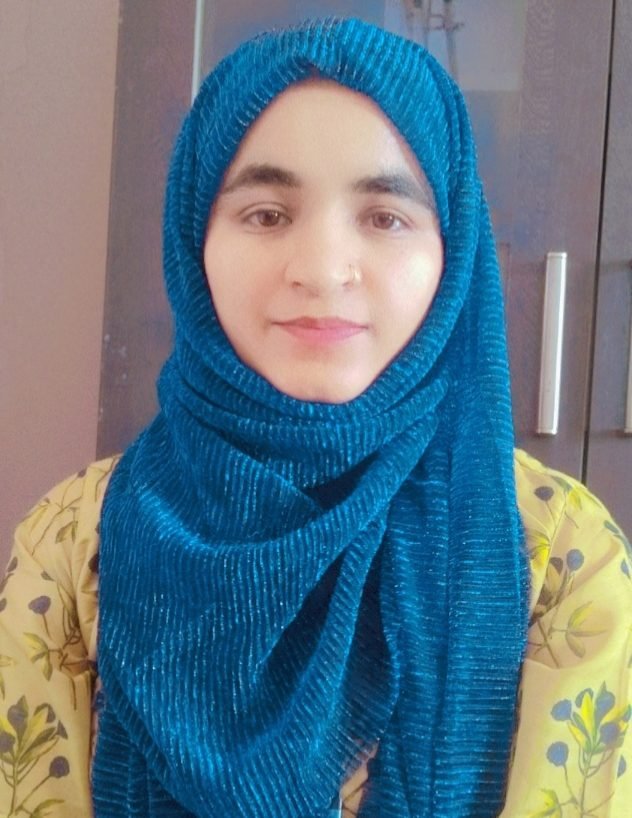
Batool Fatima is an engineering student from Rajouri. She writes articles, editorial and opinions on various topics.