

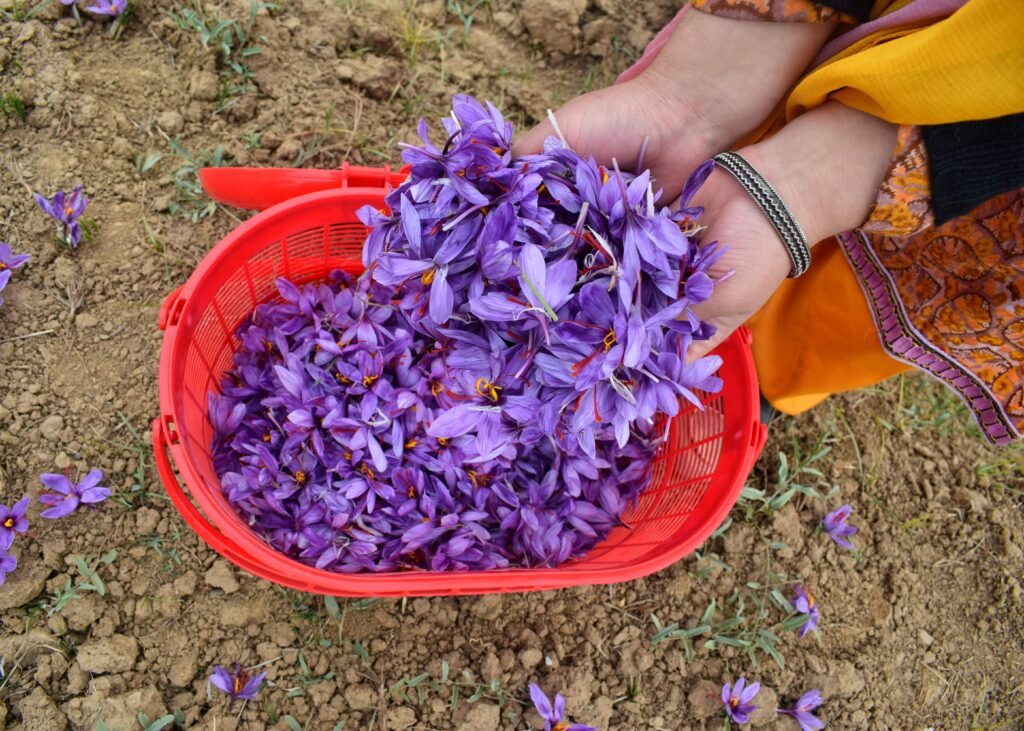
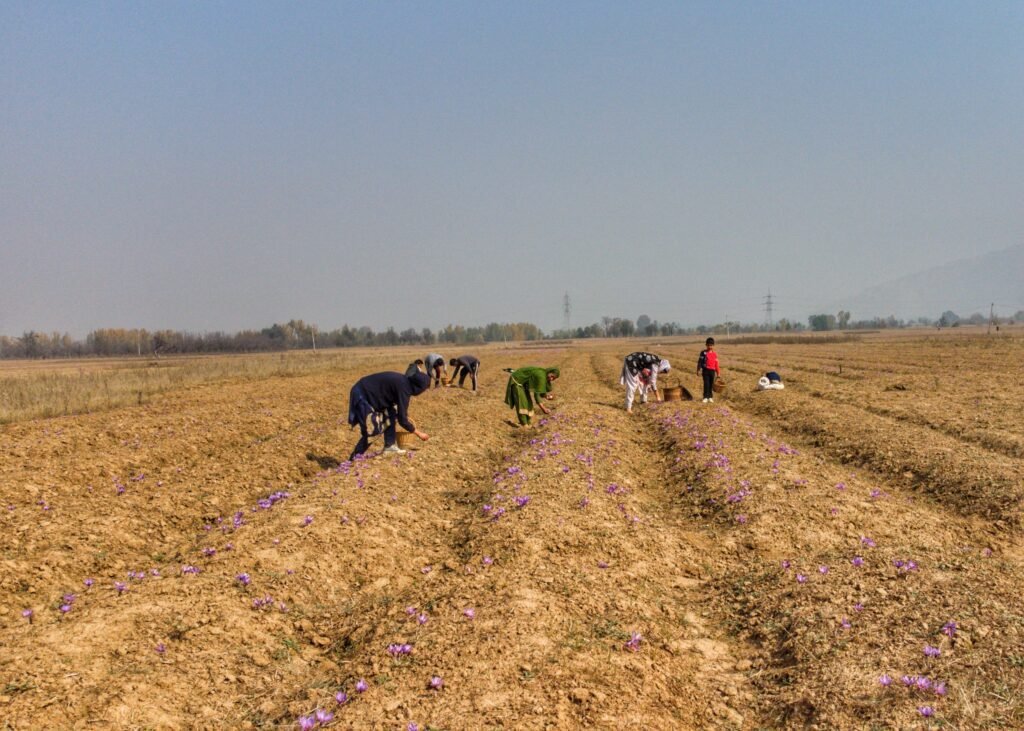
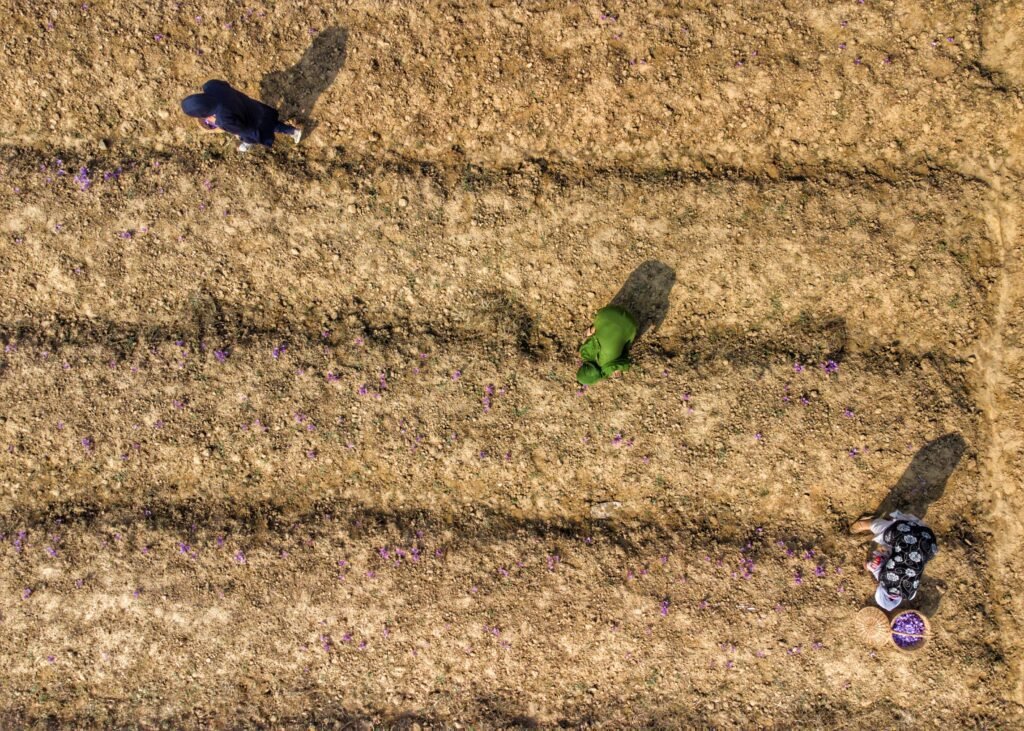
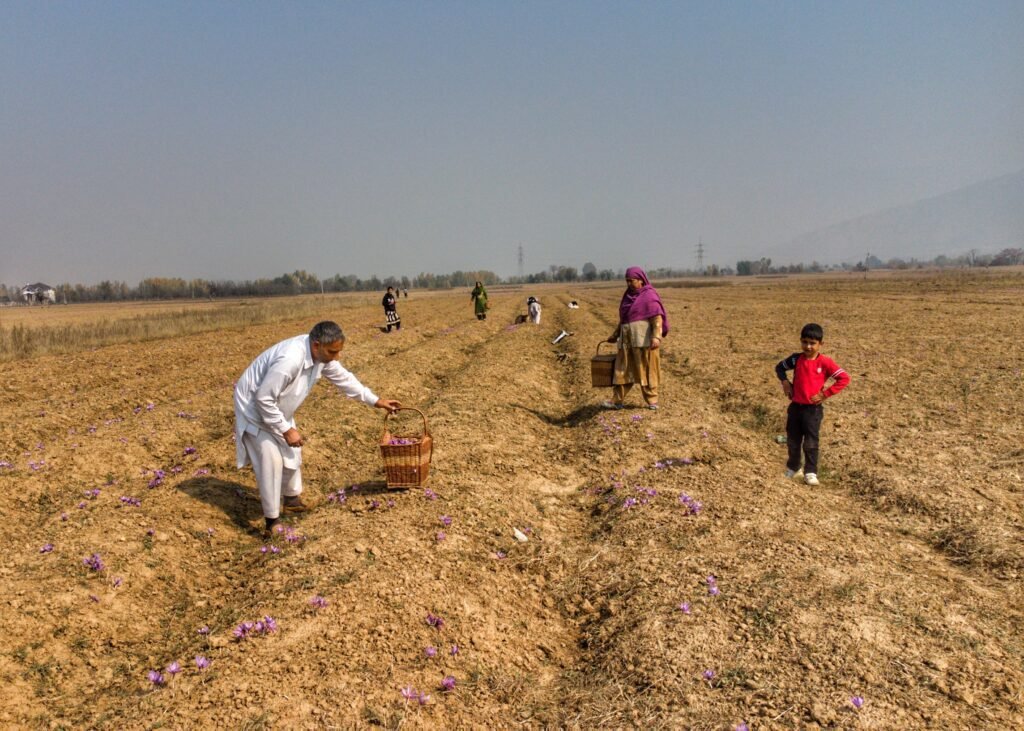
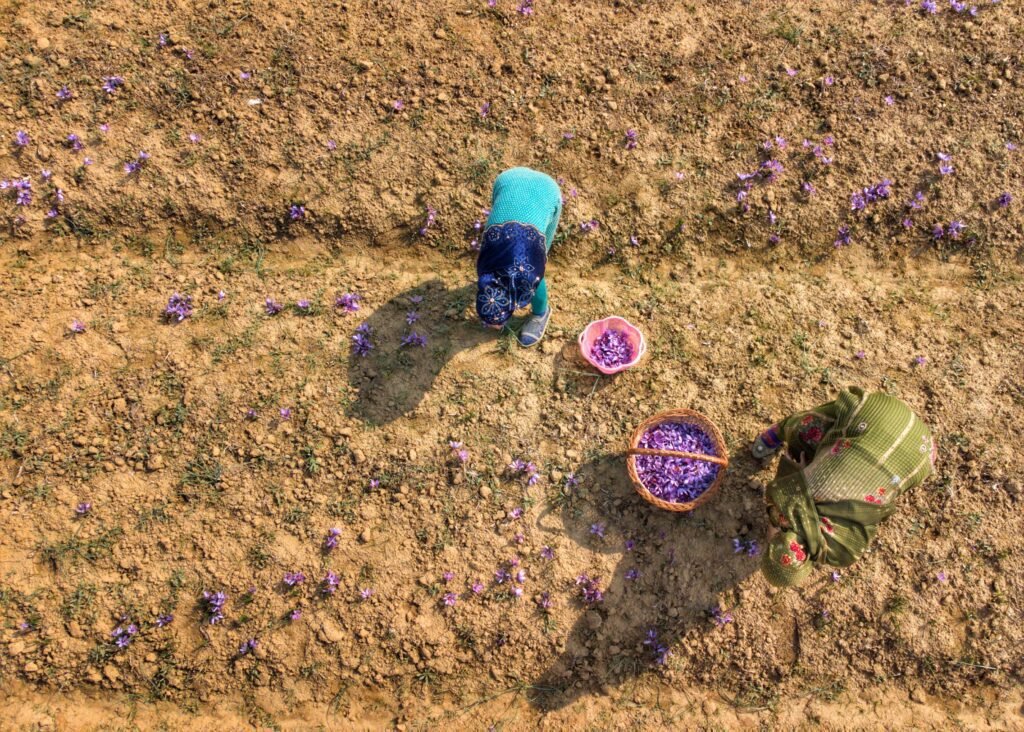
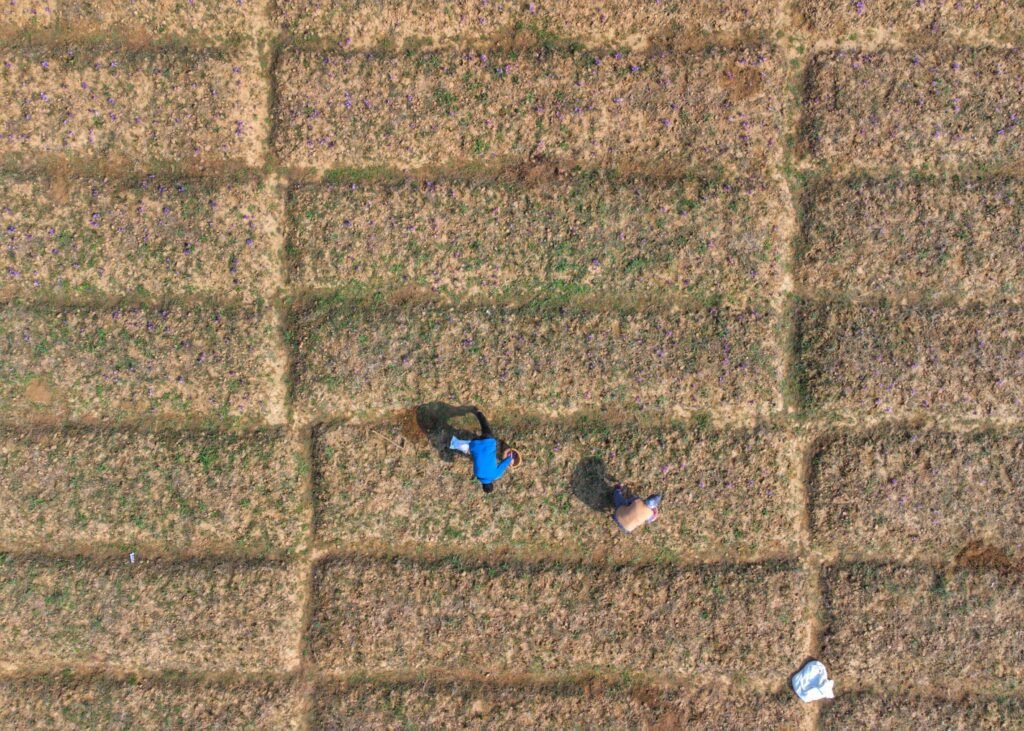
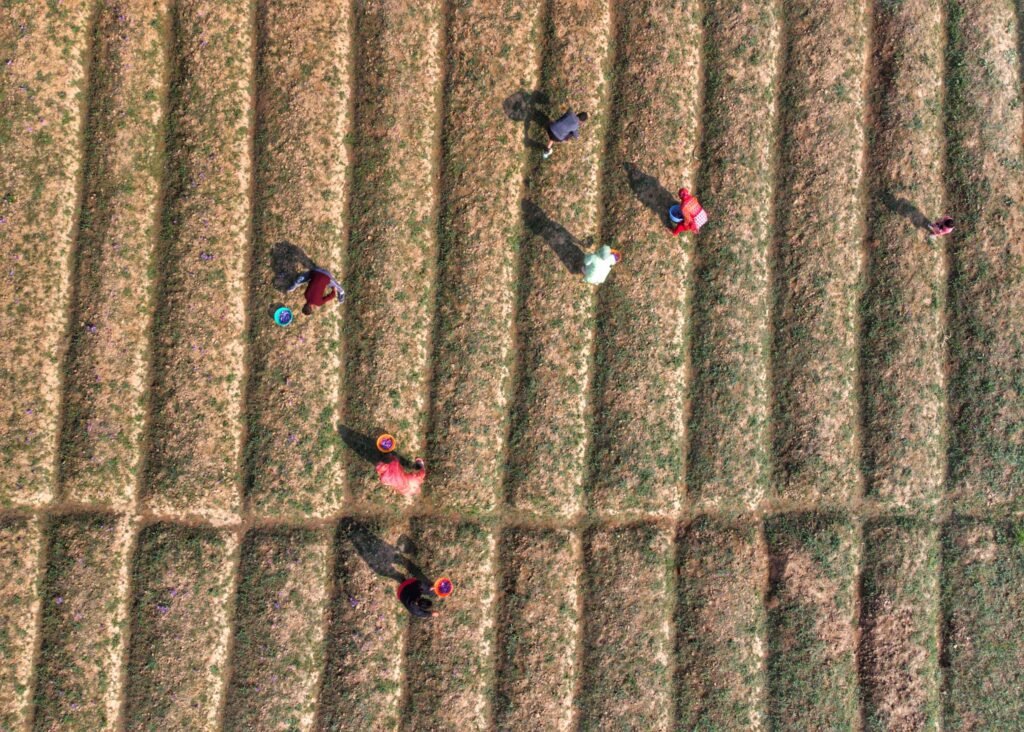
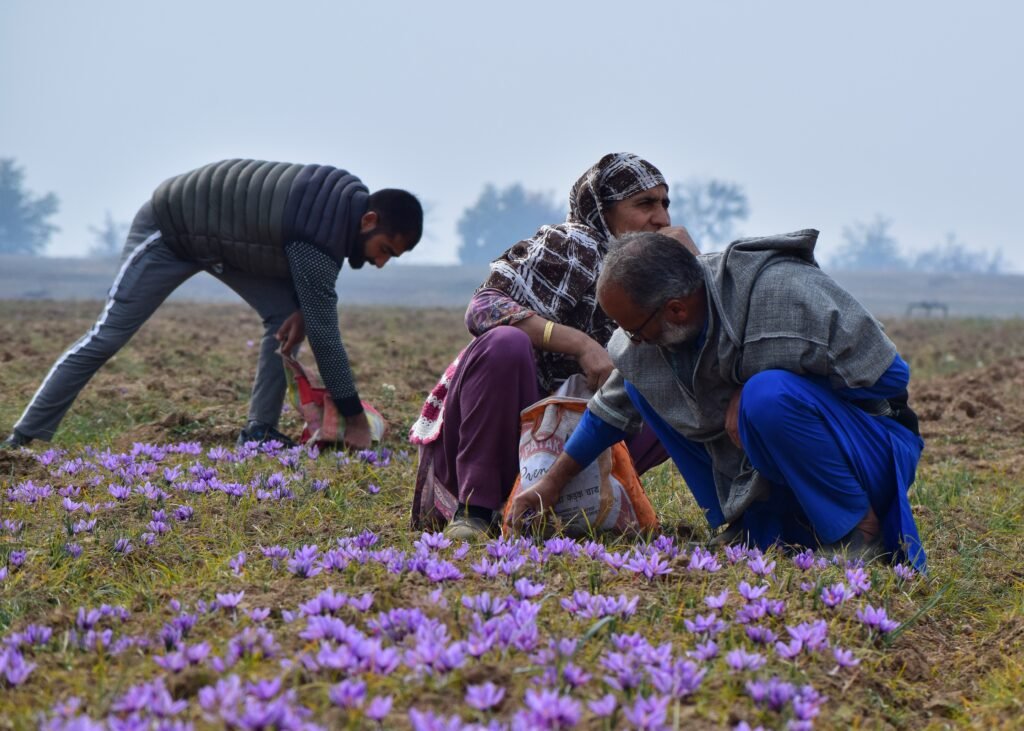
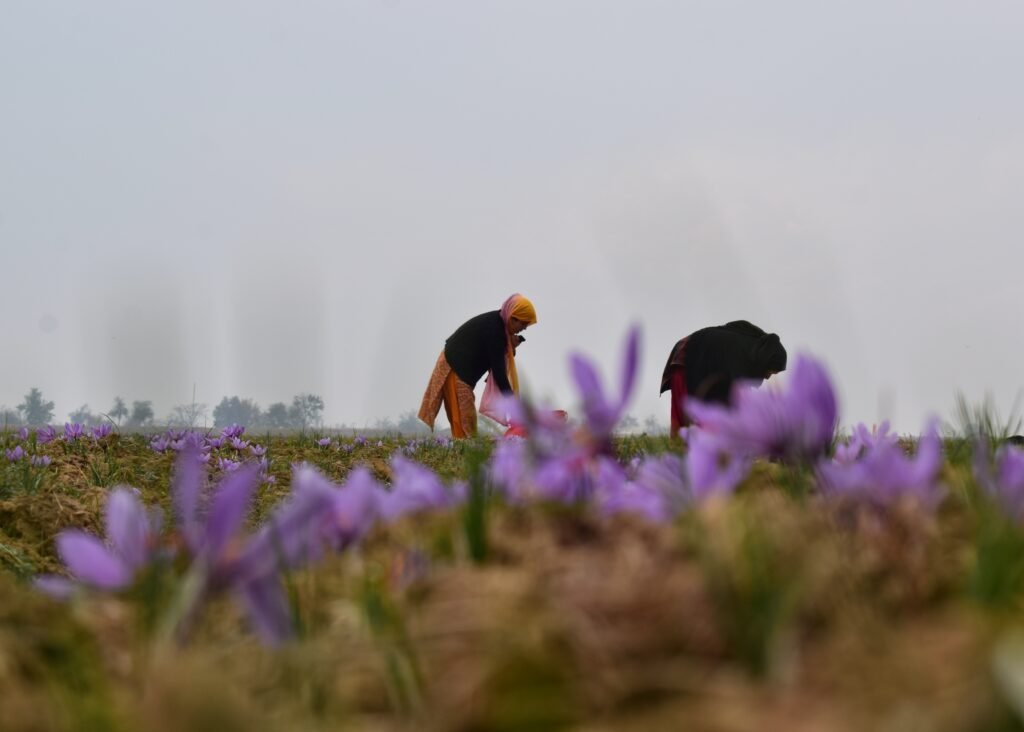
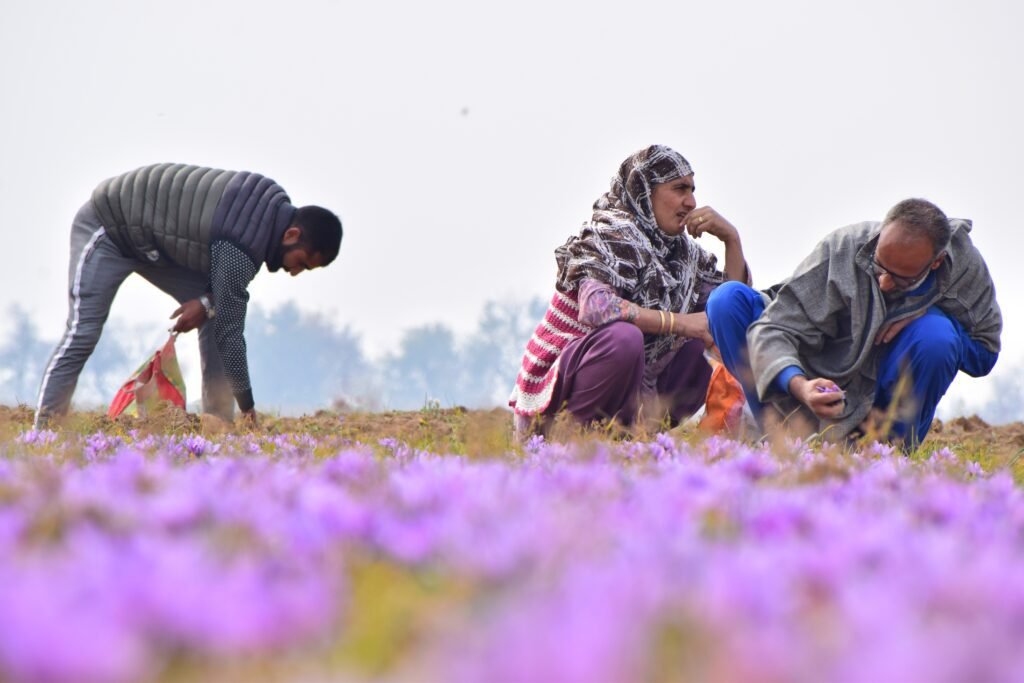
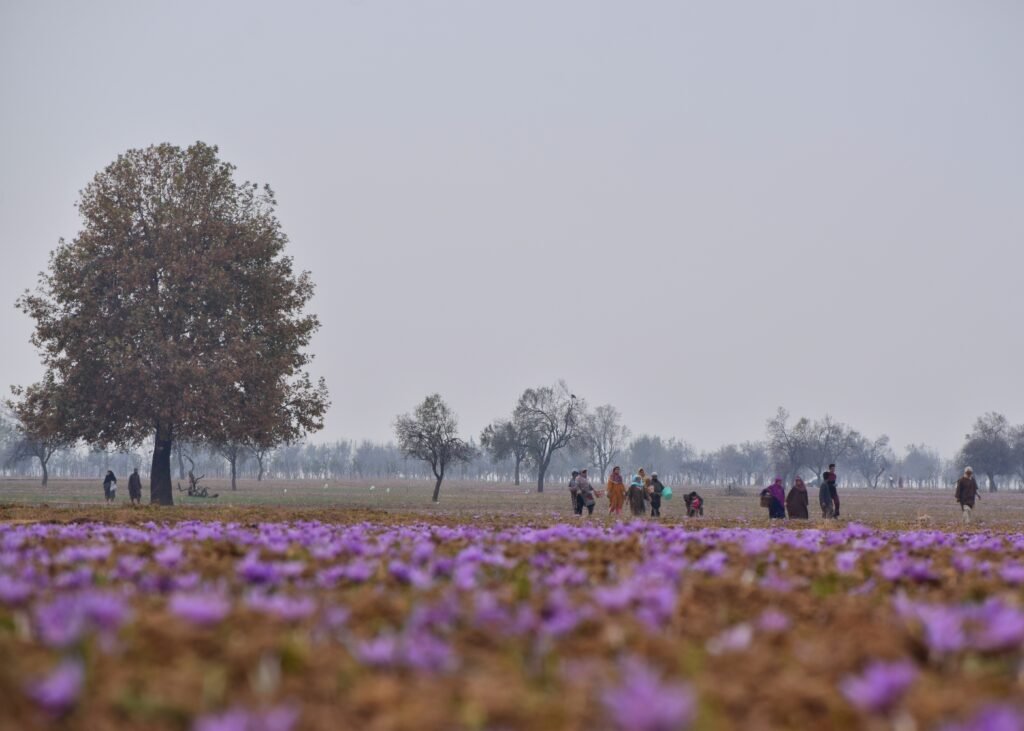
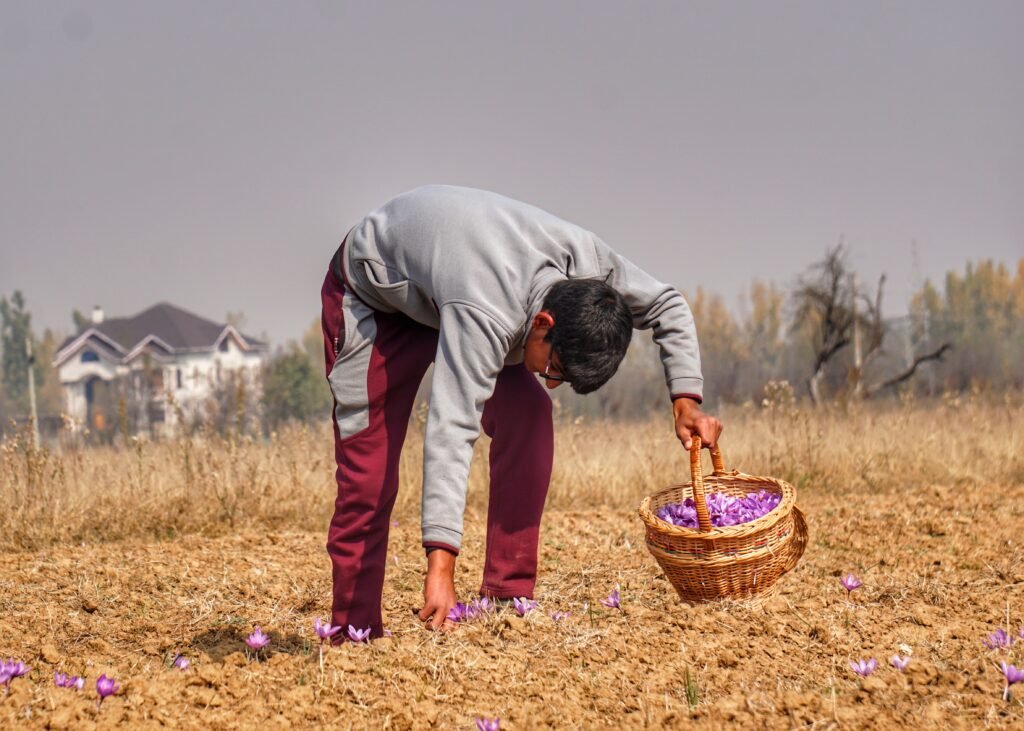
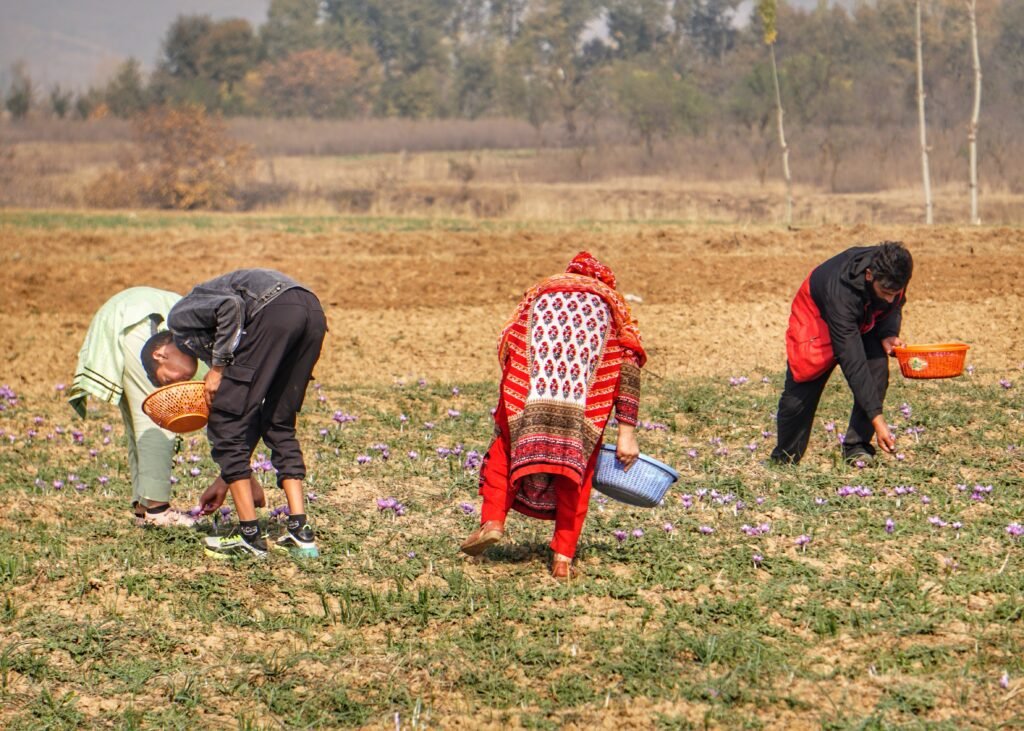
Amidst the towering snow-capped mountains of Pampore, Kashmir, lie fields covered in a blanket of purple crocus flowers. This is the flower that produces the precious spice known as saffron. Pampore, a small village located around 14 kilometres from the state capital, Srinagar, is known as the “saffron capital of India”, with more than 20,000 families associated with saffron cultivation. And these days, all these families are busy plucking the saffron flowers from the fields. Saffron is cultivated on more than 3700 hectares of land in Kashmir. The Pampore area in Pulwama is the main hub for growing saffron. Although now it’s being cultivated across different districts of the Kashmir valley as well. And farmers in Pampore are extremely happy about the crop this year. Harvesting began at October’s end and will continue till the middle of November. And for the past couple of weeks, the meadows of Pampore on both sides of the National Highway wore a festive look on sunny days with families thronging to their fields to collect saffron in wicker baskets. Last year, Kashmir’s saffron output crossed 13.36 tonnes, the most in a decade, thanks to the introduction of a scheme in 2010 to rejuvenate its cultivation and the launch of sprinkler irrigation. Saffron is reputed to be the world’s most expensive spice and is known as the king of condiments. It fetches between ₹1.5 lakh and ₹2.5 lakh per kg. Kashmir is anticipating a bumper saffron crop this year as a result of adequate rains just before the flowering season, which raised production and prevented crop yields from declining. Aabid Nabi has been farming, harvesting, and selling Kashmiri saffron — known to be the best variety of the spice — for over 30 years. Every autumn, his family comes together for the annual saffron harvest in the Pampore region of Kashmir, and they embark on the delicate and long process of preparing the spice. Aabid sees his saffron flowers sprout throughout October and November after planting seeds in rocky, dry soil in August. During the harvest, Aabid and his family members pick hundreds of flowers by hand and spend the nights separating the petals from the stigma that holds the saffron. The government has also introduced GI tagging to Kashmiri Saffron so that consumers get pure saffron from Kashmir. GI makes sure the purest Kashmiri saffron is sold in the market. It has helped the farmers a lot, and sales are almost double what they were previously. The tourists visiting the valley are stopping at the saffron farms to experience the process of growing these spices. A lot of tourists are buying saffron from the farms as well.
“With the grace of God, the crop is much better this year than what we had hoped for.”

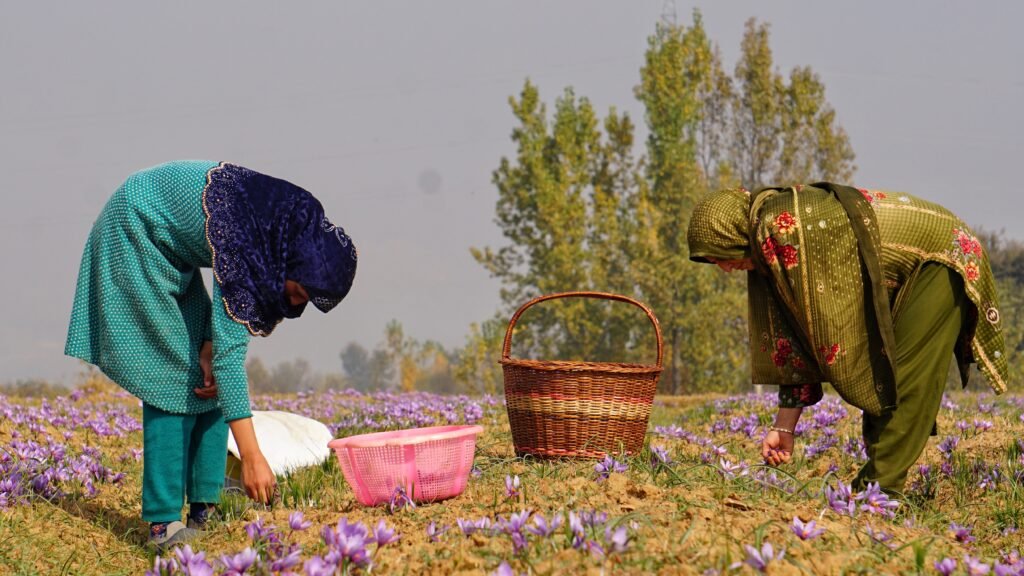
We have been harvesting for days and you can see this farm was harvested yesterday and today. There is so much to be picked as well. “This whole place is dependent on saffron as we grow most of the saffron from the Kashmir region,” said Abdul Hamid, another saffron farmer. “GI tagging is beneficial for us, but we have seen a lot of non-Kashmiri products being sold across India under the Kashmir name and that needs to be completely stopped. Although GI tagging has not reached ground level yet, The tourists visit our farms, and they see with their own eyes how we grow saffron. This also makes sure they believe the authenticity of the saffron from here. The world’s best saffron is grown in the Kashmir valley and demand for it has been good,” he added.





Aasif Shafi is multimedia journalist based In Kashmir.