


According to various political pundits, religious politics is becoming a threat to India’s democracy. The use of religious speeches by political leaders needs to be banned in India if the country, which is known for secularism and is the world’s largest democracy, wants to maintain its status. The use of religion in politics is debated at various times but mainly for hate speeches, whether in political rallies or political debates on television.
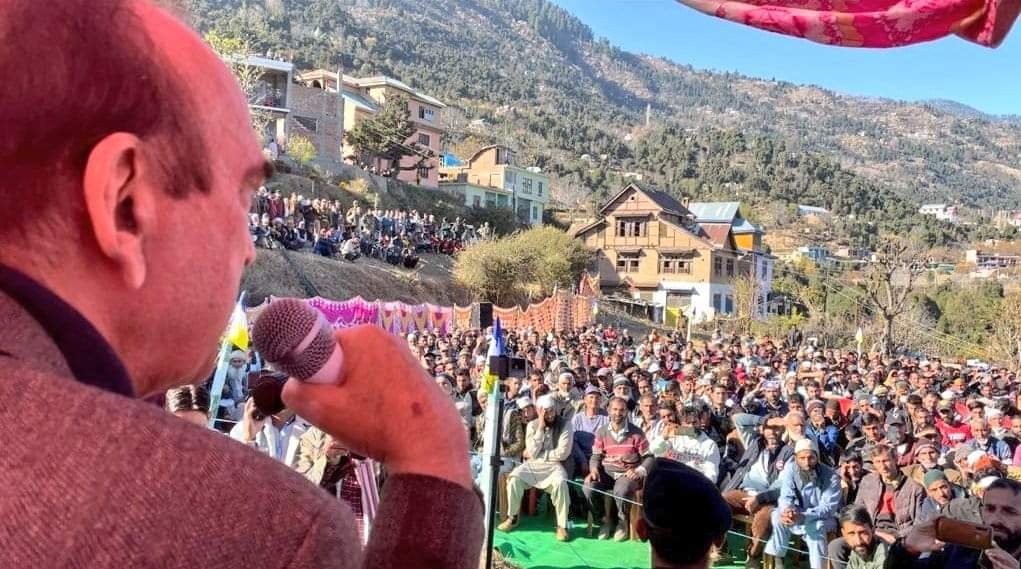
Democratic Azad Party chairman, Ghulam Nabi Azad, said on Tuesday that politics based on religion has “deeply harmed” the country and asked the voters to check the track record of every candidate and his party before casting their ballots to defeat the “divisive” elements.
Azad’s statement is taken as visionary because various political analysts think the same: religion in politics has harmed the country too much.
Ghulam Nabi Azad on Divisive Religious Politics
Speaking at a public event in Kastigarh, Jammu and Kashmir’s Doda region, Azad said that “religious politics has badly affected our country, and people have suffered with no progressive roadmap open ahead.”
“People should support candidates who are passionate about serving mankind because serving humanity is the highest form of worship and the best religion,” he said.
Before casting their ballots, voters must research each candidate’s and his party’s track record. That is the only way to stop the divisive plans, he added, adding that religious politics had no place in the modern world.
Without mentioning any specific political party, Azad said that some parties attempt to conduct politics in the name of a sect, but such individuals have no place in the contemporary world. He said that such people had nothing left. They therefore attempt to deceive people in the name of religion.
Azad on Chenab Valley

Azad recalled his two and a half years as the chief minister of Jammu and Kashmir, referring to that time as the “golden developmental phase” of the former state.
“Successive regimes ignored the Chenab Valley, and no significant development had occurred.” I constructed roads, schools, and hospitals for the Chenab Valley after being elected chief minister. “In this landlocked area, even a university was founded when there were no schools to provide basic education,” he noted.
He recalled his time and added, “When I was the Chief Minister of the state of Jammu and Kashmir, during this period, I constructed roads, hospitals, and schools in the three districts of the Chenab Valley.” I made an effort to complete all the construction work that I had previously undertaken in the valley.
Opinion
Religious politics can fuel increased religious extremism, sectarianism, and violence, which is bad for democratic countries like India. Separations between people of various cultures and faiths may also result from it. This may result in a breakdown of social order and unrest across the country. Religious politics can also result in a lack of trust and collaboration between various religious groups, which can worsen tensions and foster an adversarial climate. As a result of the distorted representation of some religious groups in the government and decision-making processes, religious politics can also contribute to the decline of democracy in the country.
Religious politics can be dangerous for democracy, as it can be used to further the agendas of political parties or religious groups. When religious politics are used to advance a particular agenda, it can lead to polarisation and a breakdown of trust between different groups. In some cases, religious politics can even lead to violence or civil unrest. It is important for democracy to stay secular and inclusive, avoiding divisive religious politics.
Demand of Banning Political leaders’ religious speeches

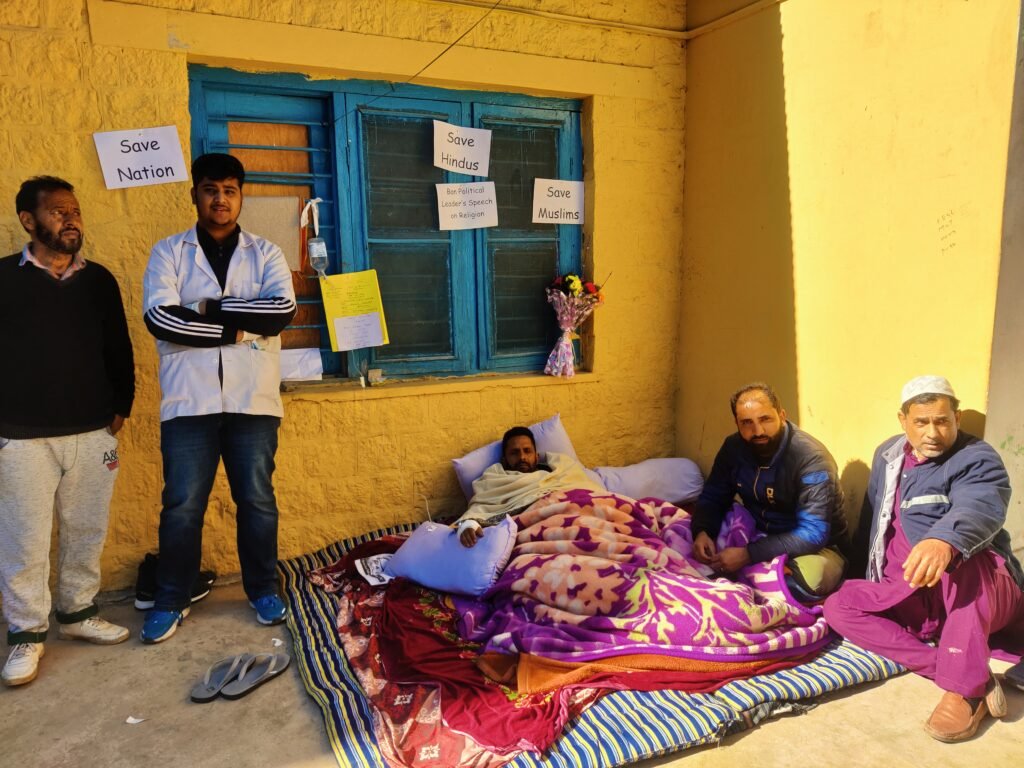
Whether political figures need to be prohibited from making religious remarks is a matter of personal preference and mostly depends on the situation. It might be considered appropriate in some nations for political officials to discuss religion, while it might not be in others. What constitutes a suitable political leader’s discourse is ultimately up to the public.
It is not necessary to ban political leaders in democratic countries from giving religious speeches, but it is important to ensure that they are not using such speeches to promote or encourage a particular religion or to further their own political agenda. Political leaders should be allowed to share their personal religious beliefs and views as long as they do not use them to promote or advocate for a particular religious opinion or cause.
But various politicians in India are using religion too much for their own interests. This is unfortunately true. Politicians in India have used religion for their own gain in various ways, from making promises to religious groups in exchange for votes to using religious symbols and rhetoric to influence public opinion. This has been a major source of violence in India, including lynching and more, for many years.
(The opinion is not in support of any political party, but it subjects itself to religious politics in a democratic country like India.)


Farid Ahmed Naik is Executive Editor for The Chenab Times and first Sarazi language news reporter. He also covers Crime and Politics on CT. Read More…