


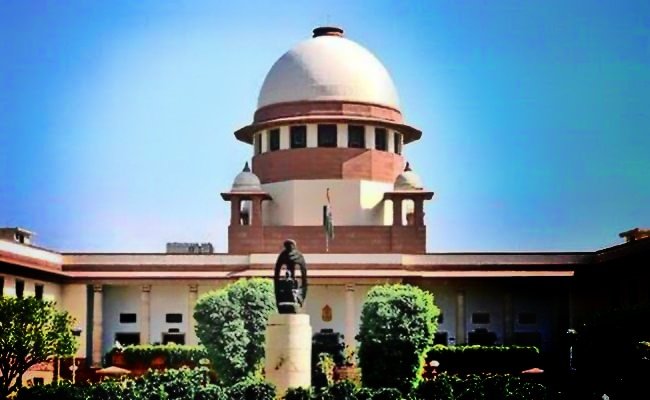
Four judges on a Constitution Bench of the Supreme Court on January 2 found no flaw in the government’s decision to demonetise ₹500 and ₹ 1000 currency notes through a gazette notification on November 8, 2016.
However, the only female judge on the bench, Justice B.V. Nagarathna, disagreed with the majority, stating that the demonetisation exercise, which was initiated by the government and was based on a mere notification in the official gazette rather than a plenary legislation in the Parliament, was plainly unlawful and vitiated.
The Supreme Court said that a batch of petitions opposing the note ban could not be upheld just because the Centre requested it.
“The demonetisation exercise cannot be struck down on grounds of proportionality,” the top court said.
The Central Board of the Reserve Bank of India and the Union government had a six-month-long conversation before the Union government was required to act, the court noted.
The case resulted in two separate decisions that were handed down by Justices BR Gavai and V Nagarathna. The other three judges on the five-judge panel are Justices Nazeer, AS Bopanna, and V Ramasubramanian in addition to Justices Gavai and Nagarathna.
BV Justice Nagarathna said demonetisation could have been executed through an act of legislation and not by the government.
“Demonetisation at the behest of the Centre is a far more serious issue as compared to demonetisation on recommendations of the RBI. Powers of the Union government being vast, must be exercised only by legislation rather than by an executive order,” Justice Nagarathna said in her order.
The top court reserved judgement after ordering the Centre and the Reserve Bank of India (RBI) to record all pertinent documents pertaining to the government’s 2016 decision.


The Chenab Times News Desk