


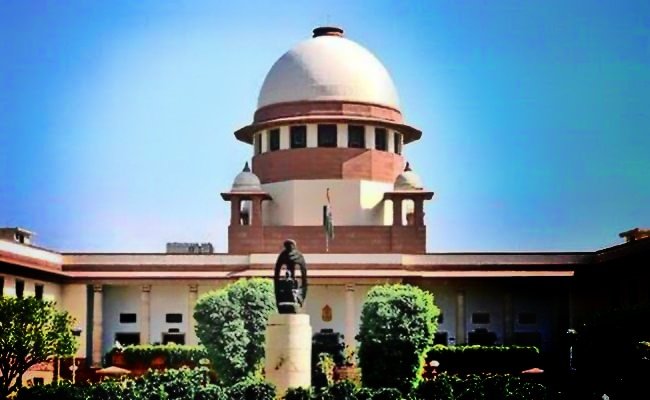
A pivotal hearing entered its seventh day at the Supreme Court of India, as a Constitution Bench led by Chief Justice DY Chandrachud, alongside Justices Sanjay Kishan Kaul, Sanjiv Khanna, BR Gavai, and Surya Kant, continued to deliberate over a batch of petitions challenging the abrogation of Article 370. This article granted special status to the erstwhile state of Jammu and Kashmir.
With over 20 pending petitions before the bench, the focus remains on the Central government’s decision in 2019 to revoke Article 370 of the Constitution. This decision led to the revocation of Jammu and Kashmir’s special status and the subsequent division of the region into two Union Territories.
The ongoing hearing has showcased a series of thought-provoking questions, commencing on August 2. At the heart of these discussions lies the inquiry into whether the framers of the Constitution and Article 370 itself intended the provision to be temporary or permanent. A crucial line of questioning revolved around whether the Article became permanent following the dissolution of the Constituent Assembly of Jammu and Kashmir in 1957.
The Court has also been deeply engaged in the Constitutional dimensions of the matter, probing whether Article 370 would become a fundamental element of the Constitution’s basic structure if its permanence were established by the dissolution of the Constituent Assembly. Another key area of the discussion centered on the employment of an ordinance to annul Article 370 during a period of the President’s rule, as stipulated in Article 356.
Significantly, the Supreme Court underscored a fundamental difference between seeking public opinions on public issues through established institutions and resorting to referendums, exemplified by the Brexit process in the United Kingdom. Moreover, the Court reiterated that the Constitution of Jammu and Kashmir holds no mention in the Constitution of India, emphasizing that the sole binding document for the nation is its own Constitution.
Examining the integration of Jammu and Kashmir with India in 1948, Chief Justice Chandrachud noted that the integration was absolute and not contingent on any conditions. The Court also expressed its desire to ascertain whether the abrogation of Article 370 was an exercise of constitutional authority or an infringement thereof.
During the most recent session on August 17, the hearing delved into the arguments presented by Senior Advocate Dushyant Dave. He delved into historical contexts and prior agreements, asserting that Article 370 was a response to honouring the conditions set by the Maharaja of Jammu and Kashmir. Dave argued that Article 370 had served its intended purpose once the Constituent Assembly concluded its tasks in 1957, rendering its further application unnecessary.
A rigorous debate unfolded between the Constitution Bench and Dave, as the Bench sought clarification on whether the aim was to subject the government’s decision to judicial review based on constitutional violations or to assess the wisdom underlying the abrogation. Dave’s response unveiled his aim to highlight what he described as a “complete case of colourable exercise of power,” contending that the abrogation constituted an abuse of authority.
Subsequently, after Dave’s arguments, Senior Advocate Shekhar Naphade emphasized the recognition of the Jammu and Kashmir Constitution by the Constitution of India. Naphade raised concerns about unequal representation, citing discrimination against Ladakh in both the Rajya Sabha and the Lok Sabha, as dictated by the provisions of the J&K Reorganization Act.
As the hearing concluded for the day, Chief Justice Chandrachud reassured the participants that the bench would meticulously review written submissions over the upcoming weekend, with the petitioners’ arguments anticipated to culminate on Tuesday, August 22.


Anzer Ayoob is the Founder and Chief Editor to The Chenab Times