


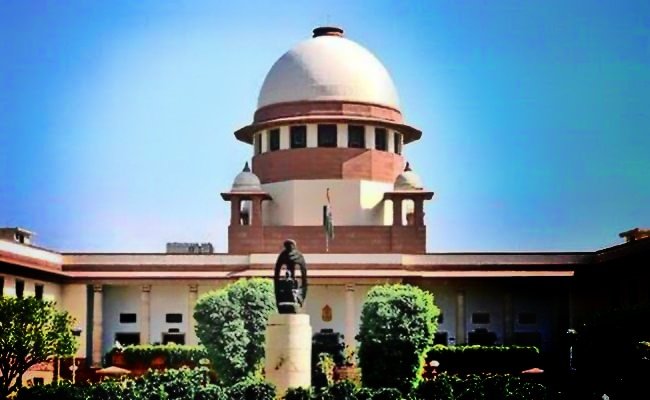
A Constitution bench of the Supreme Court of India, presided over by Chief Justice of India DY Chandrachud and comprising Justices Sanjay Kishan Kaul, Sanjiv Khanna, BR Gavai, and Surya Kant, continued its deliberations on the batch of petitions challenging the abrogation of Article 370 of the Constitution. Article 370 conferred special status on the erstwhile State of Jammu and Kashmir. The ongoing hearing marks Day 10 of the extensive legal proceedings.
The bench commenced the session with Attorney General R Venkataramani presenting arguments on behalf of the Union government in defense of the abrogation. Venkataramani outlined the historical context and the internal arrangements surrounding the decision, emphasizing the preservation of the constitution while ensuring due process. Chief Justice Chandrachud interjected, asserting that the means employed must align with the desired ends, underscoring the principle that ends cannot justify means.
Solicitor General Tushar Mehta noted the historical significance of the case, highlighting that this was the first time in 75 years that the court would examine the privileges denied to the people of Jammu and Kashmir under Article 370. Mehta stressed that the abrogation put an end to the psychological duality prevailing in the region, fostering equal treatment and rights for all citizens of the country.
As the proceedings continued, the bench delved into the historical context of the accession of princely states to India. The argument was put forth that Article 370 was not unique in granting special privileges, and many princely states exercised their prerogative to negotiate terms and conditions while joining the Indian Union. The court discussed the nuances of accession and the evolution of states’ participation in the constitution-making process.
The significance of the accession process, especially as it pertained to Jammu and Kashmir’s decision to adopt Article 370, was analyzed in detail. The court explored whether the provision was intended to be temporary or permanent, with historical references and legal interpretations being examined closely. The court also questioned whether the internal and external aspects of sovereignty were adequately addressed in the context of the abrogation.
As the hearing progressed, the Attorney General presented documents and dates to establish a comprehensive understanding of the events leading up to and following the abrogation of Article 370. The court sought clarification on the implications of the abrogation and its impact on the sovereignty of Jammu and Kashmir. The arguments revolved around the notion that Article 370 was not a privilege unique to the region, but rather a part of a larger process of states joining the Indian Union.
The day’s proceedings culminated with the bench requesting the submission of a list of states that did not execute merger agreements, indicating that the acceptance of final sovereignty of India was not solely contingent on such agreements. The court’s examination of these facets highlighted the complex interplay between historical context, constitutional principles, and the implications of the abrogation.
The bench adjourned for the day, with the hearing scheduled to resume on August 28. The ongoing deliberations reflect the court’s meticulous approach to examining the multifaceted issues surrounding the abrogation of Article 370 and its implications on the constitutional framework of India.
For easy understanding of the arguments, The Chenab Times has curated the top 10 points of arguments to comprehend Day 10 of the Article 370 hearing. Here are the top 10 arguments presented during Day 10 of the Supreme Court’s hearings on the abrogation of Article 370:
- Historical Context: The Attorney General emphasized the historical context surrounding the abrogation, highlighting the need to preserve the constitution while ensuring due process.
- Means and Ends: Chief Justice Chandrachud stressed that means must align with ends, asserting that the justification for an action cannot disregard the methods employed.
- Psychological Duality: Solicitor General Tushar Mehta pointed out that the abrogation ended the psychological duality prevailing in Jammu and Kashmir, bringing equal rights and treatment to all citizens.
- Privileges Granted: The court examined whether Article 370’s special privileges were unique, comparing it to other states that had negotiated terms while joining the Indian Union.
- Accession and Sovereignty: The court discussed the implications of accession, exploring whether the internal and external aspects of sovereignty were addressed adequately during the abrogation.
- Permanent or Temporary: The nature of Article 370 was debated, with arguments revolving around whether it was intended to be a temporary provision or a permanent feature.
- Princely States’ Accession: The Attorney General presented documents and dates to establish the context of states’ accession to India and the role of agreements in the process.
- Impact on Sovereignty: The court sought clarity on how the abrogation affected the sovereignty of Jammu and Kashmir and whether it was aligned with constitutional principles.
- Merger Agreements: The bench requested a list of states that did not execute merger agreements, examining whether these agreements were essential to the acceptance of final sovereignty of India.
- Complex Interplay: The day’s proceedings highlighted the intricate interplay between historical context, constitutional principles, and the broader implications of Article 370’s abrogation.
These points encapsulate the key arguments and discussions that took place during Day 10 of the Supreme Court’s hearings on the challenge to the abrogation of Article 370.
(Inputs from Bar and Bench)


Anzer Ayoob is the Founder and Chief Editor to The Chenab Times