



The Supreme Court of India’s Constitution Bench delved into the intricacies of the Article 370 challenge today, engaging in a comprehensive discussion on various facets of the abrogation of Article 370, which provided special status to the erstwhile State of Jammu and Kashmir. As the deliberations unfolded, legal experts presented their arguments and the Bench engaged in thought-provoking exchanges.
Led by Chief Justice of India DY Chandrachud, the Constitution Bench, which also includes Justices Sanjay Kishan Kaul, Sanjiv Khanna, BR Gavai, and Surya Kant, tackled an array of legal questions stemming from the Central government’s 2019 decision to revoke Article 370.
Central to the discussions was the scope of the power vested in the President of India under Article 370. Solicitor General Tushar Mehta, representing the Central government, highlighted that the powers conferred by Article 370 on the President should not be construed merely as executive powers; instead, they represent legislative authority.
The debate then shifted to the issue of recommendations made by different bodies. Chief Justice Chandrachud emphasized that a “recommendation is not just an opinion,” citing examples from the Constitution where the term “recommendation” is used to denote a binding decision. Solicitor General Mehta responded by suggesting that the recommendations made by certain bodies may not be binding on the President, as the Constitution of Jammu and Kashmir operates outside the Constitution of India.
Justice Sanjiv Khanna raised the pertinent question of whether the Constituent Assembly of Jammu and Kashmir could wield ultimate authority over Article 370. Solicitor General Mehta expressed reservations about a body external to the Indian Constitution having a final say in such matters.
In a series of thought-provoking statements, Chief Justice Chandrachud raised the issue of whether the President’s power could override a recommendation from the Constituent Assembly. “If the proviso to 370(3) cannot apply, does it mean substantive power under 370 is denuded or lost?” questioned the Chief Justice.
Solicitor General Mehta responded by posing an intriguing hypothetical scenario. He questioned whether, in the event of the dissolution of the Constituent Assembly, its members would decide that Article 370 should be abolished. He proposed that such a scenario would not necessarily bind the President to act in a certain fashion.
The hearing also touched upon the restoration of democracy in Jammu and Kashmir, with Chief Justice Chandrachud seeking clarity on the timeline for the restoration of the region’s statehood. Solicitor General Mehta assured the Bench that he would provide a positive statement regarding the restoration of statehood during the next hearing.
Attorney General R. Venkataramani entered the discourse, referencing historical instances that highlight the significance of the current deliberations. He invoked the case of Puranlal Lakhanpal, who desired to contest an election in Jammu and Kashmir 61 years ago. In a remarkable observation, he noted that today, people’s dreams of participating in elections in the region have been realized.
As the day’s proceedings drew to a close, the Bench rose for the day, with the hearings set to resume on August 31. With the Constitutional Bench displaying a rigorous commitment to examining every angle of the Article 370 challenge, the next session promises to unravel further intricacies surrounding this significant legal matter.
Live Updates were added below this:
4:18 pm, August 29, 2023
- Arguments have concluded for the day. The Bench rises for the day. The hearing will resume on August 31.
4:10 pm, August 29, 2023
- SG: I have a question, which you may think over the holiday tomorrow – When Constituent Assembly was being dissolved.. suppose the members would say now with J&K Constitution, they are like a monarchy and now Article 370 can be done away with.. so, in this case.. would the President have to act in this fashion? Clearly no… Debates in the Constituent Assembly clearly suggest that 370 was a temporary one.
4:09 pm, August 29, 2023
- CJI: If the proviso to 370(3) cannot apply does it mean substantive power under 370 is denuded or lost? If not lost, then is it a unilateral power which can be exercised by the President.. but there was no Constituent Assembly.. So Article 367 was followed since due to absence of Constituent Assembly, there is no Legislative Assembly.. That is why you go to Parliament for a broader consensus…. but in this process, there is a dilution .. That is the role prescribed by 370(3)… But now, you say that role is mere recommendatory… But mere recommendation does not mean it can be overridden..
4:06 pm, August 29, 2023
- SG Tushar Mehta says – ‘The President of India, being bound solely by a body outside the Constitution of India may perhaps not be the correct interpretation of our Constitution. The Constitution of J&K is beyond and outside our constitution.’
4:05 pm, August 29, 2023
- The AG submits – ‘Can a body like the Constituent Assembly of J&K have a final say on Article 370? It is not a constituent body of the Parliament of India. It does not have all the attributes and powers?’
4:00 pm, August 29, 2023
- CJI Chandrachud cites examples where recommendations are binding and when they are not. He says– ‘The hues of the word ‘recommendation’ are not by itself dispositive of the content of the expression as to whether it is merely an advice or a condition precedent. I will give examples of ‘recommendation’ being used in the Constitution- Articles 109, 117. 109 deal with money bills. A money bill is not introduced in Rajya Sabha, it is always introduced in Lok Sabha. After the bill is passed in Lok Sabha, it is sent to Rajya Sabha for recommendation. Those recommendations are not binding on the Lok Sabha. It may either accept them or reject them. That is what Article 109(2) says– the recommendation of the Rajya sabha does not bind the Lok sabha.’
3:56 pm, August 29, 2023
- CJI Chandrachud says – ‘Recommendation is not just an opinion. When the Constitution uses the term “recommendation”, it means a positive decision because Article 370 uses different phrases. It uses consultation, concurrence, decision, and recommendation.’
- The AG responds by saying – ‘Recommendation is not binding on the President. Therefore, it is a recommendation. It is not concurrence.’
3:54 pm, August 29, 2023
- CJI Chandrachud enquires – ‘Suppose there is a Constituent Assembly and it recommends to the President – do not abrogate Article 370, is it open to the President then to override the advice?’
- The AG responds by saying – ‘That power of recommendation is not available to the assembly. It has to only recommend to render Article 370 inoperative.’
3:52 pm, August 29, 2023
- Justice Sanjiv Khanna asks – ‘In this case is there any President’s proclamation exercising powers under clause 3 to Article 370 saying that I am abrogating Article 370?’
- AG says that he will come back with an answer.
3:34 pm, August 29, 2023
- The AG submits that the powers conferred by Article 370 on the President are not in the nature of Executive powers but it is a legislative power that is conferred.
3:33 pm, August 29, 2023
- The AG submits – ‘…If you look at the constitutional integration process of the rest of the country and compare it to the constitutional integration process of J&K- the historical narration shows that there is no fundamental difference at all…The political compulsions that happened in the case of J&K made a very slight deviation…Article 370 is nothing but the outcome of the formalisation of the principles and the procedures for interpretation’.
3:27 pm, August 29, 2023
- The AG says – ‘…61 years ago we had Puranlal Lakhanpal wanting to contest an election. How his dream has come true, we can now contest elections in J&K. All of us are Puranlal Lakhanpal in a way.
3:18 pm, August 29, 2023
- Attorney General (AG) R. Venkataramani commences his arguments.
3:17 pm, August 29, 2023
- Solicitor General Tushar Mehta concludes his submissions.
- ‘I wanted to read the concluding speech of Dr. Ambedkar at the conclusion of the Constituent Assembly if time permits at the end I will read…it is a beautiful speech’, SG Mehta says while concluding his submissions.
3:06 pm, August 29, 2023
- SG Mehta refers to the Supreme Court’s ruling in S.R. Bommai v. Union Of India to show the limitations of judicial review on Presidential proclamations under Article 356.
- ‘Why I am reading this – Mr. Sibal read the first part of it. His attention missed the last part.. this is the law’, he adds.
- ‘In fact, once the issuance of the Proclamation is held valid, the scrutiny of the kind and degree of power used under the Proclamation, falls in a narrower compass. There is every risk and fear of the court undertaking upon itself the task of evaluating with fine scales and through its own lenses the comparative merits of one rather than the other measure. The court will thus travel unwittingly into the political arena and subject itself more readily to the charges of encroaching upon policy-making. The “political thicket” objection sticks more easily in such circumstances. Although, therefore, on the language of Article 356(1), it is legal to hold that the President may exercise only some of the powers given to him, in practice it may not always be easy to demonstrate the excessive use of the power.’ [text from the judgment]
2:59 pm, August 29, 2023
- CJI: Unlike State Legislature, in the case of a Union Territory, like Delhi for instance, Parliament can enact on any list..
- SG: That is for 239AA
- CJI: That is what is happening here..
- SG: Yes, 239AA is incorporated here..
2:48 pm, August 29, 2023
- SG: It is a UT without a State Legislature but it has all attributes of a State… every entry apart from police is there and I do not even have to mention why police is out of the purview.
2:42 pm, August 29, 2023
- SG: We have created two Union territories…. one UT has police powers with the Central government and rest all is what a State has…
- Justice Khanna: Representation of the State is the representation of the will of people and that was taken away…
2:21 pm, August 29, 2023
- SG Mehta says that in Ladakh local body elections took place in 2020. He apprises the Bench that elections for the Ladakh Autonomous Hill Development Council will take place on September 10, 2023.
2:14 pm, August 29, 2023
- SG Tushar Mehta says – ‘I have taken instructions. The instructions are that Union Territory is not a permanent feature. But I will make a positive statement the day after tomorrow. Ladakh will remain a Union Territory’.
2:11 pm, August 29, 2023
- The Bench has reconvened. The hearing has resumed.
1:49 pm, August 29, 2023
- The Bench rises for lunch. The hearing will resume at 2pm.
1:47 pm, August 29, 2023
- CJI Chandrachud says – ‘Equally, restoration of democracy is important….Is there a roadmap? Tell us what the roadmap is.’
- He says that the court acknowledges the Centre’s statement that progression has already begun.
1:47 pm, August 29, 2023
- SG Tushar Mehta says that the assurance that J&K will not be a Union Territory permanently was given on the floor of the House by Home Minister Amit Shah. He says that he will take instructions.
- ‘In 2020, for the first time local Elections took place..I’ll take instructions. But I’ll show statements and efforts..’, he says.
1:44 pm, August 29, 2023
- CJI Chandrachud asks the Solicitor General to take instructions on when J&K’s statehood will be restored.
- CJI says – ‘We understand that these are matters of national security…the preservation of the nation itself is the overriding concern. But without putting you in a bind, you and the Attorney General may seek instructions on the highest level – is there a time frame in view?’
1:41 pm, 29 Aug 2023
- CJI Chandrachud says – ‘Should we not permit the Parliament to postulate that for a certain period, in the interest of the preservation of the nation itself, we want for a certain period that this particular state shall go into the fold of a Union Territory- on the clear understanding that this shall revert back to a state. The government also has to make a statement before us that the progression has to take place. It cannot be a Union Territory permanently.’
1:39 pm, 29 Aug 2023
- CJI Chandrachud remarks – ‘Why was it not possible for the Union to say that right now in the case of a State, we have such an extreme situation in terms of national security, that we want for a certain period that a Union Territory should be created? But this is not permanent and this shall be back as a State? Can a Union not do that for a certain period, to bring stability? Because let us face it, whether it is a state or a Union Territory, all of us survive if a nation survives.’
1:09 pm, 29 Aug 2023
- CJI: creation of UTs post-independence.. look at Chandigarh how it was carved out to become a UT to govern the two sister states as per Punjab Reorganization Act… so you make them as UT now but at a later point of time when it stabilises it is made into a state… can the union not have a control over a stipulated period to bring stability… whether it is state or UT… if all of us survive then nation survives.. then should we not give that much leeway to parliament that for some period a state is made into a UT and then after a period it becomes a state…. but we need a statement from the central government on this that if there is a time frame in view…? Restoration of democracy is a vital component of our nation. Please tell us what is the roadmap for this
- SG: I will show that that is not of permanent nature and we want this to become a state again… i will submit
1:07 pm, 29 Aug 2023
- Justice Kaul: suppose you carve out a portion of Assam into a union territory and also make Assam into a UT..
- SG: Too extreme an example….. but one state cannot be declared a UT under article 3… but there needs to be separation…
1:01 pm, 29 Aug 2023
- CJI: does parliament have the power to convert an existing Indian state into an Union territory and if it does then what about article 3?
- SG: please see the reorganisation act…
- CJI: The union territory here is not permanent in nature?
- SG: no. no. milord.. the question was asked even on the floor of the house
- CJI: how impermanent is the decision to make it into a UT and when will be the elections?
- SG: i will show it
1:00 pm, 29 Aug 2023
- SG: youth which used to be employed by terror groups etc or interest inimical to India are employed gainfully now.. it can be seen that these policy considerations which decided the reorganisation was correct or not. The blue print ensured what was done so that jammu and kashmir returns to normalcy.
1:00 pm, 29 Aug 2023
- Justice Khanna: you cannot say that it is to be treated differently because it is a border state..
- SG: see the consistent, repeated situation we are facing since decades.. here one part of the territory is occupied by Pakistan.. PoK.. this is a problem faced by the nation since decades and these decisions are not taken as knee jerk decisions.. these are policy considerations..
12:59 pm, 29 Aug 2023
- SG: This is a one of its kind situation which will not arise again
- Justice Kaul: we have seen very difficult times in Punjab, North east.. not a one off instance
- Justice Gavai: one north eastern state is facing issues now as we speak
- Justice Kaul: how do we distinguish between Jammu and Kashmir with other border states.. what is the assurance that same might not happen there?
12:58 pm, 29 Aug 2023
- SG: There were hartals every two or three weeks, banks, schools were closed.. when state reorganisation takes place there is a blue print as to how the central govt will work once the states are reorganised… like how the youth will be taken into the mainstream… etc..
- CJI: once you concede the power in relation to union for all the states.. how do you ensure that this power will not be used for other states
- 12:58 pm, 29 Aug 2023
- SG: if the proviso becomes otiose then the main article does not become otiose.. at all..
- Justice Sanjiv Khanna: constitution in a democracy will always have limitations.. both from executive and the judiciary..
- 12:58 pm, 29 Aug 2023
- SG: There is no such provision in the constitution or in the worldwide like article 370 and in a federation like ours there cannot be such an article. making 370(1) permanent will make an unconstitutional provision to remain in the constitution.
- 12:23 pm, 29 Aug 2023
- CJI: Simply put when there was no legislative assembly was existing, the explanation was amended so as to provide that constituent assembly will be treated as legislative assembly…
- Justice Sanjiv Khanna: so by amending 367 you are not amending 370 as such.. because procedure under 370 has to be followed to abrogate or nullify this..suppose 367 was amended in terms of 370(1)(d) with concurrence of state govt, then legislative assembly made a recommendation to abrogate 370 and pass legislative muster then other side would not have been here… or may be still some would be there
- 12:23 pm, 29 Aug 2023
- SG: recommendation is of the body… concurrence is of the government and the govt does not mean governor…
- Justice Khanna: govt means council of ministers
- 12:22 pm, 29 Aug 2023
- CJI: you are saying such other provisions mean article 367… article 370(1) refers to other provisions.. but can you use article 367 and amend article 367 and bring change in article 370… this while using 370(1)(d)… then are you not changing article 370? where as the purpose of 370(1)(d) is to amend other provisions of the constitution and so can you use this to amend article 370 itself.. this is the heart of the matter.. this needs clarity
- 12:22 pm, 29 Aug 2023
- SG: This has been done consistently and affirmed by your lordships.. 370 was the only article which permitted president to change any other article.. so 367 mechanism was issued in past..
- 12:22 pm, 29 Aug 2023
- CJI: What was done in Madhav Rao was that presidential order was issued… to stay the provisions of articles 366, 22, as it stood prior to the amendment by the 26th amendment.. it says ruler of an Indian state means the prince, chief or any other who is recognized by the president as the ruler of the state.. what happened there was initially after the proposed amendment did not pass muster in rajya sabha..presidential order was issued.. and that you are being derecognized as the ruler.. leading to an issue that presidential order cannot override substantial provisions of the constitution…. what happens here in 370 case is opposite.. Article 367 is sought to be amended in order to amend 370…
- 11:47 am, 29 Aug 2023
- SG: Article 370(1) permits the prime minister and chief minister of state can make change, alteration, choose not to apply any provision and like 35A create a constitutional provision only for J&K… like this discretion is now used to ensure that such a thing can never happen again. This is where the explanation to article 367 plays a role…
- 11:46 am, 29 Aug 2023
- SG: it was the people of the state who were behind integration of the state with Union of India
- 11:46 am, 29 Aug 2023
- SG Mehta: Federalism is a part of basic structure but the federal diversity can still exist within federalism
- 11:45 am, 29 Aug 2023
- CJI: We have to look at the original Madhav Rao Scindia case.. it places limitations in abrogating a constitutional position and deal with why recourse to Article 367 was taken in the case of 370 abrogation
- 11:45 am, 29 Aug 2023
- SG: Article 291 and 362 provided for privy purses. But centre under 366 removed the term princely states and hence there were no need for privy purses (any longer). That is not under consideration.
- 11:45 am, 29 Aug 2023
- Solicitor General: Article 370 is the result of a promise made by the then Dominion of India to the people of J&K. I will deal with that contention because it will be easier to persuade lordships on the correct interpretation.
Hearing begins

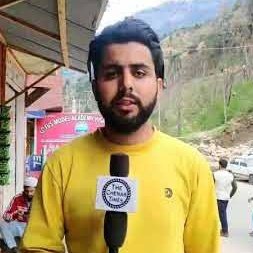
Anzer Ayoob is the Founder and Chief Editor to The Chenab Times