


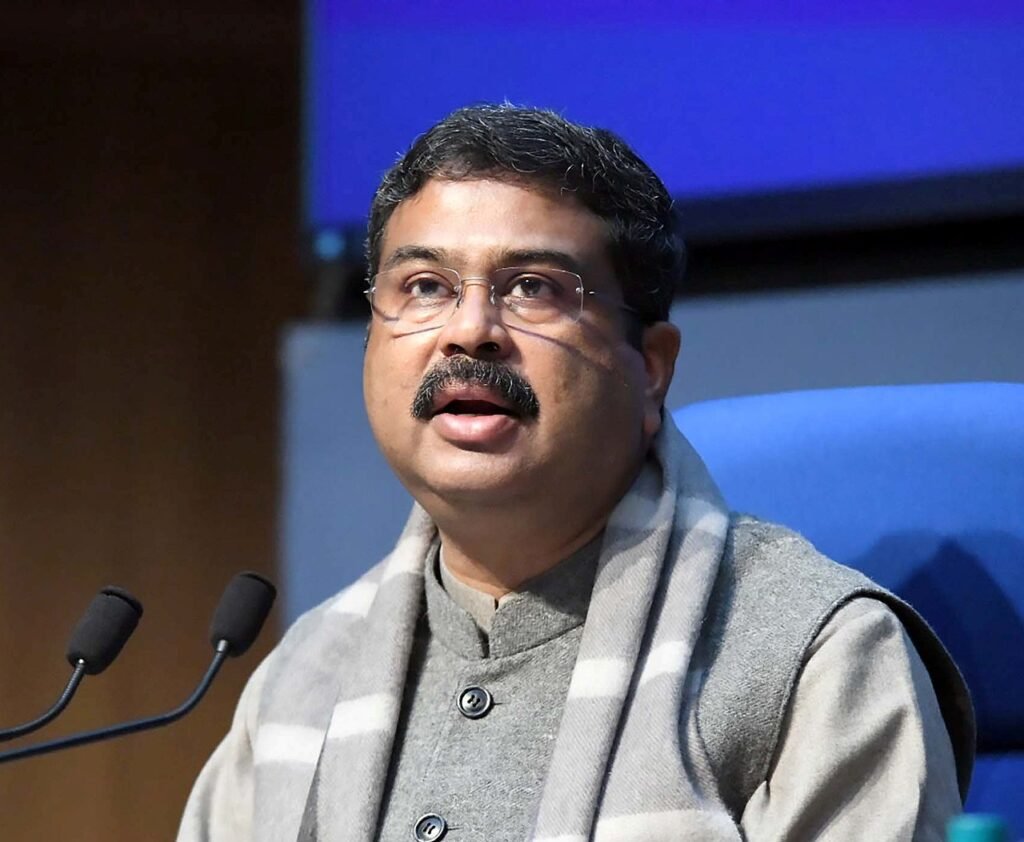
Bhubaneswar – Union Education Minister Dharmendra Pradhan emphasized the importance of providing primary education to children in their local dialects during a program at the Eastern Regional Languages Centre in Bhubaneswar on Sunday.
Addressing the gathering, Pradhan highlighted the National Education Policy’s recommendation to impart primary education in children’s local dialects until at least class 5 and ideally up to class 8, reports IANS. He asserted that learning in one’s early language fosters the development of logical thinking, expressive communication, and analytical skills.
Pradhan specifically addressed the potential impact on Odia children, expressing the belief that education in their native dialect could pave the way for future accomplishments akin to historical figures such as Madhusudan Das, Sarala Das, and Pathani Samanta.
Encouraging the implementation of the PM Schools for Rising India (PM SHRI) scheme in Odisha, Pradhan urged the state government to adopt this initiative. Additionally, he proposed organizing special programs like debate and essay competitions in December, aiming to popularize and promote the acceptance of the Odia language among the younger generation.
During the event, Pradhan inaugurated the administrative and educational buildings, hostel, and guest house at the Eastern Regional Languages Centre. A significant development occurred with the signing of a Memorandum of Understanding (MoU) between the Central Institute of Indian Languages (CIIL), Mysore, and NCERT, New Delhi, facilitating collaborative research on languages.
Further, Pradhan launched the PM-SHRI scheme in 63 Kendriya Vidyalayas and Navodaya Vidyalayas across the state during a separate program at the railway auditorium.
As the country celebrates Bharatiya Bhasha Diwas from September 28 to December 11, Pradhan acknowledged the sweetness of dialects spoken in various regions such as Ganjam, Mayurbhanj, Sambalpur, and Dhenkanal.
The initiatives outlined by Minister Dharmendra Pradhan align with efforts to preserve regional languages, enhance educational accessibility, and foster cultural identity through language education.


The Chenab Times News Desk