


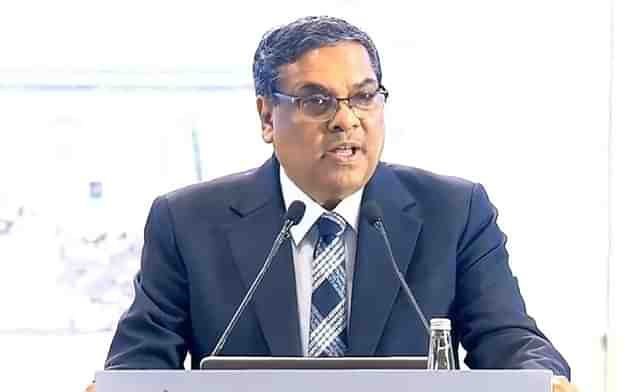
New Delhi: Justice Sanjiv Khanna was sworn in as the 51st Chief Justice of India (CJI) in a brief but significant ceremony at Rashtrapati Bhavan on Monday. President Droupadi Murmu administered the oath of office to Justice Khanna in the presence of Prime Minister Narendra Modi, members of the Union Cabinet, and dignitaries from the judiciary, including sitting and former judges of the Supreme Court and Delhi High Court. Vice-President Jagdeep Dhankhar and Andhra Pradesh Governor Abdul Nazeer, a former Supreme Court judge, were also in attendance. However, Home Minister Amit Shah was notably absent.
In a three-minute ceremony, Justice Khanna took the oath in the name of God, pledging to uphold the Constitution of India, maintain the nation’s sovereignty and integrity, and discharge his duties impartially. Following the oath, he greeted the assembled dignitaries with a respectful ‘namaste’ rather than the customary handshake.
A Brief Tenure as CJI
Justice Khanna will serve as CJI for a tenure of six months and two days, retiring on May 13, 2025. His successor, Justice BR Gavai, is also expected to have a short tenure, lasting from May 14 to November 23, 2025. In light of their brief terms, both Justices Khanna and Gavai have decided against moving into the official CJI residence at 5, Krishna Menon Marg.
Focus on Key Reforms
In his inaugural address as CJI, Justice Khanna outlined his priorities, emphasizing the need to reduce the significant backlog of cases in the judiciary, simplify complex legal procedures, and make litigation more accessible and affordable for citizens. He particularly highlighted reforms in criminal case management, aiming to streamline trial durations and reduce the procedural burden on litigants. The Supreme Court currently has approximately 66,000 pending cases, with over 16,000 unregistered petitions, making the challenge of backlog reduction a pressing issue.
Judicial Legacy and Family Background
Justice Khanna’s judicial lineage is steeped in history. His father, Justice DR Khanna, served as a judge of the Delhi High Court and was an expert in tax law, an area in which Justice Sanjiv Khanna himself has delivered several landmark rulings. Justice DR Khanna was the younger brother of Justice HR Khanna, who famously resigned from the Supreme Court in 1977 after being superseded for the position of Chief Justice due to his stance against the government’s emergency-era policies.
Justice Sanjiv Khanna began his legal career in 1983, practicing tax and civil law under veteran lawyer FC Bedi at Tis Hazari courts. He ascended to the Supreme Court in 2019 and has since authored several notable judgments.
Collegium and Appointments
As the head of the Supreme Court collegium, Justice Khanna, along with Justices BR Gavai, Surya Kant, Hrishikesh Roy, and AS Oka, will address judicial appointments. The Supreme Court currently has 32 judges against its sanctioned strength of 34, and the collegium is expected to fill two vacancies in the coming months.
Justice Khanna’s tenure will be closely watched for its impact on the efficiency and accessibility of the justice delivery system, as the judiciary continues to grapple with longstanding challenges.


The Chenab Times News Desk