


Doda, 12 Oct — The Himalayas have always been a land of contrast — where silence meets storms, and snow listens to the pulse of the monsoon. Stretching across six nations — India, Nepal, China, Bhutan, Pakistan, and Afghanistan — this immense arc of rock and ice holds the tallest peaks on Earth. It shapes the rivers that feed half a continent, the cultures that pray to its summits, and the weather that is now, quietly but unmistakably, changing.
Once, autumn in the high Himalayas meant calm skies. Trekkers came for clear views of Everest and Kanchenjunga, for the kind of still air that made each footstep feel sacred. But that rhythm is faltering. The monsoon, which once bowed out by mid-September, now lingers into October — dragging its rains, winds, and unpredictability into what used to be the safest season.
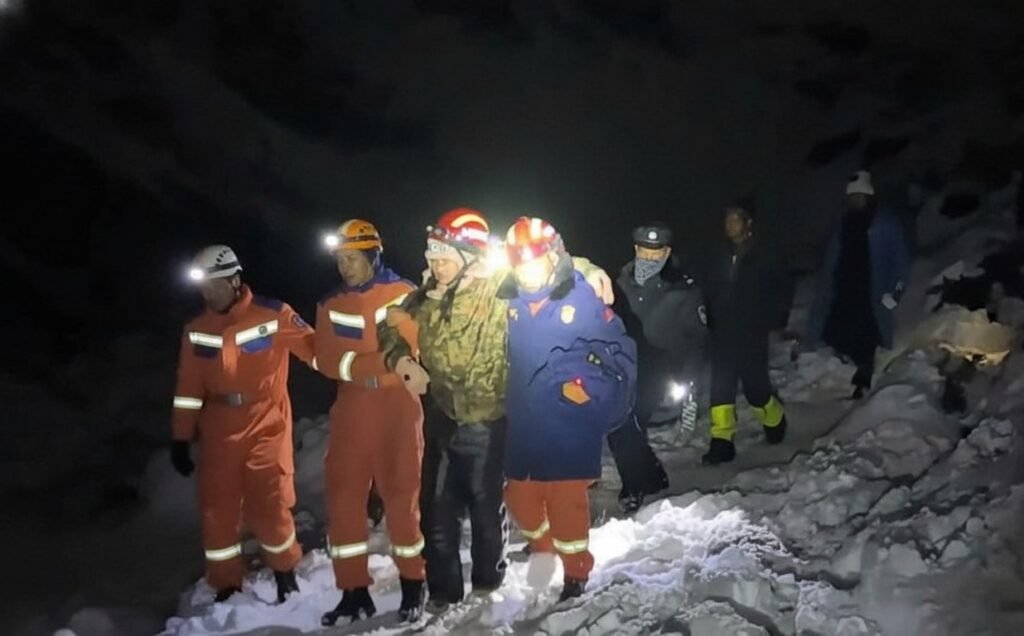
This year, the shift turned dangerous. Near the eastern face of Everest, a sudden blizzard buried trails and stranded hundreds of trekkers at altitudes above 4,900 metres. Temperatures plummeted overnight. Those who survived spoke of fighting off hypothermia, of clearing snow through sleepless nights just to keep from being buried. By the time rescue teams reached them, one climber had already lost his life. On the Nepal side, a South Korean mountaineer perished on Mera Peak under similar conditions.
Meteorologists say this was not an isolated event. In the past decade, the monsoon’s retreat has become slower, heavier, and more erratic. Rains that once stretched gently over four months now fall in violent bursts — torrents of water and snow compressed into hours. “The pattern has changed,” says Archana Shrestha of Nepal’s Department of Hydrology and Meteorology, as per BBC. “We are seeing damaging precipitation in shorter spans of time.”
The cause lies in an invisible collision above the mountains. The westerly disturbances — cold, low-pressure systems born in the Mediterranean — used to visit the Himalayas only in winter. Now, they are arriving earlier, mixing with the warm, moisture-laden monsoon air. When the two meet, the result is explosive: snowstorms, flash floods, landslides. Scientists call it a “turbocharged monsoon.”
This mixing has also altered places once known for their dryness. The Tibetan Plateau, long a land of thin air and brittle cold, is slowly becoming warmer and wetter. A recent Nature study described the region as entering a “warming and wetting climate.” For the world’s highest plateau, that means more unstable weather — and more frequent blizzards where there used to be none.
Guides and climbers have begun to notice what the data shows. “The patterns we relied on are gone,” says mountain guide Logan Talbott. “We can’t assume October will be safe anymore. Flexibility and experience have become our only tools.”
Even those who have climbed these peaks for decades say the change feels personal. The mountains that once welcomed them with blue skies now greet them with clouds that twist and multiply, bringing snow where there should be sun.
The Himalayas were born of collision — two tectonic plates forcing each other upward. Now another kind of collision, between heat and cold, is reshaping them. The peaks still stand, magnificent and unmoving. But around them, the seasons themselves are shifting — one storm at a time.


Haseena Ayoob is a regular contributor of The Chenab Times.