


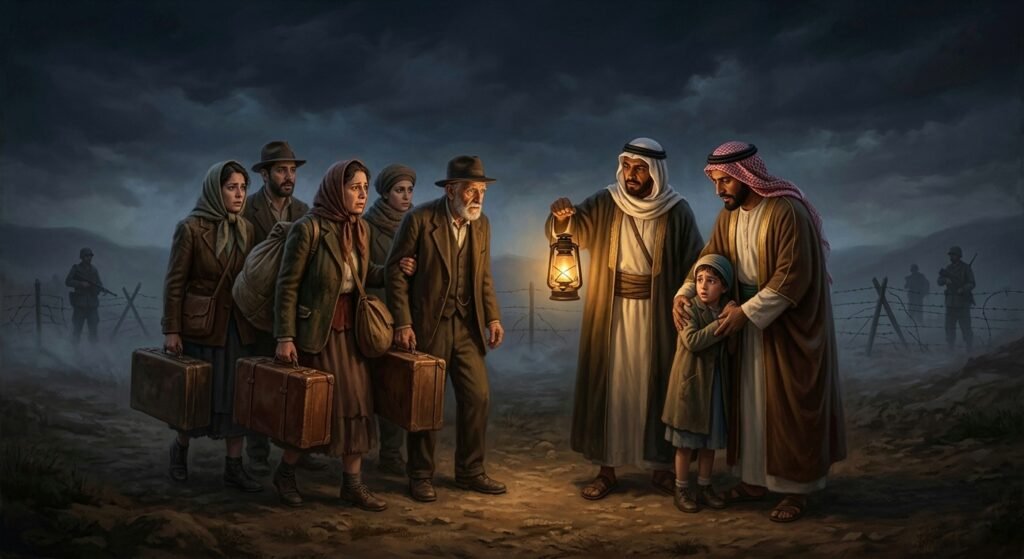
The Holocaust is widely remembered as one of the darkest chapters in human history. Between 1933 and 1945, Nazi Germany and its collaborators carried out a systematic campaign to annihilate Europe’s Jewish population, murdering six million Jews and millions of other victims. Much of the historical narrative surrounding the Holocaust has focused on events in Europe—particularly in Germany, Poland, and occupied territories. Yet scattered across North Africa, the Middle East, and parts of Europe are lesser-known stories of individuals and communities who risked their lives to protect Jews from persecution.
Among these stories are those of Arab and Muslim rescuers who sheltered Jewish families, forged documents, resisted discriminatory policies, and in some cases saved entire communities. Historians have increasingly drawn attention to these acts of courage, which complicate simplified narratives of wartime alliances and reveal moments of moral resistance across cultural and religious lines.
North Africa Under Axis Control
During World War II, parts of North Africa fell under Axis control. From June 1940 until May 1943, Nazi Germany and Fascist Italy occupied or dominated territories across the region. The Jewish communities of North Africa—particularly in Tunisia, Algeria, and Morocco—faced persecution, forced labor, and discriminatory laws.
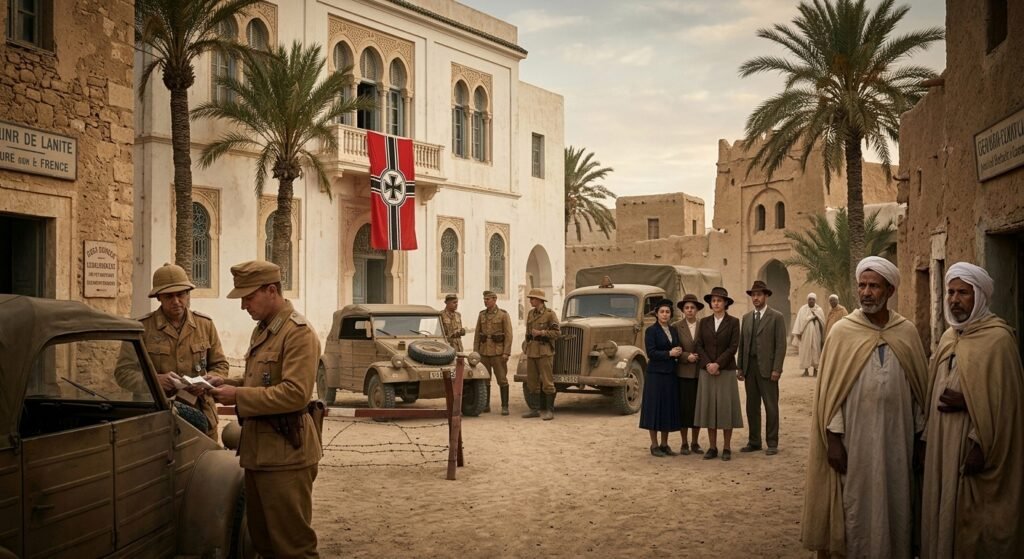
Historian Robert Satloff notes in his book Among the Righteous: Lost Stories from the Holocaust’s Long Reach into Arab Lands that Jewish communities in these territories experienced intimidation, forced labor camps, and confiscation of property during Axis rule. However, the scale of destruction was far smaller than in Europe. According to Satloff, roughly 4,000 to 5,000 Jews—about one percent of the region’s Jewish population—were killed in North Africa during the war. The relatively lower death toll is largely attributed to the Allied victory in the North African Campaign, which ended Axis control of the region in 1943.
Even under occupation, some Arab leaders and ordinary citizens resisted anti-Jewish policies or actively helped Jews survive.
Opposition to Anti-Jewish Policies in Algeria
In Algeria, the Vichy French regime implemented policies that stripped Jews of civil rights and encouraged the confiscation of Jewish property. According to reporting by journalist Paul Harris in The Guardian, many French settlers were willing to profit from these confiscations. However, Muslim religious leaders in the capital, Algiers, publicly opposed the seizure of Jewish property.
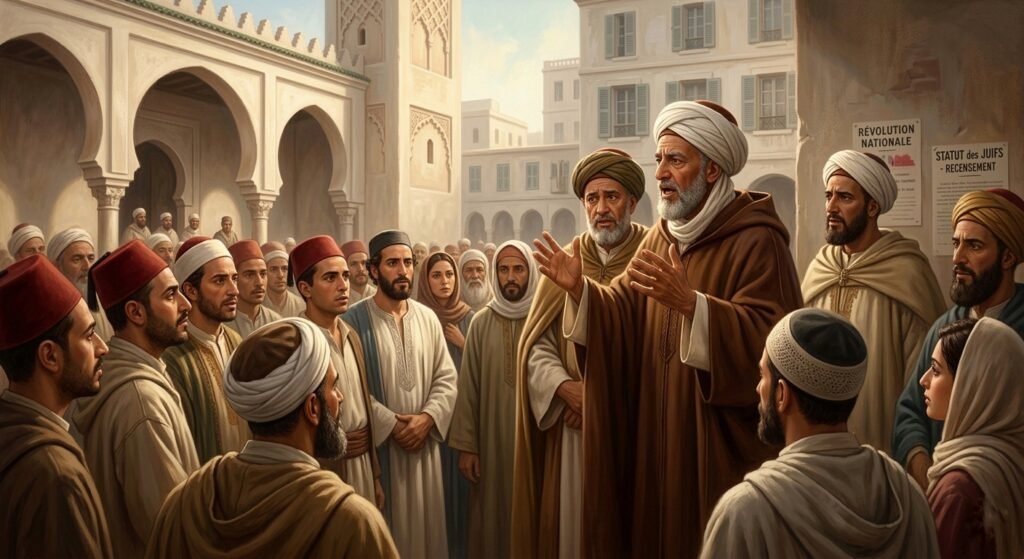
Their stance reflected a broader resistance among some Muslim clerics who rejected the notion that their Jewish neighbors should be persecuted or dispossessed.
The Tunisian Leaders Who Protected Jews
Tunisia offers some of the most significant examples of political resistance to anti-Jewish policies during the war.
When Moncef Bey became ruler of Tunisia in 1942, the country was effectively under the control of Vichy France and subject to German influence. According to Fayçal Cherif’s study “Jewish–Muslim Relations in Tunisia during World War II,” published in the book Jewish Culture and Society in North Africa, Moncef Bey publicly affirmed that Jewish citizens were under his protection.
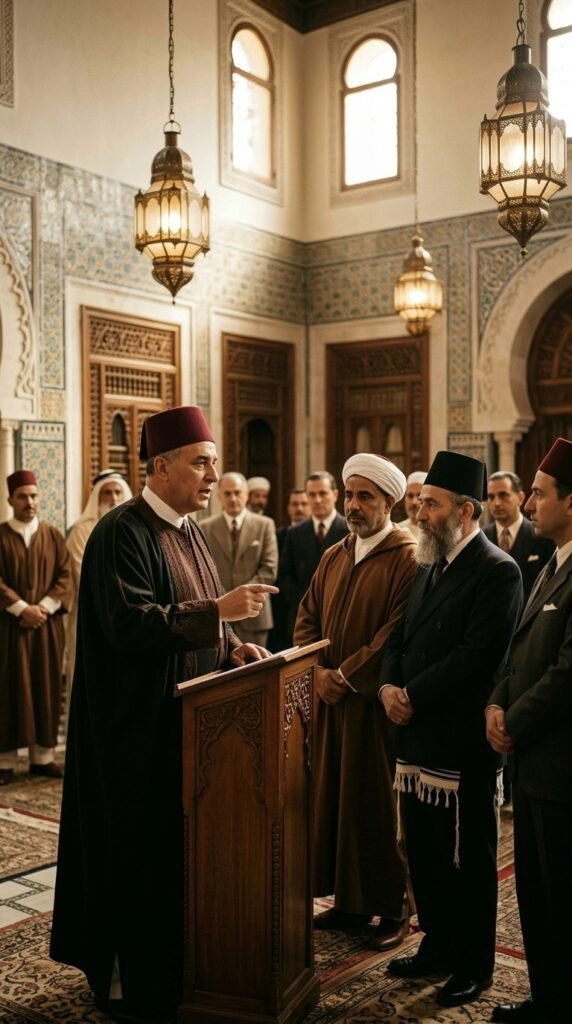
Shortly after ascending the throne, he awarded Tunisia’s highest royal honor to several prominent Jews and reportedly told his officials that the country’s Jewish population were “his children” just like Muslim citizens.
Moncef Bey’s government also took practical steps to mitigate Nazi policies. His prime minister, Mohamed Chenik, warned Jewish leaders of German plans and intervened in some cases to prevent arrests and deportations. Because anti-Jewish laws required the ruler’s signature, Moncef Bey reportedly delayed or obstructed their implementation whenever possible.
Historian Kenneth Perkins, in A History of Modern Tunisia, writes that Moncef Bey’s political stance later contributed to his removal from power after the Allied liberation, as French authorities accused him—controversially—of collaboration with the Axis.
Individual Acts of Courage in Tunisia
Alongside political leaders, ordinary individuals also risked their lives to protect Jewish neighbors.
One such figure was Si Ali Sakkat, a former Tunisian government minister who had retired to a farm near Tunis. According to Robert Satloff’s research published by PBS’s NewsHour, Sakkat sheltered around sixty Jewish forced laborers who had escaped from a nearby German labor camp. The men were hidden and fed on his property until Allied forces liberated Tunisia.
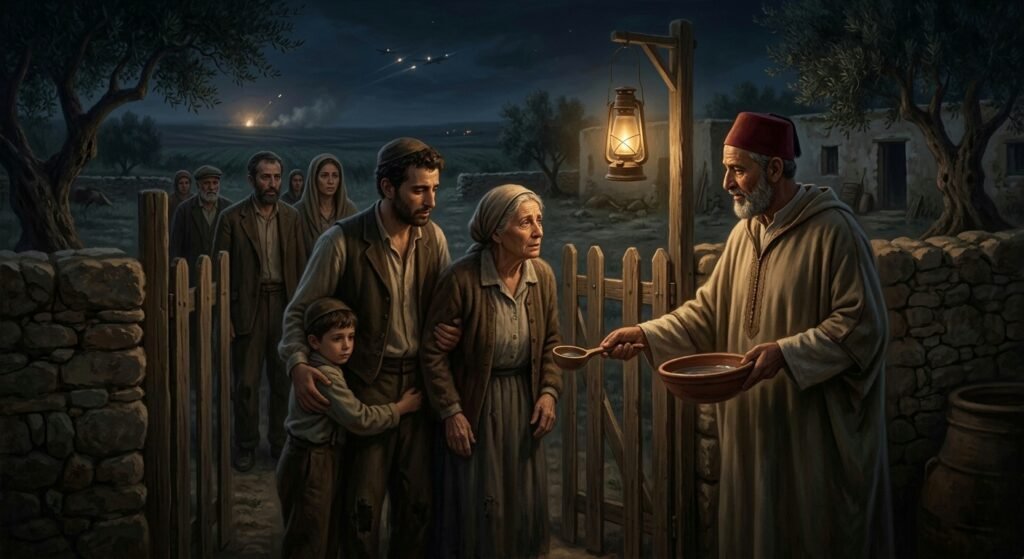
Another Tunisian rescuer, Khaled Abdul-Wahab, became known as the “Arab Schindler.” According to reporting in The Jerusalem Post, Abdul-Wahab learned that German officers were planning to assault a Jewish woman named Odette Boukhris. He moved her family and approximately two dozen other Jewish families to his farm outside the coastal town of Mahdia, where they remained hidden for four months until the occupation ended.
Morocco’s Sultan and the Jewish Community
During the war, Morocco was also under the authority of the Vichy regime, which attempted to impose anti-Jewish laws.
According to historian Susan Gilson Miller in A History of Modern Morocco, Sultan Mohammed V resisted some of these measures and rejected attempts to force Moroccan Jews to wear the yellow badge. He also refused to deport Morocco’s Jewish population to Nazi camps in Europe.
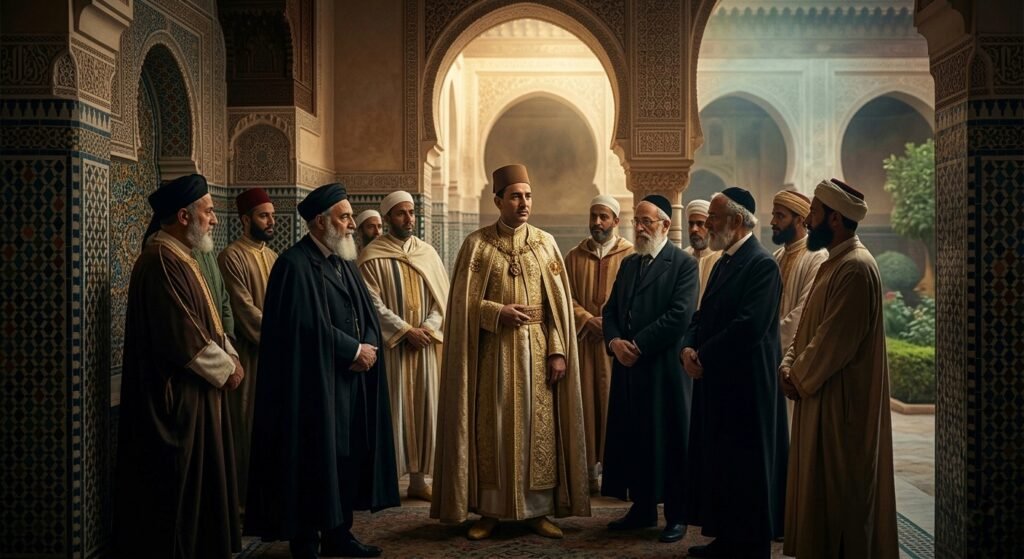
Many Moroccan Jews later credited the monarch with protecting them during the war. As historian Jessica Marglin writes in Across Legal Lines: Jews and Muslims in Modern Morocco, the Jewish community remembered Mohammed V as a ruler who treated Jews as integral members of Moroccan society.
However, historians caution against oversimplifying his role. Abdelilah Bouasria notes in a study on Moroccan politics that Mohammed V did sign some decrees restricting Jewish access to schools and certain professions under pressure from Vichy authorities.
Iran and the Refuge of the “Tehran Children”
While North Africa experienced Axis occupation, Iran became an unexpected refuge for refugees fleeing Nazi persecution.
According to the United States Holocaust Memorial Museum, Iran hosted approximately 116,000 Polish refugees during World War II, including around 5,000 Polish Jews who had escaped Soviet labor camps and Nazi-occupied territories.
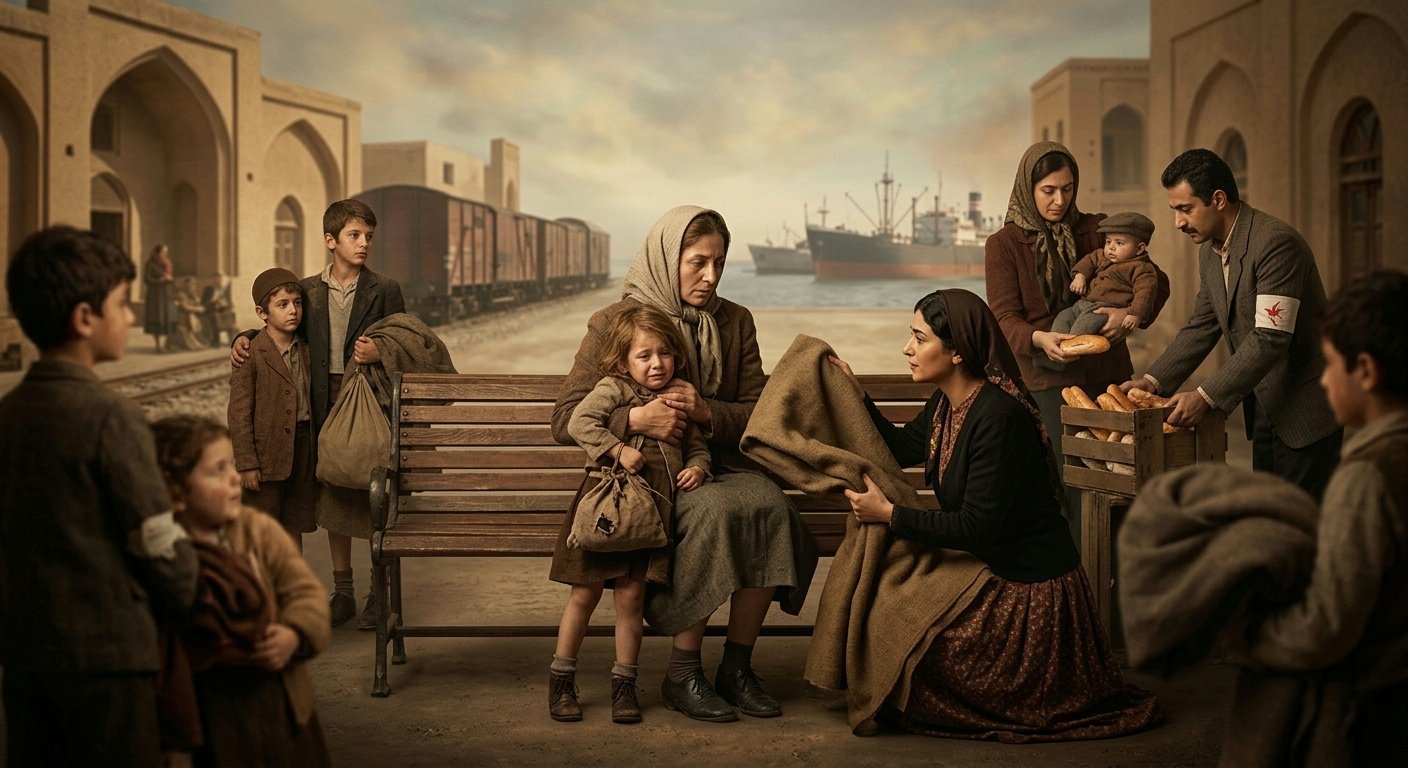
Many of the Jewish children who arrived in Iran became known as the “Tehran Children.” In her book Tehran Children: A Holocaust Refugee Odyssey, historian Mikhal Dekel recounts the journey of these young survivors who eventually traveled onward to British-controlled Palestine.
Survivor Adam Szymel later recalled the emotional moment when he arrived in Iran. In oral histories collected by the United States Holocaust Memorial Museum, Szymel described feeling “free” for the first time after years of fear and displacement.
Muslim Rescue Efforts in Europe
Acts of rescue also took place within Europe itself.
Albania, a country with a Muslim-majority population, became one of the rare places where the Jewish population increased during the Holocaust. According to historian Harvey Sarner’s book Rescue in Albania, nearly all of the country’s Jews survived the war, thanks in part to a cultural code of honor known as besa, which emphasizes protecting guests and keeping one’s promises.
One notable rescuer was Refik Veseli, a teenage Muslim apprentice photographer. Veseli hid a Jewish family from Yugoslavia in his family’s mountain village after the German occupation of Albania. According to research cited by Yad Vashem, the Veseli family protected the refugees for months until the end of the war.
Stories like Veseli’s were not isolated. Dozens of Albanians have since been recognized as “Righteous Among the Nations,” the title given by Israel’s Yad Vashem memorial to non-Jews who risked their lives to save Jews during the Holocaust.
Diplomats and Rescuers
Several Muslim diplomats also used their positions to save Jewish lives.
Selahattin Ülkümen, the Turkish consul on the Greek island of Rhodes, intervened in 1944 when German authorities began deporting Jews to Auschwitz. According to Stanford J. Shaw’s book Turkey and the Holocaust, Ülkümen argued that Jews who were Turkish citizens—and their relatives—should be exempt from deportation.
Through persistent negotiation with German officials, he secured the release of about 50 people.
Another rescuer, Iranian diplomat Abdol Hossein Sardari, worked in the Iranian consulate in Paris. According to the United States Holocaust Memorial Museum, Sardari issued Iranian passports and documents to Jews, arguing that Iranian Jews were ethnically “Aryan” and therefore not subject to Nazi racial laws. Historians estimate that these efforts saved between 2,000 and 3,000 people.
The Grand Mosque of Paris
One of the most remarkable stories of wartime shelter took place in the Grand Mosque of Paris.
During the German occupation of France, the mosque became a refuge for members of the French Resistance and for Jews fleeing Nazi persecution. According to the book The Grand Mosque of Paris: A Story of How Muslims Rescued Jews During the Holocaust by Karen Gray Ruelle and Deborah Durland Desaix, mosque officials provided Jews with documents identifying them as Muslims in order to protect them from arrest.
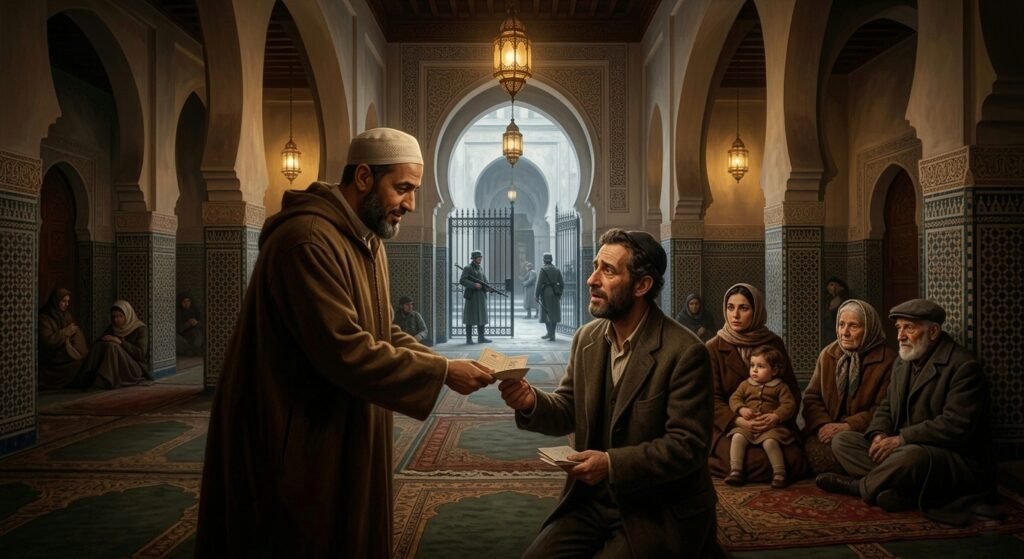
Under the leadership of the mosque’s rector, Si Kaddour Benghabrit, several Jews—including the Algerian Jewish singer Salim Halali—were reportedly given papers that allowed them to avoid deportation.
However, historians continue to debate the scale of these rescue operations. Ethan Katz, writing in The Jewish Quarterly Review, notes that while the mosque clearly provided shelter to some individuals, the exact number of Jews saved remains uncertain.
A Story Often Overlooked
For decades after World War II, these stories remained largely absent from mainstream Holocaust narratives.
Historians such as Robert Satloff have argued that the rescue efforts of Arab and Muslim individuals were overshadowed by political tensions in the Middle East and by the dominant focus on European experiences during the Holocaust.
Yet the historical record shows that in moments of extraordinary danger, people from diverse cultures and religions made choices that defied hatred and violence.
These acts did not change the overall tragedy of the Holocaust. But they reveal a complex human story—one in which moral courage sometimes appeared in unexpected places.


Anzer Ayoob is the Founder and Chief Editor to The Chenab Times