


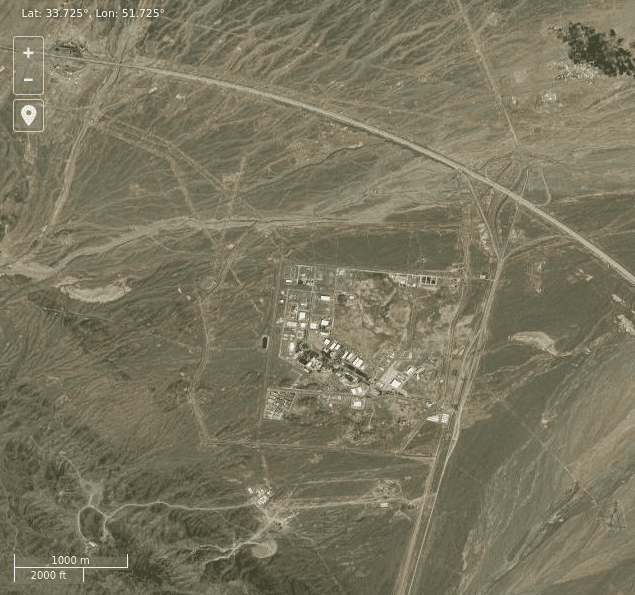
Iran’s Natanz uranium enrichment facility, located approximately 220 kilometres southeast of Tehran, was struck in a joint US-Israeli airstrike on Saturday, as the conflict in the Middle East entered its fourth week with no signs of de-escalation.
According to details received by The Chenab Times, Iran’s official news agency Mizan confirmed the strike and reported that technical assessments found no leakage of radioactive materials and no danger to residents in the surrounding areas. Iran’s Atomic Energy Organisation separately confirmed the attack, attributing it to the United States and Israel. The International Atomic Energy Agency said on Saturday that it had been informed by Iran about the strike and that no increase in off-site radiation levels had been recorded. The UN nuclear watchdog added that it was looking into the incident.
The strike marks the second time Natanz has been targeted since the war began on 28 February 2026, when the United States and Israel launched coordinated strikes under what has been described as Operation Epic Fury. The facility, Iran’s primary uranium enrichment site, had also been targeted during the 12-day Israel-Iran conflict in June 2025. Israeli Defence Minister Israel Katz warned in a video statement on Saturday that the intensity of strikes against Iran would increase significantly in the coming week.
Simultaneously, twenty-two countries issued a joint statement condemning what they described as the de facto closure of the Strait of Hormuz by Iranian forces. The signatories included the United Arab Emirates, the United Kingdom, France, Germany, Italy, the Netherlands, Japan, Canada, South Korea, Australia, Bahrain, and several European nations. The statement called on Iran to immediately cease laying mines, conducting drone and missile attacks on commercial vessels, and blocking passage through the waterway. The countries urged Tehran to comply with United Nations Security Council Resolution 2817.
The Strait of Hormuz, a narrow waterway between the Persian Gulf and the Gulf of Oman, serves as the sole maritime passage for roughly one-fifth of the world’s oil and liquefied natural gas. Iran’s effective blockade of the strait since early March has sent global energy prices sharply higher and disrupted supply chains across multiple continents. The International Energy Agency last week authorised the largest-ever coordinated release of emergency oil stocks in its history, making 400 million barrels available to global markets to offset the disruption.
United Nations Secretary-General António Guterres also urged Iran to reopen the strait on Saturday, stating that the United Nations stood ready to help secure the waterway to ease tensions. US President Donald Trump, speaking to reporters, said the United States did not directly depend on the strait but urged other nations to take steps to protect it.
More than 1,300 people have been killed in Iran since the war began, according to AP. With limited information emerging from the country, the full extent of damage to Iran’s nuclear, military, and energy infrastructure remains unclear.


Global Affairs Desk at The Chenab Times covers international developments, global diplomacy, and foreign policy issues through fact-based reporting, explainers, and analytical pieces. The desk focuses on major geopolitical events, diplomatic engagements, and international trends, with an emphasis on verified information, multiple perspectives, and contextual understanding of global affairs.