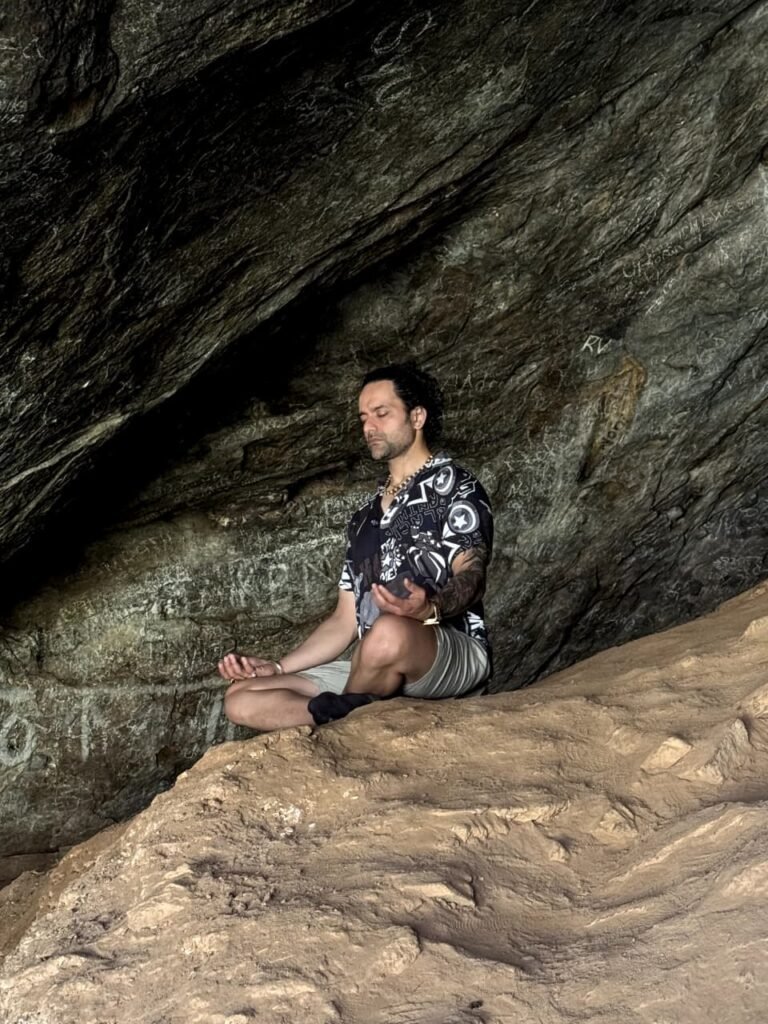
The holy city of Amritsar has given the world many things — a timeless spiritual landmark in the Golden Temple, the warmth of its langar halls, the resilience of its people. It has, for centuries, been a city where seekers come in search of something larger than themselves. That culture of seeking, it seems, leaves an impression on those born within it.
Harpreet Singh was born in Amritsar on 29th October 1987. He would go on to build a practice and a public identity — “Healing with Ginni” — that he says now connects him with clients spanning continents. Today, he describes his work as sitting at the crossroads of astrology, spiritual energy healing, and mind coaching. Whether you find that combination compelling or unconventional likely depends on where you stand in a cultural conversation that, data suggests, is shifting rapidly in one direction.
Featured Profile · The Chenab Times
Healing with Ginni

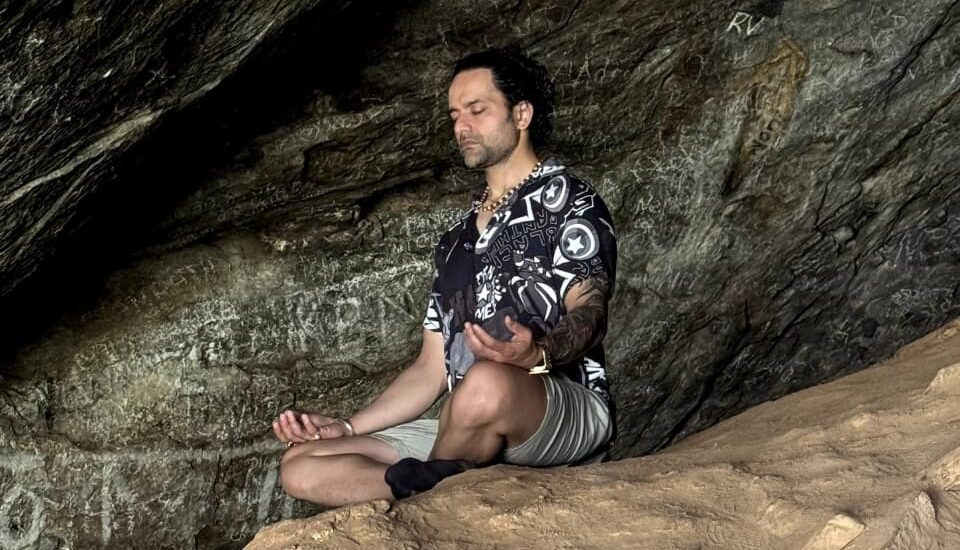
Harpreet Singh · Amritsar
Spiritual Healer & Mind Coach


Healing with Ginni
Astrology · Energy Healing · Coaching

Global Practice
Connecting Souls Across Continents

The Journey
From Amritsar to the World Stage

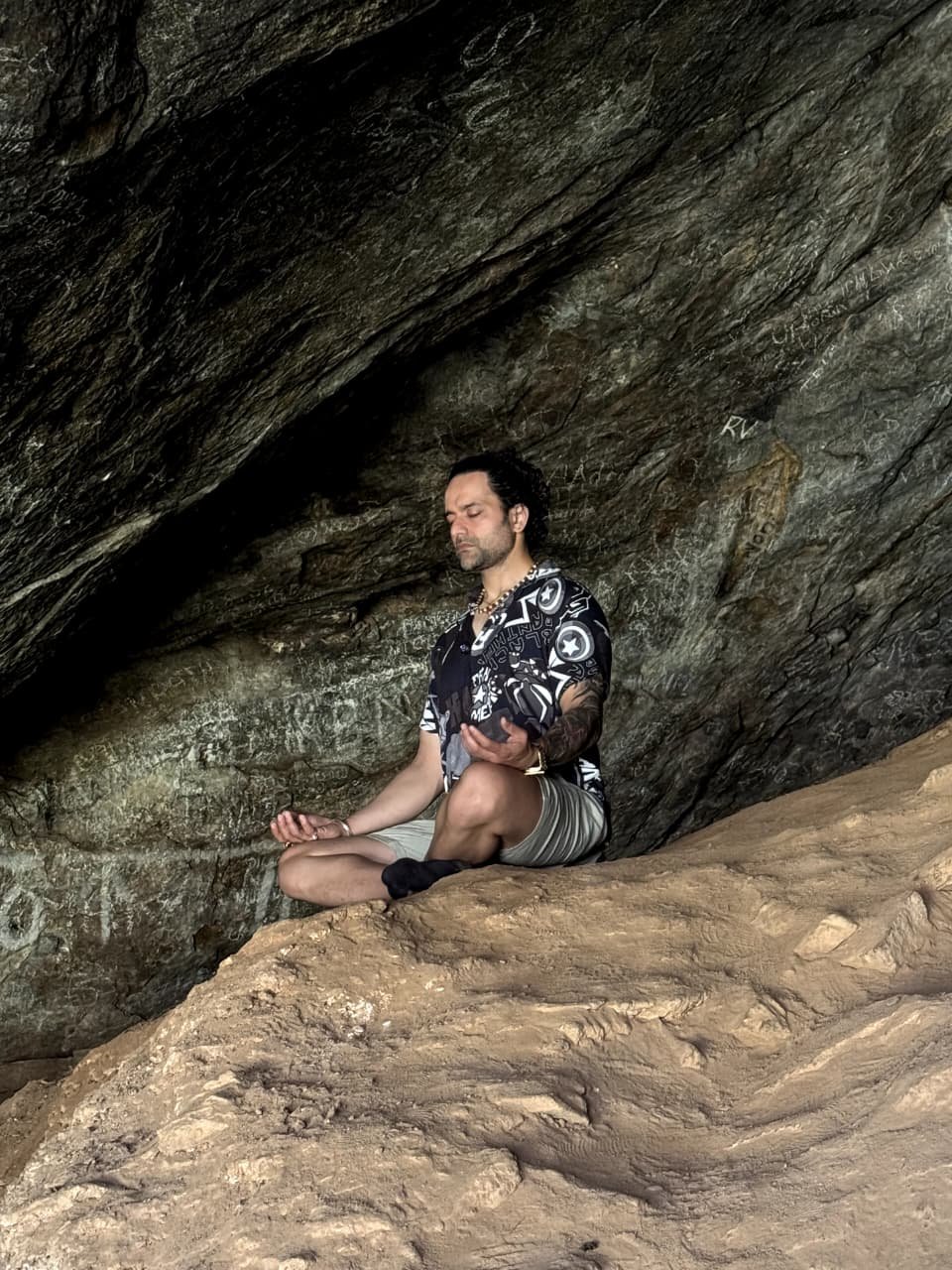
Singh’s biography does not follow the arc that most professional success stories in India are expected to trace. His formal education, by his own account, extended to Class XII — the Higher Secondary level. There were no university degrees, no training institutes with notable affiliations, no certifications listed on a marquee wall. What he describes instead is a path shaped largely by intuition and personal exploration.
This is, in itself, neither unusual nor disqualifying in the world of spiritual practice. India has a long and legitimate tradition of wisdom transmitted outside institutional walls — from village healers to temple pandits to generations of practitioners whose authority was earned through lived experience rather than examination scores. Whether Singh’s journey falls within that tradition or charts something newer is a question his growing body of work will, in time, help answer.
What is clear is that he made a choice early on to pursue a direction most around him were unlikely to validate easily — and that the choice appears to have held.
The promise, embedded in the brand, is transformation — not as marketing language, but as the organising principle of everything Harpreet Singh does under the name the world has come to know him by.
— The Chenab Times · Exclusive Feature 2026Building ‘Ginni’: The Making of a Wellness Identity
The decision to build a professional identity around a single name — Ginni — is a deliberate one. In an increasingly crowded wellness space, where thousands of practitioners compete for attention on the same digital platforms, personal branding has become as critical as the service itself. “Healing with Ginni” functions both as a name and as a concept: the promise, embedded in the brand, is transformation.
Singh describes his methodology as a three-part framework: astrological readings, energy-based healing sessions, and mind coaching conversations. Each of these is, on its own, an entire field of practice. The ambition to synthesise all three is either a strength or a complication, depending on what a prospective client is looking for.
Astrology, in the Indian context, has deep cultural roots. Vedic astrology — or Jyotish — has been practiced for thousands of years and remains widely consulted, from personal life decisions to business timing to matrimonial matching. Energy healing, by contrast, is a more recently codified practice in its contemporary form, drawing from traditions including Reiki, pranic healing, and various chakra-based modalities. Mind coaching, meanwhile, belongs to the broader ecosystem of life coaching and cognitive behavioural frameworks that emerged largely through Western psychology.
Singh’s Three-Part Methodology
- Astrological readings — rooted in Vedic Jyotish tradition, applied to personal decisions, timing, and life direction
- Energy-based healing sessions — drawing from Reiki, pranic healing, and chakra-based modalities to address invisible emotional blockages
- Mind coaching conversations — translating spiritual insight into practical orientation; not just diagnosis, but direction
Singh’s claim is not that he is the world’s foremost expert in any one of these — it is that the combination, delivered personally and intuitively, produces results that a compartmentalised approach might not. That is a harder thing to measure, and a harder thing to verify.
One of the more conspicuous features of Singh’s self-presentation is the repeated reference to high-profile clientele — including celebrities and members of royal families — paired almost immediately with an assurance of total confidentiality.
This is a common posture in the wellness industry, and not an inherently dishonest one. Therapists, coaches, astrologers, and spiritual advisors across the world operate under strict discretion agreements, and the more prominent the client, the more absolute that discretion tends to be. The problem, from a journalistic standpoint, is that a claim is only as useful as the evidence that supports it. Without independently verifiable names, endorsements, or testimonials from identifiable individuals, such references remain, at best, colourful context.
The Chenab Times was unable to independently verify the nature or extent of Singh’s celebrity or royal clientele. This does not mean such associations do not exist — it means they cannot, on the basis of available information, be presented as established fact. What can be said is this: the global appetite for exactly the kind of service Singh offers is large, growing, and increasingly mainstream. That much is on the record.
The Boom Nobody Predicted
To understand why a practitioner like Harpreet Singh can build a viable global practice from a city like Amritsar — without a degree, without a formal institution behind him, and without conventional advertising — it helps to look at what has happened to the spiritual wellness industry over the past decade.
The forces driving this growth are not esoteric. Rising rates of depression and anxiety — with the World Health Organization estimating approximately 280 million individuals globally living with depression — alongside increasing mental health awareness, have created a sustained consumer demand for practices that address emotional and psychological wellbeing through non-clinical means.
Digital platforms have been transformative. Online consultations, webinars, and digital platforms have allowed spiritual practitioners to connect with clients from across the world, breaking geographical barriers and enabling a cross-cultural exchange of ideas and practices. For a practitioner based in Punjab, this is the difference between a local clientele and a global one.
Asia Pacific currently leads the global spiritual products and services market, accounting for more than 45% of market share, supported by cultural traditions in India, China, and Japan. India, in particular, occupies a position of inherent advantage: its ancient frameworks — Vedic astrology, Ayurveda, yoga, meditation — are precisely what a global wellness consumer is increasingly seeking out.
Singh describes his one-on-one sessions as holistic experiences rather than simple consultations — the objective is not to predict the future in any fatalistic sense, but to help clients identify where blockages may be obstructing their ability to function and flourish.
His approach, he says, begins with assessment — understanding where a person is, what they are carrying, and what they are trying to move toward. Astrological analysis provides one lens. Energy reading provides another. The mind coaching element then works to translate insight into practical orientation: not just “what is happening” but “what do I do now?”
This is, in its architecture, recognisable. It echoes models used by integrative therapists, holistic coaches, and transpersonal psychologists around the world — professionals who similarly argue that the visible and invisible dimensions of a human being cannot be effectively addressed in isolation from one another.
What distinguishes Singh from credentialed practitioners in those fields is the question his critics might ask first: the formal qualifications that, in a regulated profession, serve as the primary assurance of competence and safety. Singh’s authority rests, by his own account, on intuitive ability, experience, and the trust of his clients — a basis that is neither unprecedented nor without risk, and one that is common to most of the spiritual healing profession globally.
Without access to independently gathered client testimonials, what can be observed is the model he has constructed and the apparent sustainability of it. This kind of word-of-mouth growth, characteristic of the wellness industry at large, tends to be both slow and durable. The clients who stay are rarely those who came looking for entertainment. They are, more often, people navigating real difficulty — grief, anxiety, relationship strain, professional crisis, existential uncertainty — and looking for frameworks, however unconventional, that help them make sense of where they are.
What Comes Next
Singh describes an ambitious forward agenda. Structured healing programs, workshops, a digital education platform — the building blocks of what he calls a “global healing movement.” This vocabulary of scale and mission is common among wellness entrepreneurs of his generation, and the ambition is not inherently implausible. The infrastructure of digital content, online courses, and subscription-based wellness has made exactly this kind of expansion achievable for individual practitioners with a defined offering and a committed audience.
The future of the broader wellness and spiritual market is being shaped by digital dominance — subscription-based wellness apps and virtual spiritual retreats represent areas of immense potential — alongside personalisation, where brands and practitioners offering customised solutions stand to gain significant market share.
Whether Singh’s vision translates into that kind of sustained institutional presence will depend, like most things in this space, less on ambition and more on consistency, credibility, and the discipline to build something that outlasts the novelty of the founding story.
Harpreet Singh’s story reflects a world in which the boundaries between spirituality, psychology, wellness, and entertainment have become productively blurred — and in which individuals from unexpected backgrounds are finding audiences that established institutions never quite managed to reach.
It reflects, too, a conversation this country has not fully had about what healing looks like when the formal systems — mental health services, medical infrastructure, community support structures — are either unavailable, unaffordable, or simply insufficient to meet the scale of human need. Into that gap step practitioners of every description, from the deeply credentialed to the entirely self-taught. Some do harm. Many do not.
Where Harpreet Singh ultimately sits in that landscape — whether he builds the movement he envisions, whether his methods stand up to the scrutiny that greater visibility will eventually invite — remains to be seen. He is, for now, a figure in the early chapters of a story whose ending is not yet written.
What Amritsar gave him, it seems, is the conviction to begin it.