


The Jammu and Kashmir administration has highlighted a significant challenge in the school education sector with 3,192 government schools reporting less than 10 students or zero enrolment since 2022. These institutions continue to have 2,518 teachers posted in them despite the minimal student presence.
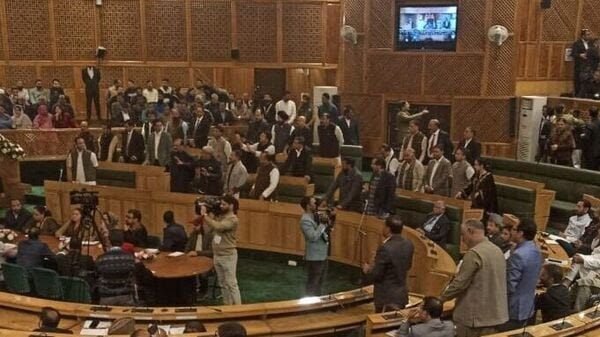
Information was available with The Chenab Times. According to official data shared by the School Education Department in the Legislative Assembly on March 28, 2026, the Jammu division accounts for 1,494 such schools with 1,934 teachers. The Kashmir division has 1,698 schools with 584 teachers. The figures were provided in a written reply by Education Minister Sakeena Itoo to a question from BJP MLA Ranbir Singh Pathania.
Since 2019, the government has closed or merged 1,732 schools across the Union Territory as part of efforts to rationalise resources. Of these, 1,427 closures or mergers occurred in the Jammu division and 305 in the Kashmir division. The government incurred an expenditure of over Rs 13,816 crore on salaries for staff in these low-enrolment schools over the years.
Why this matters
Low enrolment in government schools points to broader issues in the education system of Jammu and Kashmir, a Union Territory with diverse geography ranging from the plains of Jammu to the valleys and mountains of Kashmir. With a substantial public investment in school infrastructure and staffing, the presence of thousands of nearly empty schools raises questions about efficient use of resources. Rationalisation through closures and mergers aims to redirect teachers and funds to better-served institutions, potentially improving overall education quality. However, it also reflects demographic shifts, migration patterns, preference for private schools, and challenges in remote or hilly areas where access remains difficult.
What is known so far
Official records show a clear regional variation. In the Jammu division, districts like Kathua reported the highest number of low-enrolment schools at 508, followed by Udhampur with 188 and Rajouri. Other districts including Jammu, Reasi, and those in the Chenab region such as Doda, Kishtwar, and Ramban also feature in the data. In Kashmir, the numbers are spread across districts like Baramulla, Kupwara, and Anantnag.
The government has been pursuing school rationalisation for several years. The process involves merging small schools with nearby ones that have better enrolment and infrastructure. This policy aligns with national guidelines on rationalising small schools to enhance efficiency, teacher utilisation, and learning outcomes. Earlier data from 2025 had already flagged thousands of primary schools with enrolment below 30 students, indicating the issue predates the latest figures.
What is happening presently
The School Education Department continues to monitor enrolment trends and implement mergers where feasible. Teachers from closed or merged schools are typically reassigned to other institutions to maintain pupil-teacher ratios. The department has not indicated immediate plans for mass closures beyond the ongoing process but emphasises improving infrastructure, adding facilities, and enhancing teaching quality to attract students back to government schools.
Efforts also include addressing specific local challenges. In remote Chenab Valley areas and other hilly terrains, factors such as long distances to schools, harsh winters, and limited transport contribute to low attendance. Some parents opt for private institutions perceived to offer better facilities or English-medium instruction.
The government has presented the data as part of its commitment to transparent governance and resource optimisation in education. Minister Sakeena Itoo’s reply in the Assembly underscores the scale of the rationalisation exercise carried out since 2019 while acknowledging the financial burden on public funds.
Education experts and local stakeholders have long called for a balanced approach. While rationalisation helps curb wasteful expenditure, concerns remain about potential disruption to education in sparsely populated villages, particularly for young children who may face longer travel after mergers. Community representatives in areas like Chenab Valley have occasionally raised demands for new or relocated schools to improve access rather than closures.
The latest disclosure comes amid ongoing discussions on strengthening school education in Jammu and Kashmir following the reorganisation of the former state into a Union Territory in 2019. Authorities maintain that sustained focus on quality, infrastructure development, and community engagement will help reverse declining enrolment trends in government schools.
As of March 2026, the process of school rationalisation remains a key priority for the administration to ensure that public resources deliver maximum benefit to students across the Union Territory.


The Chenab Times News Desk