


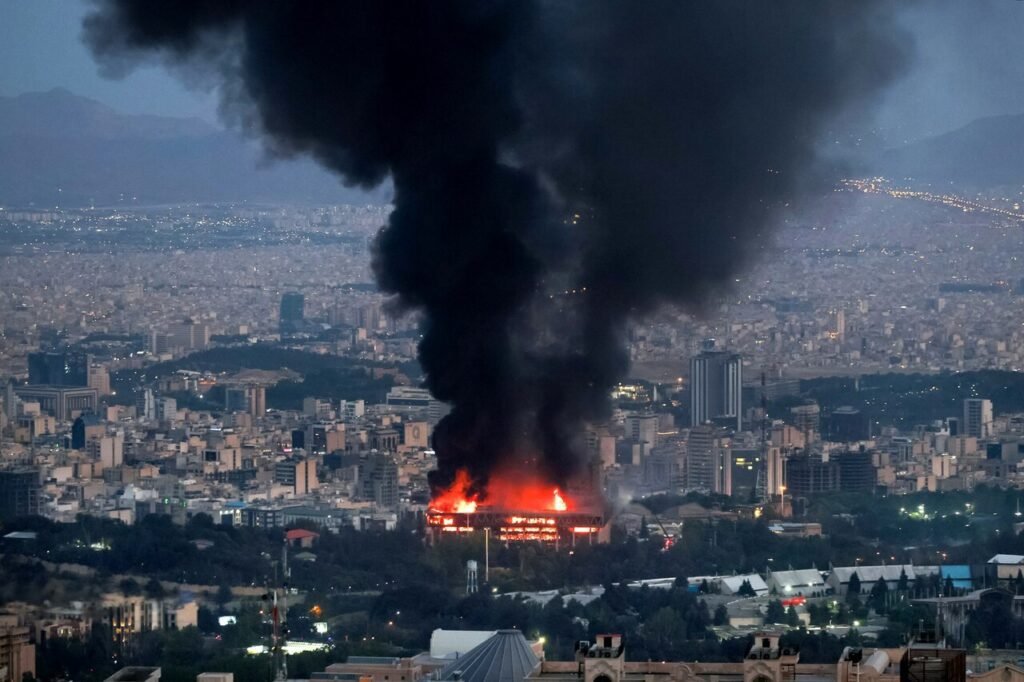
Prime Minister Benjamin Netanyahu has asserted that Israel has successfully neutralized Iran’s capabilities to develop nuclear weapons and ballistic missiles. He stated that Iran’s capacity to produce fissile material for a bomb has been halted, and its efforts to acquire advanced missile technology have been severely hampered. These claims come amid ongoing tensions and proxy conflicts in the Middle East, where Iran and Israel are engaged in a complex shadow war.
Information was available with The Chenab Times that while Netanyahu presented this assessment, evidence suggests that Iran continues to pose a significant threat. The country has been involved in attacks against Israel and various Persian Gulf nations, indicating persistent regional destabilization efforts. Furthermore, intelligence assessments indicate that Iran may still possess highly enriched uranium, a key component for nuclear weapons development, raising questions about the completeness of the alleged Israeli success.
Netanyahu’s remarks, made during a period of heightened regional anxiety, aim to underscore Israel’s strategic achievements in countering its primary adversary. The Israeli Prime Minister has long prioritized preventing Iran from obtaining nuclear weapons, viewing it as an existential threat to Israel. His government has pursued a multi-pronged strategy, including military deterrence, intelligence operations, and diplomatic pressure, to achieve this objective. The recent statements suggest that, in Netanyahu’s view, these efforts have yielded substantial results in curbing Iran’s most dangerous weapon programs.
The Prime Minister’s office has highlighted specific instances where, according to their intelligence, Iran’s path to a nuclear weapon has been blocked. These include disruption of critical supply chains for missile components and alleged successful cyber operations targeting nuclear facilities. The narrative promoted by the Israeli government is that their proactive measures have significantly set back Iran’s nuclear ambitions, making a breakout for a weapon highly improbable in the short to medium term. This assertion is intended to reassure both the Israeli public and international allies about Israel’s security posture.
However, the situation on the ground remains volatile. Iran, through its proxies and direct actions, continues to challenge Israel and its allies in the region. These actions, ranging from missile and drone attacks to naval interdictions, are seen by many analysts as evidence that Iran’s strategic objectives have not been significantly altered. The continued operational tempo of these groups suggests that Iran retains the will and capacity to project power and influence, even if its most advanced weapons programs face obstacles.
The issue of Iran’s nuclear program is a central concern for global powers, particularly in the context of international non-proliferation efforts. The Joint Comprehensive Plan of Action (JCPOA), or Iran nuclear deal, aimed to limit Iran’s uranium enrichment activities in exchange for sanctions relief. While the United States withdrew from the deal under the Trump administration, European powers have sought to preserve it. Iran has since progressively increased its uranium enrichment levels, moving closer to weapons-grade material, a development that has alarmed international observers and fueled the ongoing geopolitical standoff.
The intelligence community worldwide remains divided on the precise status of Iran’s nuclear program. While some reports suggest Iran has the technical knowledge and infrastructure to produce nuclear weapons, others maintain that significant hurdles remain. The ambiguity surrounding Iran’s capabilities is a key factor in the regional arms race and the broader geopolitical dynamics involving Iran, Israel, and the United States. Netanyahu’s strong assertion of success is likely intended to shape international perception and bolster support for Israel’s security policies.
The ongoing conflict between Israel and Iran is not confined to the nuclear dimension. It encompasses a broader struggle for regional influence, playing out through proxy conflicts in Syria, Lebanon, Yemen, and Iraq. Iran’s support for groups such as Hezbollah in Lebanon and the Houthis in Yemen is seen by Israel as a direct threat, extending its military reach and destabilizing its northern and southern borders. Israel has conducted numerous airstrikes in Syria targeting Iranian assets and weapons convoys destined for Hezbollah.
The Persian Gulf nations, including Saudi Arabia and the United Arab Emirates, have also been targets of Iranian aggression or actions by Iranian-backed groups. These attacks have impacted oil infrastructure and shipping lanes, underscoring the strategic importance of the region and the interconnectedness of the conflicts. The current diplomatic landscape is complex, with efforts to de-escalate tensions facing significant challenges due to entrenched mistrust and competing strategic interests.
Netanyahu’s declaration of victory over Iran’s weapons programs, while strategically significant for Israel’s narrative, will be scrutinized against the backdrop of continued regional instability and Iran’s ongoing defiance of international pressure. The effectiveness of Israel’s clandestine operations and military posture will continue to be tested as the shadow war between the two nations persists, with implications for global security and the delicate balance of power in the Middle East.


Global Affairs Desk at The Chenab Times covers international developments, global diplomacy, and foreign policy issues through fact-based reporting, explainers, and analytical pieces. The desk focuses on major geopolitical events, diplomatic engagements, and international trends, with an emphasis on verified information, multiple perspectives, and contextual understanding of global affairs.