


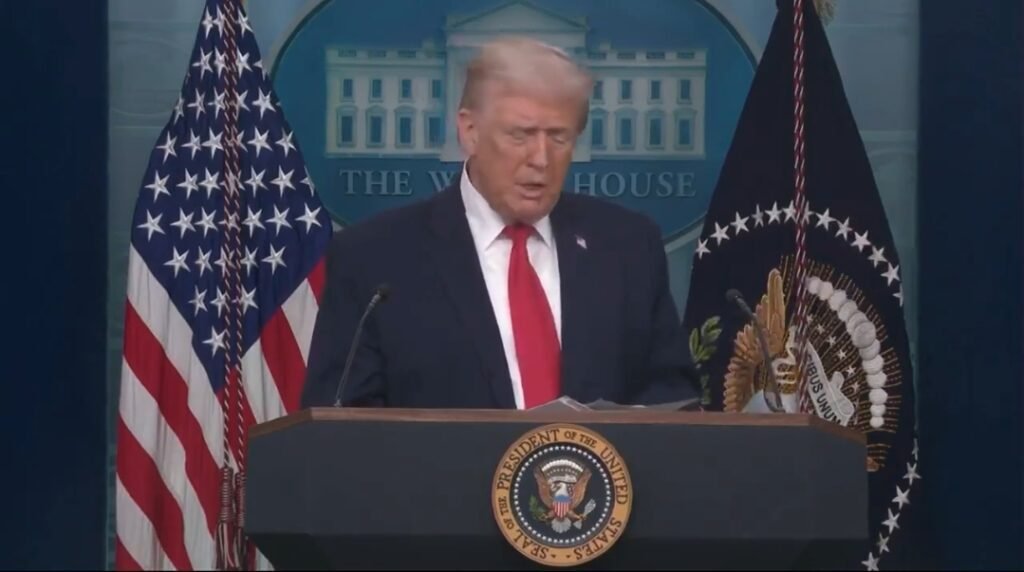
President Donald Trump announced on February 28 that “major combat operations” were initiated against Iran, describing the actions as “massive joint U.S.-Israeli strikes.” The announcement followed a period of heightened tensions between the United States and Iran, signaling a significant escalation in the ongoing geopolitical conflict in the Middle East.
Information was available with The Chenab Times indicating that the operations were launched following direct presidential orders. The specifics of the targets and the scale of the operations were not immediately disclosed, but the phrasing suggests a coordinated and substantial military engagement. This development marks a critical juncture in the complex relationship between the U.S., its allies, and Iran, which has been characterized by a series of retaliatory actions and diplomatic standoffs.
The announcement by President Trump came as the global community closely monitored the situation in the Persian Gulf. The U.S. has previously expressed concerns over Iran’s regional activities, including its ballistic missile program and alleged support for militant groups. These concerns have been a recurring theme in diplomatic engagements and have contributed to the imposition of stringent sanctions on the Iranian economy.
The involvement of Israel in the “joint” operations underscores the deepening security cooperation between the two nations, which share significant strategic interests in countering Iranian influence in the region. Both countries have been vocal critics of Iran’s nuclear ambitions and its role in regional conflicts, including those in Syria and Yemen. The coordinated military action is likely to have far-reaching implications for the stability of the Middle East.
The decision to launch “major combat operations” is a significant departure from the more targeted strikes that have characterized U.S. military actions in the region in recent years. The term “major combat operations” implies a broad scope of engagement, potentially involving sustained military activity across multiple fronts. The White House has indicated that further details would be provided by President Trump in a subsequent address to the nation, which was anticipated to offer more clarity on the objectives and extent of these operations.
The context for these operations includes a history of escalating provocations. In recent months, incidents such as attacks on oil tankers in the Gulf of Oman, the downing of a U.S. drone, and Iranian retaliatory actions against U.S. bases in Iraq following the killing of Qassem Soleimani, a top Iranian commander, have fueled the already tense atmosphere. The economic pressure exerted by U.S. sanctions has also been a significant factor, with Iran seeking to circumvent these measures and maintain its economic viability.
International reactions to the announcement are expected to be swift and varied. Regional powers such as Saudi Arabia and the United Arab Emirates, which have also been wary of Iran’s regional policies, are likely to view the U.S. action with a degree of approval, though they may also express concerns about the potential for wider conflict. European allies, who have generally advocated for a diplomatic resolution, may voice apprehension about the potential for de-escalation and the impact on ongoing efforts to preserve the Iran nuclear deal.
The announcement comes at a time when President Trump’s administration has been pursuing an “America First” foreign policy, which has often involved a more assertive stance on international security issues. The decision to engage in “major combat operations” could be interpreted as a continuation of this policy, aiming to deter perceived threats and reassert American influence in a volatile region. The domestic implications of such a move are also significant, with potential impacts on public opinion and the upcoming political landscape.
The operational details of the strikes, including the specific targets and the duration of the combat operations, remain a key focus of international attention. The U.S. military, through its Central Command (CENTCOM), is responsible for overseeing operations in the Middle East, and its role in executing these actions will be closely scrutinized. The involvement of the Israeli Defense Forces alongside U.S. forces suggests a high degree of coordination and shared intelligence between the two nations.
The broader geopolitical ramifications are considerable. A significant escalation in the conflict could lead to wider regional instability, potentially drawing in other actors and exacerbating existing conflicts. The global economy, heavily reliant on the flow of oil from the Middle East, could also be affected by any disruption to supply routes or increased geopolitical uncertainty. The effectiveness of the “major combat operations” in achieving their stated objectives, whatever they may be, will be crucial in determining the future trajectory of U.S.-Iran relations and the stability of the wider region.


Global Affairs Desk at The Chenab Times covers international developments, global diplomacy, and foreign policy issues through fact-based reporting, explainers, and analytical pieces. The desk focuses on major geopolitical events, diplomatic engagements, and international trends, with an emphasis on verified information, multiple perspectives, and contextual understanding of global affairs.