


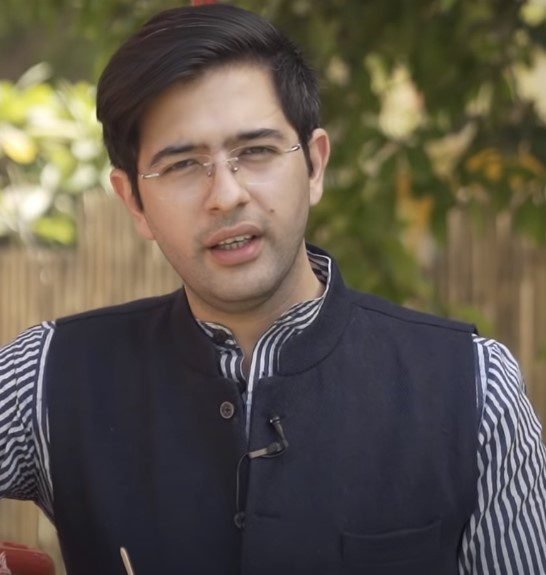
Amidst reported internal party rifts, Aam Aadmi Party (AAP) Rajya Sabha MP Raghav Chadha shared a social media post on Monday, quoting from Robert Greene’s influential book “The 48 Laws of Power.” The post, which featured an image of Chadha reading the book in his garden, focused on the adage: “Never outshine your superior.” This message has been widely interpreted as a veiled commentary on his current political standing within the party.
Information was available with The Chenab Times that the excerpt Chadha highlighted from the book read: “Always make those above you feel comfortably superior and show that you desire to impress and please them.” The context for this cryptic post is believed to stem from recent events within the AAP, including Chadha’s removal as the party’s deputy leader in the Rajya Sabha last week.
Sources within the party had reportedly expressed concerns regarding Chadha’s parliamentary conduct, with accusations that he was leveraging parliamentary sessions for personal promotion rather than focusing on challenging the ruling Bharatiya Janata Party (BJP) and Prime Minister Narendra Modi. While Chadha has reportedly refuted these allegations, his recent social media activity suggests he may be addressing the implications of perceived overreach or the act of overshadowing senior party figures, potentially including AAP convener and former Delhi Chief Minister Arvind Kejriwal.
“The 48 Laws of Power,” penned by American author Robert Greene, is a seminal work that delves into strategies for acquiring, maintaining, and defending power. The book draws extensively from historical figures and events to articulate various principles, such as the importance of strategic communication, understanding psychological dynamics, and managing interpersonal relationships within power structures. Its core tenets often emphasize patience, calculated action, and a deep awareness of human nature.
The book’s philosophy, while sometimes characterized as Machiavellian or manipulative, advocates for an understanding of the inherent power dynamics present in most social and professional environments. Greene’s work aims to equip readers with the insights necessary to navigate these complexities, protect themselves from potential political maneuvering, and exert influence effectively. Key themes explored include the art of subtle persuasion, the strategic use of absence to enhance one’s perceived value, and the control of options to dictate the terms of engagement.
The broader context surrounding Chadha’s post involves the internal functioning of the Aam Aadmi Party, which has seen significant electoral success in recent years, particularly in Delhi and Punjab. As the party has grown, internal debates regarding leadership, strategy, and the roles of prominent figures have become more pronounced. The allocation of responsibilities and the public projection of its leaders are critical aspects of maintaining party discipline and public perception.
Raghav Chadha, a Member of Parliament from Punjab, has been a prominent voice for the AAP since his entry into national politics. His role in the Rajya Sabha has been significant, particularly in legislative debates and party outreach. The decision to remove him from the deputy leader position in the Upper House marked a notable shift in his public role and has fueled speculation about underlying tensions within the party leadership.
The reference to “outshining the master” directly alludes to a potential conflict where an individual’s ambition or performance is perceived as a challenge to those in established positions of authority. This dynamic is a recurring theme in Greene’s “The 48 Laws of Power,” where the author advises extreme caution when dealing with superiors, stressing the need to manage perceptions and avoid creating feelings of insecurity or threat.
The book itself has garnered a significant following among those interested in leadership, strategy, and power dynamics, although it has also faced criticism for its potentially amoral approach. Greene’s work is often presented as a guide to understanding the unspoken rules of power in various contexts, from corporate environments to political arenas. The principles outlined are intended to foster a heightened sense of awareness and strategic thinking, enabling individuals to better navigate complex social hierarchies and protect their interests.
Chadha’s decision to share this particular quote and book at this juncture is being closely watched by political observers, who see it as a public acknowledgment, albeit indirect, of the challenges he may be facing within the AAP. The move also signals his intent to frame his situation through the lens of established theories on power and influence, potentially indicating a long-term strategic approach to managing his political career amidst the reported party discord.
The Aam Aadmi Party has yet to issue a formal statement regarding the specific reasons for Chadha’s removal from his Rajya Sabha leadership role or to address the implications of his recent social media post. However, the ongoing discourse surrounding his actions and statements continues to be a subject of interest in the Indian political landscape, highlighting the intricate dynamics of power and hierarchy within political parties.


The Chenab Times News Desk