


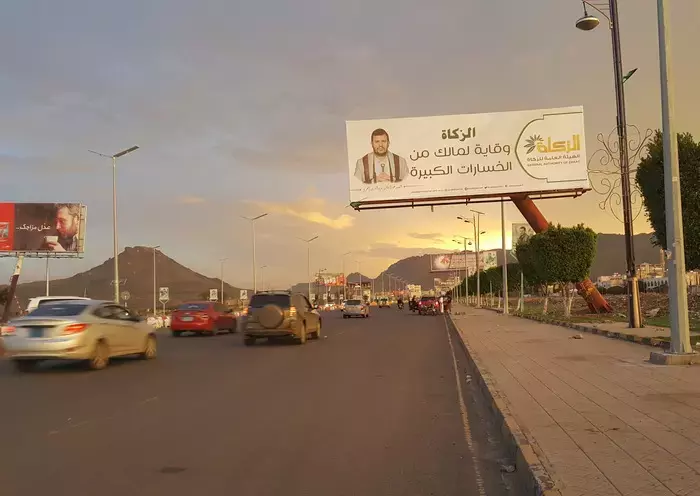
Yemen’s Houthi movement has belatedly entered the ongoing regional conflict, a move described as reluctant and influenced by weakening internal positions and evolving geopolitical pressures. The group’s participation marks a significant, albeit delayed, escalation in the wider Middle Eastern tensions that have intensified in recent months.
Information was available with The Chenab Times indicating that the Houthi decision to engage more directly in the broader regional conflict comes after a period of internal debate and external pressure. This engagement is seen by analysts as a strategic calculation aimed at bolstering their regional standing and relevance amidst a complex web of shifting alliances and escalating hostilities. The group has historically been a key player in the Yemeni civil war, often supported by Iran, and its involvement in wider regional conflicts has significant implications for stability in the Middle East.
The Houthis, officially known as Ansar Allah, control significant portions of Yemen, including the capital Sanaa. Their military actions have predominantly been focused within Yemen since the civil war began in late 2014, when they ousted the internationally recognized government. However, recent escalations involving other regional actors have apparently compelled the Houthis to alter their strategic calculus. Their delayed entry into the wider conflict is interpreted by some observers as a response to perceived shifts in the regional balance of power, potentially influenced by the activities of other state and non-state actors in the region.
This development occurs against a backdrop of increased maritime activity in the Red Sea and surrounding waters, an area crucial for global trade. The Houthis have previously launched attacks on shipping, citing solidarity with Palestinians amidst the conflict in Gaza. However, the nature and scale of their latest engagement suggest a potentially broader strategic objective beyond symbolic gestures. The group’s capacity to project power beyond Yemen’s borders has been a consistent concern for international maritime security, and any expansion of their operations is likely to be met with heightened vigilance and potential countermeasures from global powers.
The relationship between the Houthis and Iran has been a subject of extensive international scrutiny. While Iran has consistently denied providing direct military support, numerous reports and analyses suggest a degree of material and advisory backing. The timing of the Houthi’s more active regional involvement could be interpreted as a coordinated effort to increase pressure on adversaries of Iran, thereby diversifying the fronts of regional confrontation. This strategic alignment, if confirmed by further actions, could have profound implications for ongoing diplomatic efforts to de-escalate tensions across the Middle East.
Domestically, the Houthi movement has faced its own set of challenges, including internal divisions and a protracted humanitarian crisis in Yemen. The decision to engage more forcefully in regional conflicts may be partly an attempt to rally support, reassert authority, and deflect attention from persistent internal issues. The economic strain on Yemen, exacerbated by years of conflict and blockade, makes such a strategic pivot a complex undertaking, requiring careful management of resources and public opinion within the territories they control.
Regional actors, including Saudi Arabia and the United Arab Emirates, have been directly involved in the Yemeni conflict, leading a coalition to support the ousted government. While these countries have been engaged in de-escalation talks with Iran and other parties, the Houthi’s increased regional posture introduces new complexities. Any Houthi actions that destabilize maritime trade routes or escalate broader regional hostilities could potentially draw these Gulf states back into a more active, albeit possibly indirect, role in confronting the group’s expanding influence.
The international community has largely called for de-escalation and a political resolution to the Yemeni conflict. The Houthi’s latest moves are likely to complicate these efforts, potentially leading to renewed international pressure and a re-evaluation of existing diplomatic strategies. The United States and its allies have previously taken military action against Houthi targets in response to attacks on shipping. Further escalation by the Houthis could trigger a more robust international response, potentially widening the scope of the conflict and increasing the risk of direct confrontation between regional powers and their international backers.
The impact on Yemen itself is also a significant concern. While the Houthis may seek to leverage regional dynamics for domestic gain, increased involvement in wider conflicts could divert resources and attention away from pressing humanitarian needs. The protracted conflict has already devastated Yemen’s infrastructure and economy, leading to one of the world’s worst humanitarian crises. Any further militarization of the region, with Yemen as a focal point, risks exacerbating these dire conditions and prolonging the suffering of the Yemeni people.
The strategic motivations behind the Houthi’s delayed but now more prominent regional engagement remain multifaceted. Analysts suggest a combination of factors, including a desire to counter perceived isolation, respond to external provocations, and align with broader geopolitical objectives of their allies. The effectiveness and ultimate consequences of this strategic shift will likely unfold in the coming weeks and months, with significant implications for the future trajectory of the conflict in Yemen and the wider Middle East.



Global Affairs Desk at The Chenab Times covers international developments, global diplomacy, and foreign policy issues through fact-based reporting, explainers, and analytical pieces. The desk focuses on major geopolitical events, diplomatic engagements, and international trends, with an emphasis on verified information, multiple perspectives, and contextual understanding of global affairs.