


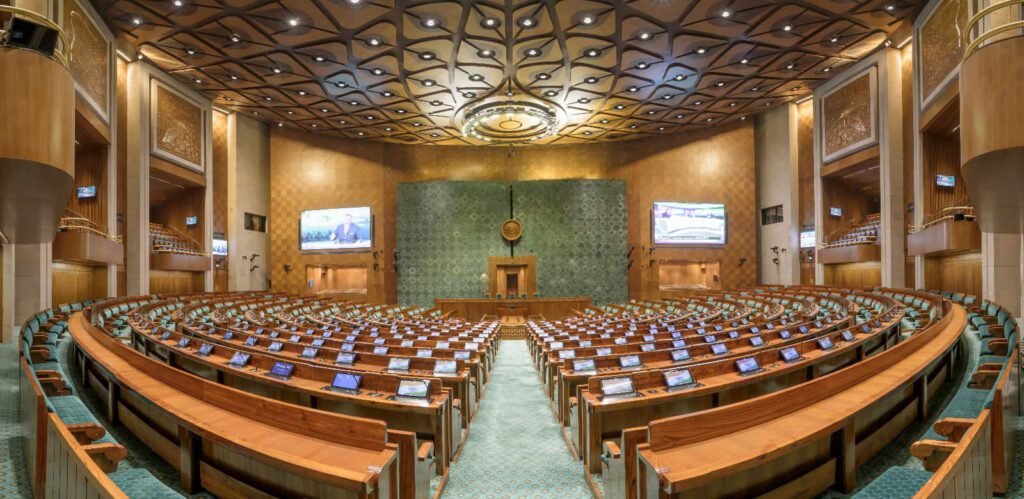
The Himachal Pradesh High Court has directed the Vidhan Sabha to release admissible pension and arrears to two former Congress MLAs who were disqualified from the state assembly. The court mandated that the payment be completed within one month, failing which the Vidhan Sabha will be liable to pay six percent annual interest on the overdue amount.
Information was available with The Chenab Times that a division bench, comprising Justice Vivek Singh Thakur and Justice Ranjan Sharma, issued the order on Friday. This ruling came in response to a petition filed by Rajinder Rana, a former MLA from Sujanpur in Hamirpur district, and Ravinder Ravi from Lahaul Spiti, who had challenged the cessation of their pensionary benefits.
The two legislators were among six Congress MLAs disqualified from the Himachal Pradesh Assembly on February 29, 2024. Their disqualification followed their cross-voting in favour of the Bharatiya Janata Party candidate Harsh Mahajan during the Rajya Sabha elections and their subsequent absence during the crucial budget-passing session. This action was taken by the assembly Speaker.
In their petition to the High Court, Rana and Ravi argued that they were members of the 12th and 13th Vidhan Sabha prior to the current legislative term. They contended that the provisions of a recent amendment to the Himachal Pradesh Legislative Assembly (Allowances and Pension of Members) Act, which sought to disentitle disqualified members from pension, should not retroactively apply to their previous tenures.
The court was informed during the proceedings that the Himachal Pradesh Vidhan Sabha had initially introduced an amendment bill concerning pension entitlement for disqualified members. However, this initial bill was reportedly withdrawn, and a new legislation has since been passed by the assembly. This new bill, awaiting the Governor’s assent, specifically states that a person elected to the 14th Legislative Assembly or any subsequent assembly will not be eligible for a pension under the Act if they have been disqualified in accordance with the 10th Schedule of the Constitution.
The six Congress MLAs who faced disqualification were Sudhir Sharma from Dharamshala, Rajinder Rana from Sujanpur, Ravinder Ravi from Lahaul Spiti, Inder Dutt Lakhanpal from Barsar, Chaitanya Sharma from Gagret, and Davinder Bhutto from Kutlehar. Their disqualification on technical grounds has significantly altered the political landscape of Himachal Pradesh, leading to bye-elections for the seats they formerly occupied.
The Himachal Pradesh Legislative Assembly (Allowances and Pension of Members) Amendment Bill 2024, which forms the crux of the legal challenge, aims to prevent individuals disqualified under anti-defection provisions from receiving pension benefits. The primary contention of the petitioners was that their pension rights accrued from their service in earlier terms, which predated the new legislative intent or the specific disqualification event under the current term.
The court’s directive to release the pension and arrears within a month signifies a move to uphold the petitioners’ claims regarding their service periods before the most recent disqualification. The imposition of interest in case of delay underscores the urgency and the court’s emphasis on timely compliance with its orders. The legal interpretation hinges on whether pensionary benefits, once accrued or partially accrued, can be entirely forfeited based on subsequent disqualifications, especially when considering past tenures.
The legal framework surrounding pension benefits for former legislators is often complex, involving service duration, specific acts, and amendments. The Himachal Pradesh case highlights the intersection of anti-defection laws and the rights of elected representatives regarding retirement benefits. The High Court’s judgment is expected to set a precedent for similar cases in the state and potentially elsewhere in India, clarifying the application of pension laws in scenarios involving disqualification.
The political ramifications of the cross-voting and subsequent disqualifications were significant, contributing to a shift in the state’s political dynamics. The pension issue, though seemingly administrative, represents a legal battle for rights claimed by former elected officials based on their past service. The court’s decision seeks to address these claims by mandating the release of withheld payments, subject to the statutory provisions and the constitutional framework.
The disqualified MLAs were elected on Congress tickets and subsequently voted against the party’s candidate in the Rajya Sabha polls, an act widely seen as a violation of the party whip. Their disqualification under the Tenth Schedule of the Constitution, commonly known as the anti-defection law, stripped them of their membership in the legislative assembly.


The Chenab Times News Desk