


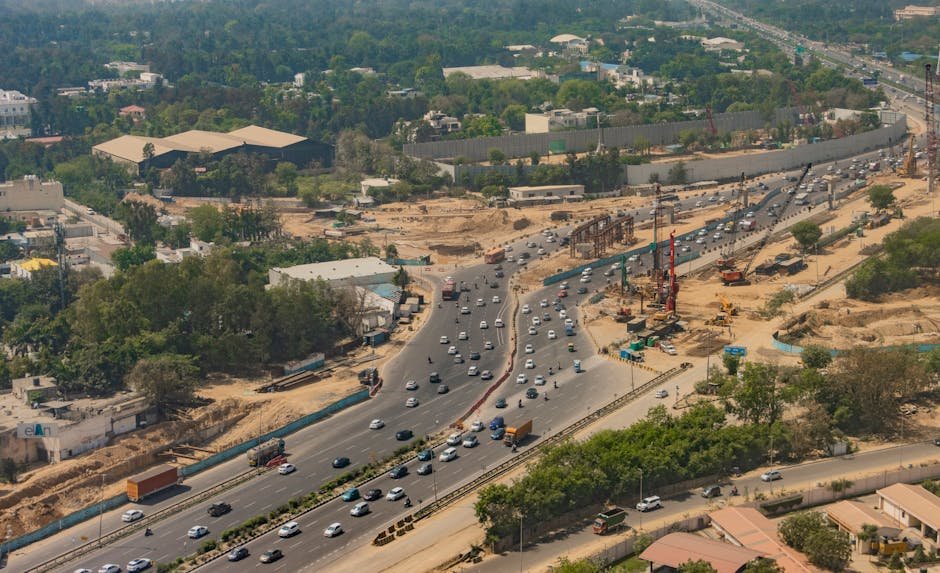
The daily commute between Gurugram and Delhi is set for a significant transformation as the Central Government plans to convert three major highway corridors, including the heavily trafficked Mehrauli-Gurugram (MG) Road, into signal-free zones. This ambitious infrastructure initiative aims to drastically reduce travel times in the National Capital Region (NCR), projecting peak-hour journeys from over an hour to as little as 15 minutes.
Information was available with The Chenab Times detailing the Union Minister of State for Road Transport and Highways, Harsh Malhotra’s, announcement in the Lok Sabha. He confirmed that major intersections such as Ashram-Badarpur and Mehrauli-Gurugram will feature the construction of multiple flyovers and advanced interchanges. Malhotra stated, “Currently, because of congestion, it takes around one to one-and-a-half hours. This travel time will be reduced. Similarly, travel time between Mehrauli and Gurgaon will be reduced to barely 15 minutes instead of the current one hour after this stretch becomes signal-free,” underscoring the government’s commitment to enhancing mobility.
In parallel with the upgrades planned for Delhi, Gurugram is slated for a substantial overhaul of its internal road networks. The National Highways Authority of India (NHAI) is set to assume responsibility for the 5.5-kilometre MG Road stretch, extending from IFFCO Chowk to the Delhi border. The plans include elevating this critical route to a ‘Model Road’ designation, complete with a multi-level interchange or cloverleaf design at IFFCO Chowk. This strategic development is expected to eliminate the traffic signals that have long been a source of commuter frustration. The revamp is being coordinated with the integration of the Regional Rapid Transit System (RRTS) and the expansion of Metro lines at IFFCO Chowk, positioning it as a central transit hub for the NCR.
The prospect of a drastically reduced commute time is anticipated to significantly impact the real estate market in Gurugram. Experts predict a surge in rental demand as professionals working in South and Central Delhi may increasingly opt for residential accommodations in Gurugram’s premium sectors. This migration is driven by the potential to access better amenities and housing options without enduring lengthy daily travel. The infrastructural changes are expected to blur the lines between the distinct urban areas, fostering a more unified and fluid urban corridor across the NCR.
Beyond the MG Road corridor, plans are also underway to address congestion at the Kalindi Kunj bottleneck and the Punjabi Bagh-Tikri border. These measures are part of a broader strategy to establish signal-free transit across key arteries within the capital region. The successful implementation of these projects is projected to yield substantial savings in terms of man-hours and fuel consumption, thereby stimulating a new phase of economic growth throughout the NCR. The initiative represents a significant step towards alleviating traffic congestion and improving the quality of life for millions of residents who commute daily between the twin cities and surrounding areas.


The Chenab Times News Desk