


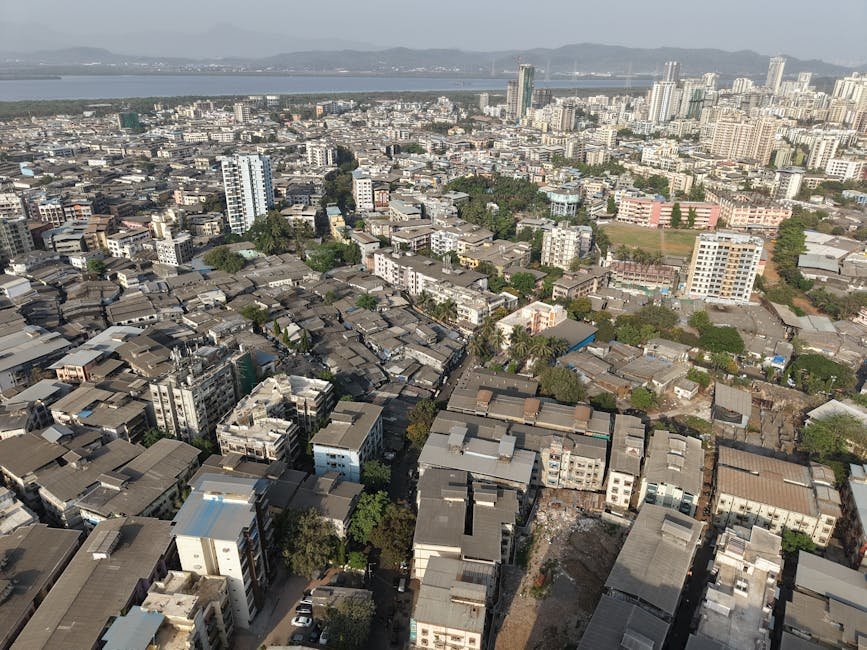
A high-powered committee appointed by the Bombay High Court has identified vehicular emissions, traffic congestion, inadequate parking management, and the prevalence of untested vehicles as primary contributors to air pollution in the Mumbai Metropolitan Region (MMR). In its preliminary report, the committee, comprising two former judges, has recommended a series of measures aimed at mitigating these issues and improving air quality across the region.
Panel’s Findings and Recommendations
The committee, formed after the Bombay High Court expressed concern over the deteriorating air quality in MMR, has pointed to vehicular emissions as a significant source of pollution. The report, submitted recently, noted that traffic jams and inefficient traffic flow exacerbate the problem. To address this, the panel has directed the traffic department to explore measures such as implementing dedicated bus lanes on wider roads. This, it is suggested, would minimize the impact on overall traffic if a bus were to break down. Furthermore, the committee has emphasized the need for preventive maintenance of vehicles to avoid mechanical failures that can contribute to congestion and emissions.
Parking mismanagement has also been flagged as a contributing factor to air pollution. The committee has called for improved strategies to manage parking, thereby reducing vehicles idling or circulating in search of parking spaces, which adds to emissions. The issue of untested vehicles, likely referring to those not meeting emission standards or lacking valid Pollution Under Control (PUC) certificates, has also been highlighted. The panel has urged for stricter enforcement, including raids on vehicles with fake PUCs, to ensure compliance with emission norms.
The committee also observed that the Mumbai Air Pollution Mitigation Plan, developed by the Brihanmumbai Municipal Corporation (BMC), should be extended to all planning authorities and local bodies. This is to ensure that ongoing construction works, including public infrastructure projects, are also subject to stringent pollution control regulations. The report was submitted to the High Court bench hearing a suo motu public interest litigation (PIL) concerning the deteriorating air quality in the MMR.
The High-Powered Committee (HPC) was formed by the High Court after it observed insufficient monitoring by civic authorities. The committee’s preliminary findings in February indicated that major sources of air pollution in MMR include vehicular emissions, construction and demolition activities, industrial emissions, and road dust. It directed the traffic department to take steps such as creating barrier-free tolls across Mumbai and surrounding areas.
Broader Context and Enforcement
The Bombay High Court has previously expressed dissatisfaction with the measures taken by civic authorities to curb air pollution, noting that the situation has worsened despite previous court orders and interventions. In response, the court constituted the HPC, comprising former Chief Justice of the Himachal Pradesh High Court Amjad A. Sayed and retired Bombay High Court Justice Anuja Prabhudessai, to monitor and supervise compliance. The committee is empowered to recommend immediate, medium-, and long-term measures for pollution control.
Recent surveys of sites with poor air quality index (AQI) across Mumbai and Navi Mumbai have revealed a significant lack of compliance with existing pollution control guidelines. Panels have noted that while standard operating procedures exist, their on-ground implementation has been inadequate. Measures like water sprinklers, fogging, and smog guns have often been deployed in a limited or cosmetic manner, and vehicles carrying demolition waste have lacked tracking systems. Road cleaning activities have, at times, contributed to spreading pollution rather than suppressing it.
The court has also expanded the scope of the committee’s mandate, directing it to examine emissions from neighboring cities that may be affecting Mumbai’s air quality. This reflects an understanding that air pollution is a regional issue, not confined to the city limits alone. The committee is expected to propose broader regional measures to address pollution originating from adjoining urban centers, drawing parallels to how pollution in Delhi is often linked to activities in neighboring states.
The panel’s observations underscore the complex nature of air pollution in a densely populated metropolitan region. While vehicular traffic and construction are identified as major sources, the effectiveness of current regulatory and enforcement mechanisms remains a concern. The court’s proactive stance through the formation of the HPC signifies a strong commitment to addressing environmental challenges and ensuring accountability among the various authorities responsible for air quality management in the Mumbai Metropolitan Region.


The Chenab Times News Desk