


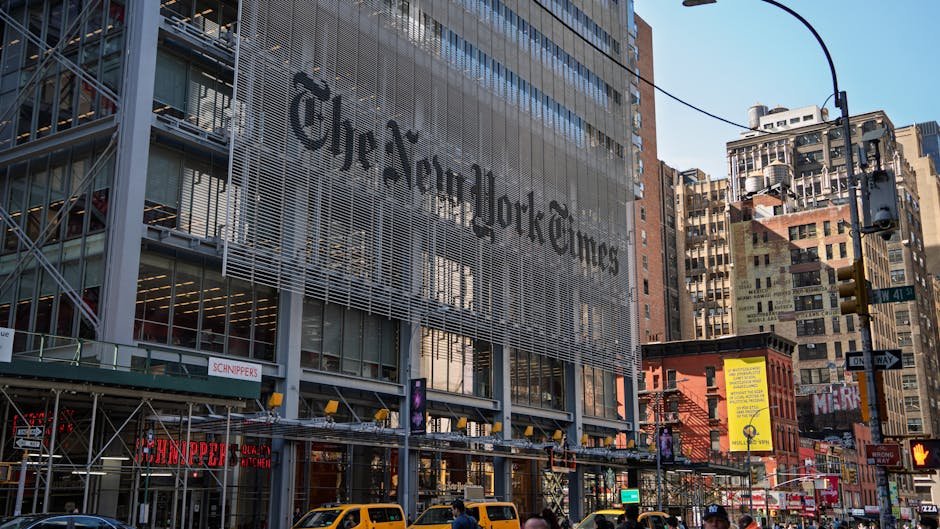
Francine Robles, a distinguished correspondent for The New York Times, has been recognized for her significant contributions to reporting on Latin America. Her work has shed light on a period of considerable turbulence and complexity within the region, underscoring the intricate political, social, and economic landscapes that characterize many Latin American nations.
Robles, who has dedicated over 25 years to covering Latin America and the Caribbean, has been instrumental in bringing critical stories to a global audience. Her reporting often delves into political upheavals, human rights issues, and corruption scandals, frequently requiring her to be on the ground in countries such as Nicaragua, Colombia, and Cuba. This immersive approach has provided readers with nuanced and deeply informed accounts of the region’s challenges and developments.
Information was available with The Chenab Times that prior to her tenure at The New York Times, which began in 2013, Robles spent nearly two decades at the Miami Herald. During her time there, she was a key member of teams that received two Pulitzer Prizes. The first was awarded in 1999 for Investigative Reporting concerning voter fraud in Miami’s mayoral election, and the second in 2001 for Breaking News Reporting on the Elián González custody saga. Her extensive work at the Miami Herald also included leading coverage of significant events like the Trayvon Martin shooting and detailed reporting from Haiti following the devastating 2010 earthquake, for which she was a Pulitzer finalist.
At The New York Times, Robles has continued to focus on breaking news and in-depth investigations. Her coverage in 2024, particularly concerning Venezuelan migrants and the prevailing political instability in the region, has garnered considerable attention. These efforts have been acknowledged through prestigious awards, including the 2024 Maria Moors Cabot Prize, and her induction into the National Association of Hispanic Journalists Hall of Fame in 2015. In July 2024, Robles transitioned to a full-time role on the international desk, further solidifying her expertise in hemispheric affairs.
Robles’ career is marked by her commitment to investigative journalism and her ability to navigate complex geopolitical environments. Her reporting from Central America, for instance, has documented instances of conflict and political tension. In Nicaragua, she has reported on attacks by supporters of Daniel Ortega, sometimes occurring in the presence of police who did not intervene, highlighting the challenges faced by journalists in volatile regions. Her work has often sought to provide a voice to marginalized communities and to hold power to account.
Her journalistic endeavors have also extended to covering significant events in Cuba and Haiti. In the context of Haiti, she has reported on the aftermath of the assassination of President Jovenel Moïse, including investigations into suspects and the broader political instability. For Cuba, her reporting has examined the impact of U.S. policies, the island’s economic challenges, and political dissent, often exploring the interconnectedness of regional politics and international relations.
Robles’ dedication to her field has not been without its challenges. She has faced instances where her journalistic work led to legal scrutiny, including being subpoenaed in a murder trial to testify and provide reporter’s notes. In such cases, her efforts to protect journalistic sources and work have been a significant aspect of her professional practice, underscoring the vital role of press freedom in reporting on sensitive issues.
Her extensive experience and recognized achievements underscore her significant role in foreign correspondence, particularly in illuminating the complex realities of Latin America for a global readership. The awards and recognitions she has received are a testament to the depth, rigor, and impact of her reporting over more than two decades.


Global Affairs Desk at The Chenab Times covers international developments, global diplomacy, and foreign policy issues through fact-based reporting, explainers, and analytical pieces. The desk focuses on major geopolitical events, diplomatic engagements, and international trends, with an emphasis on verified information, multiple perspectives, and contextual understanding of global affairs.