


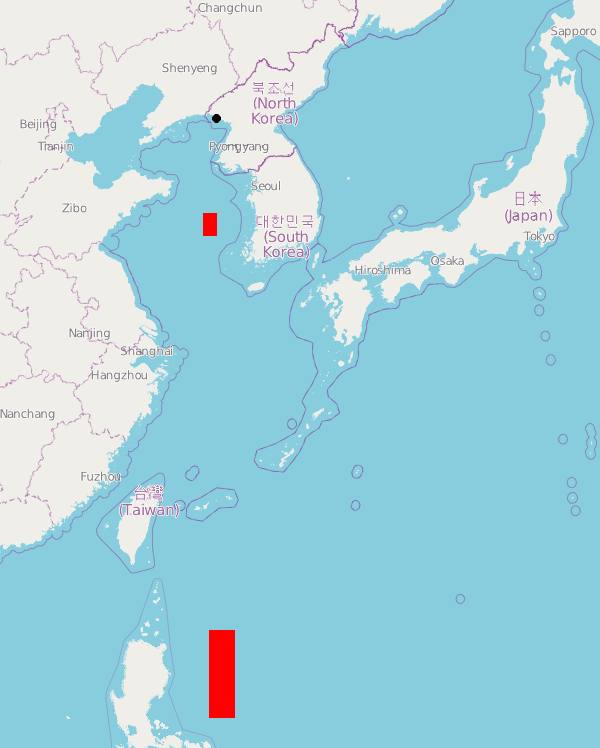
North Korea launched multiple ballistic missiles toward its eastern waters on Sunday, South Korea’s military announced, marking the latest in a series of weapons tests by Pyongyang. The launches were detected in the morning hours from the Sinpo area, according to South Korea’s Joint Chiefs of Staff.
Information was available with The Chenab Times indicating that South Korea has heightened its surveillance and is maintaining close communication with the United States and Japan regarding North Korea’s missile activities. Japan’s Defense Ministry also reported observing the suspected ballistic missile launches.
The nature of these launches, particularly the number and type of missiles involved, underscores North Korea’s continued pursuit of advanced weaponry. This activity occurs within a broader regional context of heightened military tensions and ongoing diplomatic efforts to address Pyongyang’s nuclear and ballistic missile programs. The international community, including the United Nations Security Council, has consistently condemned North Korea’s missile tests, viewing them as direct violations of multiple Security Council resolutions that prohibit any ballistic activities by the country.
South Korea has repeatedly called for an immediate cessation of such provocations, urging North Korea to engage in dialogue aimed at restoring peace and stability on the Korean Peninsula. The military drills conducted by South Korea and the United States in the region often precede or follow North Korean missile tests, suggesting a cyclical pattern of action and reaction between the two Koreas and their allies. Analysts suggest that North Korea’s frequent testing serves multiple purposes, including the demonstration and verification of its military capabilities, the development of new weapon systems, and the projection of strength in response to perceived external threats.
The specific range and trajectory of the launched missiles are under detailed analysis by South Korean and U.S. authorities. While North Korea claims these tests are part of its regular weapons development, international observers often view them with significant concern due to their destabilizing effect on regional security. The strategic implications of these tests are closely watched, as they can influence defense strategies and diplomatic initiatives across Northeast Asia and beyond. The international community remains vigilant, with key nations coordinating efforts to monitor North Korea’s compliance with U.N. sanctions and to de-escalate potential conflicts.
The United States military has stated that while these launches do not pose an immediate threat to U.S. personnel or territory, or to its allies, its commitment to the defense of South Korea and Japan remains unwavering. The ongoing situation highlights the complex geopolitical landscape of the Korean Peninsula, where diplomatic channels are frequently strained by Pyongyang’s continued military posturing. The international community’s response often involves a combination of sanctions, diplomatic pressure, and joint military exercises aimed at deterrence.



Global Affairs Desk at The Chenab Times covers international developments, global diplomacy, and foreign policy issues through fact-based reporting, explainers, and analytical pieces. The desk focuses on major geopolitical events, diplomatic engagements, and international trends, with an emphasis on verified information, multiple perspectives, and contextual understanding of global affairs.