


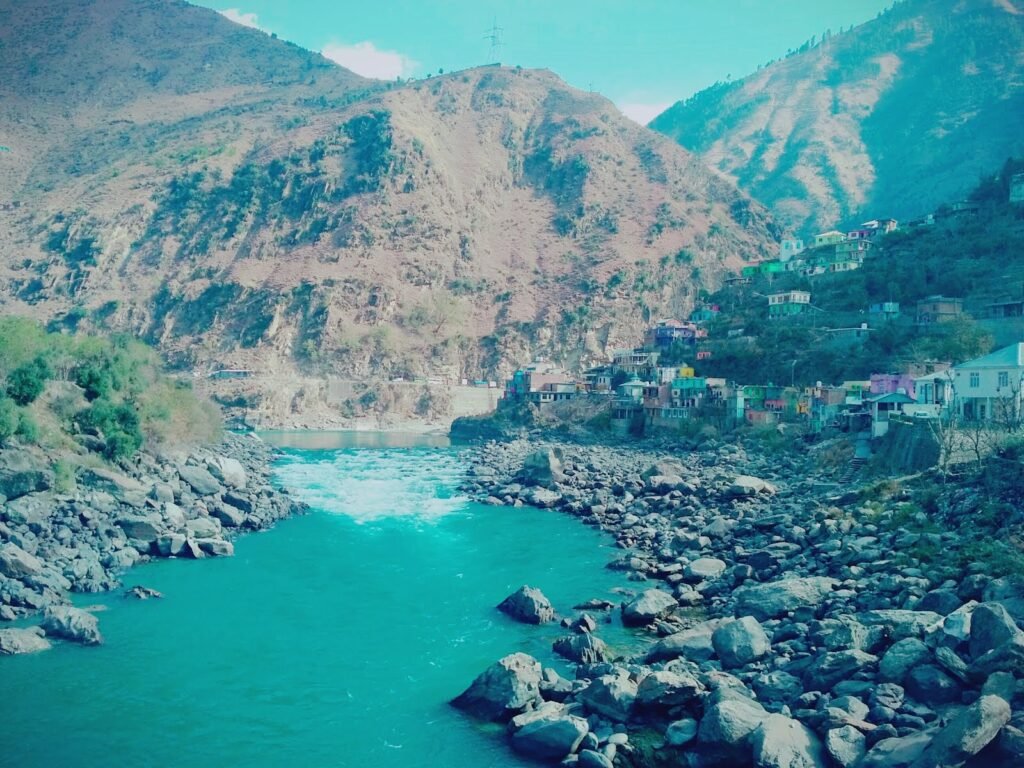
Bhaderwah April 21: Unprecedented snowfall in the upper reaches of the Chenab region has created perilous conditions for Bakerwal tribal communities undertaking their biannual migration from the plains of Jammu to the high-altitude pastures of Doda and Kishtwar districts.
Information was available with The Chenab Times that hundreds of nomadic families, accompanied by their livestock, are facing significant challenges during their journey to high-altitude pastures. The Chattergalla Pass, a critical route, has become increasingly treacherous due to erratic weather, including snowstorms, heavy rainfall, and sudden avalanches.
Each year, as winter recedes, the Bakarwal and Gujjar tribes embark on their seasonal migration, a tradition passed down through generations. This year’s severe weather has amplified the inherent dangers of this arduous profession.
Abdul Majeed, 85, from Basholi, described the migration as a life-threatening endeavor with no alternative for his community. He stated that despite the loss of goats, horses, and sometimes even young children and elderly individuals due to hostile weather, no government aid is provided. Families are forced to continue the profession inherited from their forefathers, with educated members also compelled to join due to a lack of employment opportunities.
Hundreds of Bakerwal families commence their migration with thousands of livestock from the plains of Kathua, Samba, and Jammu districts, heading towards the high-altitude meadows of Doda and Kishtwar districts. This journey typically takes about a month to reach their summer grazing lands.
Nishata Begum, 63, from Kathua, recounted her experience of a snowstorm at Sarthal and Chattergalla, which resulted in the deaths of several young goats and left her family without food for three days. She expressed hope for a safe arrival at their destination in Machail, Padder area of Doda District. Begum noted that the migration period, once a time of joy, has now become an occasion for mourning livestock losses and facing hostility from locals. She highlighted the plight of her two graduate sons who, despite belonging to the ST category, could not secure government jobs and were thus forced into the traditional nomadic profession.
Saddam Chohan, 14, shared his disheartening experience upon reaching Chattergalla after an initial excitement about the journey from his home in Lakhanpur. He witnessed the loss of several goats in a snowstorm, feeling helpless as a spectator. He acknowledged the inevitability of continuing the profession practiced by his father and grandfather.
In response to the challenges faced by the migrating tribes, the Divisional Forest Officer (DFO) Bhaderwah, Devinder Kumar, has constituted a team of officials, led by Range Officer Sameer Rishu. This team is tasked with ensuring that the nomads do not encounter any hostility while traversing forest areas. Range Officer Rishu stated that several hundred families have entered the Bhaderwah Forest over the past fortnight, and his team is providing round-the-clock assistance, enabling them to continue their journey even during nighttime hours.
Rishu appealed to the local population to welcome the tribals as guests rather than treating them as trespassers. He emphasized their integral role in the forest ecosystem, highlighting their centuries-old symbiotic relationship where they depend on forests for sustenance and actively conserve biodiversity through sustainable practices. He further noted that their culture and knowledge are deeply connected to nature, positioning them as guardians of the forest.
According to figures from the Chattergalla check post, approximately 250 Bakerwal families have crossed the checkpoint in the last ten days. Nomadic tribes traditionally move with their livestock to the upper slopes of the northern Himalayas during the summer months and return to the plains in winter, covering hundreds of miles on foot along challenging routes.
Official statistics indicate that there are about 2.5 million Gujjar and Bakarwal people in Jammu and Kashmir. Of this population, approximately 500,000 are nomads who rely on rearing buffalo, sheep, goats, and horses for their livelihood.


The Chenab Times News Desk