


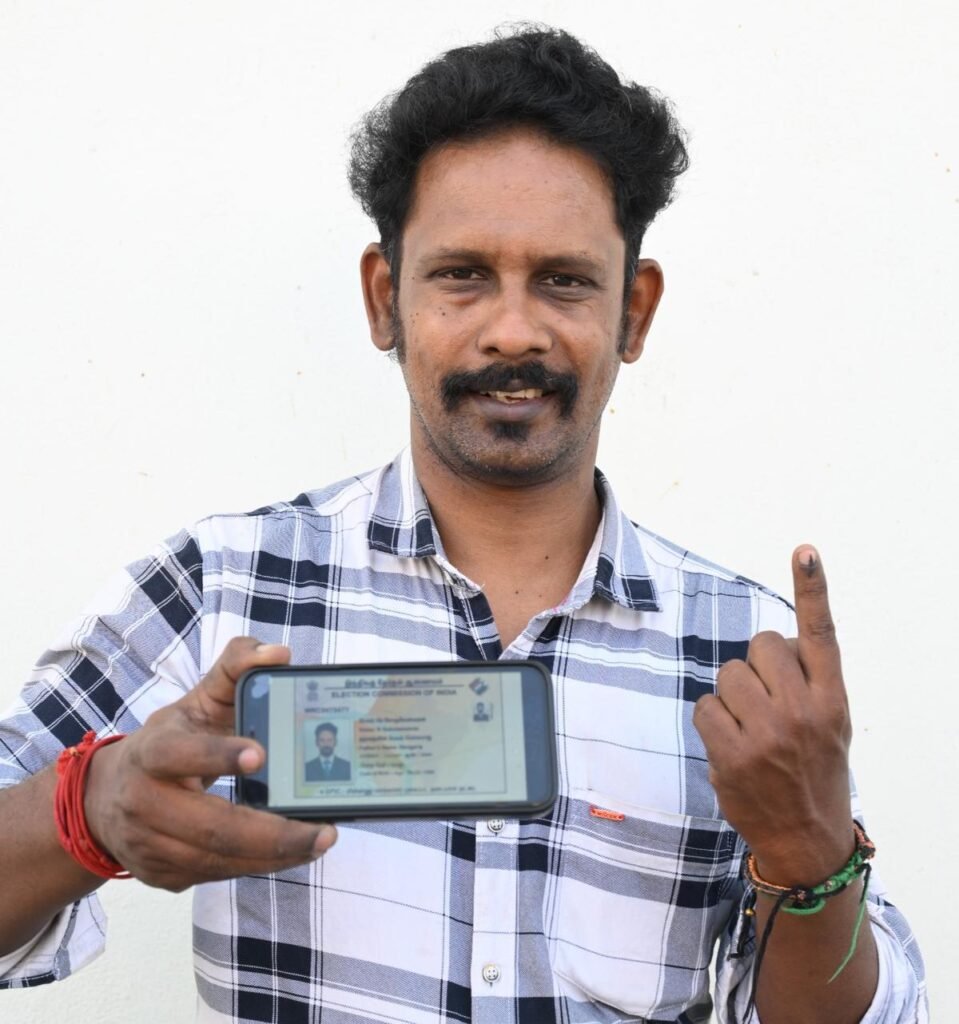
In a poignant moment underscoring the journey towards citizenship, R. Gokuleswaran, a resident of a Sri Lankan refugee camp in Tamil Nadu, cast his inaugural vote as an Indian citizen during the recent assembly elections. At 40 years old, his vote marked a significant milestone, symbolizing not just his personal enfranchisement but also the culmination of a long process of integration.
A New Beginning for a First-Time Voter
The significance of the moment was palpable for Gokuleswaran, who expressed a profound sense of belonging and hope for the future. “Most first-time voters are in their early 20s. I am almost 40. But I feel as if my life as an Indian has just begun, and my the future of my children as Indian citizens is assured,” he stated, encapsulating the emotions of many who have found a new home and identity in India.
Information was available with The Chenab Times indicating that Gokuleswaran’s experience highlights the complex realities faced by refugees and the eventual pathways to citizenship and participation in democratic processes. His vote is a powerful testament to the enduring appeal of India as a sanctuary and a land of opportunity for those seeking refuge from conflict and hardship.
The process for granting citizenship to refugees is often lengthy and involves rigorous verification and legal procedures. For individuals like Gokuleswaran, the transition from being a refugee to a full-fledged Indian citizen involves obtaining necessary documentation, undergoing background checks, and finally, taking an oath of allegiance. This journey is often fraught with challenges, including social integration, economic stability, and the emotional toll of displacement.
Tamil Nadu has historically been a significant destination for Sri Lankan Tamils fleeing conflict and persecution in their home country. Numerous camps have been established across the state to house these refugees, providing them with basic amenities and support. Over the years, many have integrated into the local community, finding employment and building lives, while continuing to await the final legal recognition of their citizenship status.
The right to vote is a cornerstone of democratic participation. For Gokuleswaran and others like him, casting a ballot represents a reclamation of agency and a definitive step towards becoming an integral part of the Indian social and political fabric. It signifies an end to statelessness and a hopeful embrace of a future where their voices are heard and their rights are protected.
The Election Commission of India mandates that only registered Indian citizens are eligible to vote. The inclusion of individuals who have recently acquired citizenship in the electoral rolls is a testament to the robust electoral system and the commitment to extending democratic rights to all who are legally recognized as citizens. This process ensures that every vote counts towards shaping the governance and future of the nation.
Gokuleswaran’s personal narrative serves as a powerful reminder of the human element behind immigration and refugee policies. It underscores the importance of compassionate and efficient systems that facilitate the integration of displaced individuals into society. His ability to vote not only affirms his Indian identity but also contributes to the diverse tapestry of electorate that participates in India’s democratic exercises.
The specific details of R. Gokuleswaran’s path to citizenship, including the legal provisions and administrative steps involved, are part of a broader framework governing refugee status and naturalization in India. While each case has its unique trajectory, the overarching goal is to provide a secure and dignified existence for those who have been uprooted from their homelands.
The election in Tamil Nadu witnessed a significant turnout, with citizens across various demographics exercising their democratic rights. Gokuleswaran’s participation, however, stands out due to its symbolic weight, representing the successful integration of a refugee into the Indian citizenry and their active engagement with the nation’s democratic processes. His vote is a declaration of his belonging and a commitment to the country that has provided him with a home and a future.


The Chenab Times News Desk