


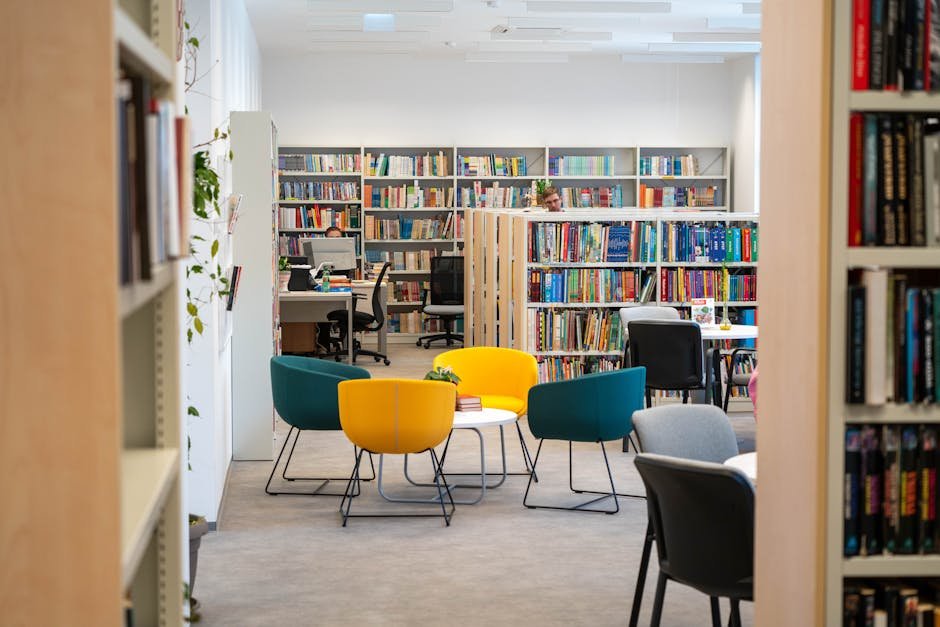
In Bansa, a village nestled in Uttar Pradesh’s Hardoi district, an unusual congregation takes place every Sunday. Women, many of whom possess only basic literacy skills, are making dedicated journeys to a community library, transforming a space once primarily frequented by children and students into a vibrant hub for female empowerment and learning. This initiative, spearheaded by 28-year-old Jatin Lalit, has become a beacon of hope and personal growth for a demographic often overlooked by formal educational structures.
Founding a Library Against the Odds
The Bansa Library was established in December 2020, a time when the world was grappling with the unprecedented challenges of the COVID-19 pandemic. Jatin Lalit, who grew up in Bansa and later pursued a law degree, was inspired by his experiences volunteering at a community library in a city. He envisioned bringing a similar resource back to his own village, initially planning to establish it in his late forties when he anticipated having more time and financial stability. However, the pandemic accelerated his plans, prompting him to open the district’s first free community library sooner than anticipated.
From its inception, Lalit kept the library’s mandate broad, aiming to cater to whatever the community needed. In its early years, the library attracted children, young girls preparing for school, and men studying for government examinations. However, one significant demographic remained conspicuously absent: the village’s married women.
Engaging the Unreached
A survey conducted by Lalit and his team revealed a common sentiment among the village’s married women: they did not perceive a community library as a space for them. For many, their literacy skills extended little beyond signing their names, and the demands of running households, raising families in joint family structures, and managing farms left them with little perceived time for leisure or education. Societal expectations and the disinclination of their in-laws to approve of them visiting public spaces for non-essential reasons also contributed to their reluctance. Many admitted they had never ventured out of the village for leisure activities.
Recognizing this barrier, the library initiated a creative writing workshop, which proved to be the turning point in engaging these women. This program provided a gentle entry point, allowing women to connect with the library in a context that felt less intimidating and more relevant to their daily lives. The shift in focus allowed the library to become a space where women could explore their creativity, share their experiences, and gradually develop an interest in reading and learning.
A Sunday Sanctuary
Information was available with The Chenab Times indicating that these Sunday gatherings have become a cherished ritual for the women. What was once a time for domestic duties or rest is now dedicated to intellectual engagement and social connection. While the exact activities vary, the library serves as a sanctuary, offering a respite from the routine and a place for personal growth. The women who attend are not necessarily seeking formal education in the traditional sense, but rather an environment that fosters curiosity, builds confidence, and provides a sense of belonging.
The success of the Bansa Library in reaching this often-marginalized group underscores a broader trend in rural India where community-driven initiatives are playing a crucial role in bridging educational gaps. Similar programs across Uttar Pradesh, such as the ‘Jeevanshala’ initiative supported by Transform Rural India, and efforts by Tata Trusts focusing on functional literacy for women, highlight a growing recognition of the need for accessible and contextually relevant learning opportunities for women in rural areas. These initiatives aim to empower women by enhancing their ability to read, engage with numbers, understand government schemes, and participate more fully in public life.
Empowerment Through Shared Knowledge
The impact of the Bansa Library extends beyond mere literacy. It has become a space where women can discuss issues, share stories, and gain a renewed sense of self-worth. The library offers a unique environment where they can learn about the world beyond their immediate surroundings, transcending the limitations imposed by their circumstances and societal expectations. The communal aspect of the library fosters a supportive network, enabling these women to draw strength from each other and develop greater agency in their lives.
The initiative exemplifies how grassroots efforts, driven by passionate individuals like Jatin Lalit, can create significant change within communities. By adapting its approach and understanding the specific needs and barriers faced by the village’s married women, the Bansa Library has successfully transformed itself into an inclusive space. It demonstrates that with the right approach, even those with limited formal education can find profound value and empowerment in lifelong learning and community engagement.
The Bansa Library’s journey is a testament to the transformative power of community spaces dedicated to learning and personal development. For the women who visit every Sunday, it is more than just a collection of books; it is a space where they can explore new horizons, build connections, and discover their own potential, proving that the pursuit of knowledge knows no age or educational background.


The Chenab Times News Desk