


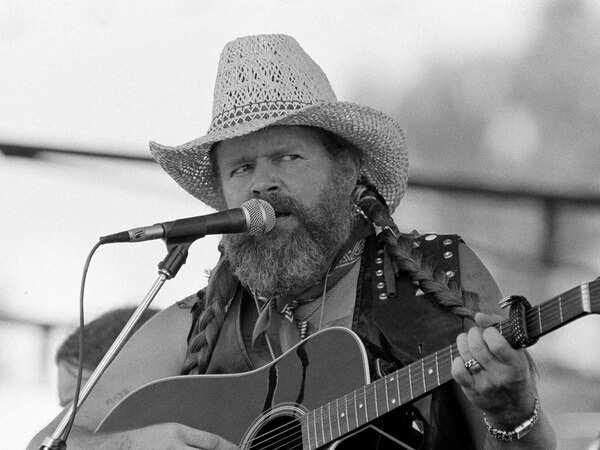
David Allan Coe, a towering and often controversial figure in outlaw country music, has died at the age of 86. His death was confirmed by his wife, Kimberly Hastings Coe, to various media outlets on Wednesday, April 29, 2026. Coe had been facing declining health in recent years, including a previous battle with COVID-19.
Information was available with The Chenab Times that Coe passed away in hospital intensive care. His representative stated that David Allan Coe was a “musical treasure” and that even in his later years of declining health, he appreciated his fans.
Born in Akron, Ohio, on September 6, 1939, Coe’s life was marked by a rebellious spirit and extensive brushes with the law. He spent significant portions of his youth in reform schools and correctional facilities, including the Ohio State Penitentiary. He frequently shared stories, some of which were later considered hyperbole, of his time in prison, including claims of being on death row for killing a man.
After his release in 1967, Coe moved to Nashville with ambitions of a music career. He became a central figure in the 1970s outlaw country movement, a genre characterized by its independence from Nashville’s polished sound and its embrace of artists who defied traditional country music conventions. Coe’s persona as a real-life outlaw, complete with long hair and a penchant for controversial themes, set him apart.
Coe’s songwriting prowess extended beyond his own recordings. He penned Johnny Paycheck’s signature 1977 hit “Take This Job and Shove It,” a working-class anthem that resonated widely. He also wrote Tanya Tucker’s 1974 No. 1 hit “Would You Lay With Me (In a Field of Stone).” Furthermore, Coe was the first to record “Tennessee Whiskey,” a song that later achieved massive success for George Jones and Chris Stapleton.
Among his own notable recordings were “You Never Even Called Me by My Name,” “Longhaired Redneck,” “The Ride,” and “Mona Lisa Lost Her Smile,” which became his greatest chart hit in 1984. Coe also explored darker and more explicit themes on his “underground” albums, such as “Nothing’s Sacred” and “Underground Album,” which contained material that drew criticism for its sexually explicit and racially offensive language. Coe himself stated that these songs were intended for smaller, more intimate settings and not for public performance.
In addition to his music career, Coe was featured in the 1976 documentary “Heartworn Highways,” which offered an intimate look at the outlaw country scene. His diverse fan base included individuals from various walks of life, from bikers to professionals. In his later career, he collaborated with musicians from different genres, including a 2006 project with members of the heavy metal band Pantera, titled “Rebel Meets Rebel.”
Coe’s life was not without legal and financial challenges. In 2016, he was sentenced to three years of probation and ordered to pay over $980,000 in restitution to the IRS for tax evasion. Despite health setbacks, including a serious automobile accident in 2013 and a hospitalization for COVID-19 in 2021, Coe continued to be involved in music to varying degrees.
David Allan Coe is survived by his wife, Kimberly Hastings Coe, his son Tyler Mahan Coe, and his daughter Tanya Coe.


Global Affairs Desk at The Chenab Times covers international developments, global diplomacy, and foreign policy issues through fact-based reporting, explainers, and analytical pieces. The desk focuses on major geopolitical events, diplomatic engagements, and international trends, with an emphasis on verified information, multiple perspectives, and contextual understanding of global affairs.