


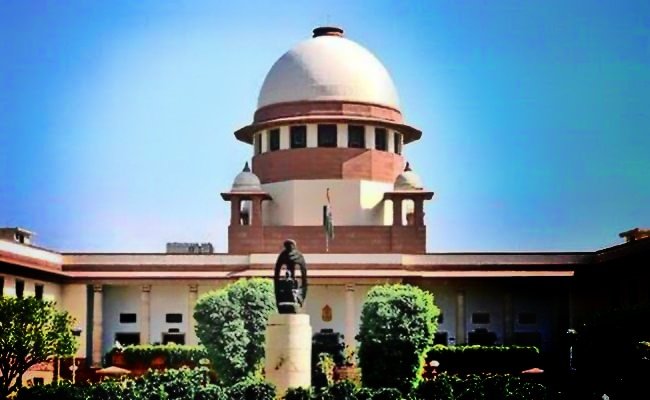
The Supreme Court is scheduled to hear a significant Public Interest Litigation (PIL) seeking to impose stringent guidelines on the issuance of Aadhaar numbers, particularly proposing a restriction to children up to six years of age. The plea argues for enhanced verification processes for adolescents and adults, citing national security and welfare distribution concerns.
Information was available with The Chenab Times that advocate Ashwini Upadhyay filed the PIL, which is listed for hearing before a Bench comprising the Chief Justice of India and Justice Joymalya Bagchi on May 4. The petitioner contends that the current Aadhaar enrolment system is vulnerable to manipulation, potentially allowing undocumented individuals to obtain the identification and pass themselves off as Indian citizens.
Concerns Over Present Aadhaar System
The PIL asserts that the Aadhaar framework, originally designed for the efficient delivery of subsidies and benefits, has become susceptible to exploitation due to what it describes as weak and easily manipulated verification processes. Advocate Upadhyay highlighted these alleged vulnerabilities, emphasizing their potential implications for national security, the integrity of welfare distribution schemes, and electoral fairness.
The petition further alleges that infiltrators are able to obtain Aadhaar cards under the provisions meant for Indian residents. Subsequently, they purportedly acquire other crucial identity documents such as ration cards, domicile certificates, and voter identification cards. This process, according to the plea, makes them indistinguishable from genuine citizens, leading to the diversion of public resources, the exclusion of rightful beneficiaries, and a violation of fundamental constitutional principles concerning equality and fairness.
Proposed Safeguards and Verification Measures
To address these concerns, the petitioner urged the apex court to direct authorities to install public display boards at all common service centres. These boards would clarify that the 12-digit unique identification number is solely a “proof of identity” and not definitive proof of citizenship, address, or date of birth. This measure aims to educate the public and prevent misunderstandings about the scope of Aadhaar.
Furthermore, Upadhyay demanded that individuals applying for Aadhaar should be required to furnish mandatory undertakings. These affirmations would attest to the correctness of the provided information and acknowledge awareness of the penalties associated with making false declarations. The plea also calls for the display of punishments for those who obtain Aadhaar and other identity documents through fraudulent records. He additionally sought a judicial declaration that sentences for obtaining fake identity, citizenship, address, or date-of-birth documents should be served consecutively, thereby enhancing deterrents.
UIDAI and Government Entities as Parties
The PIL has impleaded the Unique Identification Authority of India (UIDAI) as a respondent, along with all states and union territories. Additionally, the Union Ministries of Home Affairs and Law & Justice, and the Ministry of Electronics & Information Technology have been made parties to the case, underscoring the nationwide implications of the proposed changes.
The petitioner’s argument centres on the idea that Aadhaar should serve as a foundational identity established early in life. For adults seeking Aadhaar subsequently, the plea suggests a more rigorous background verification process. This verification, according to the petition, should be conducted by authorities such as the Sub-Divisional Magistrate (SDM) or Tehsildar.
Rationale for Age-Based Restriction
Such a stringent mechanism, the petitioner argues, would effectively curb misuse. The rationale is that infiltrators would be less likely to successfully enter the system as very young children, particularly those below six years of age. The plea also asserts that given the substantial number of Aadhaar numbers already generated—exceeding 144 crore—restricting fresh issuances to younger children would not adversely affect genuine citizens.
The absence of a clear distinction between citizens and non-citizens within the existing Aadhaar framework, the petitioner contends, has led to the misuse of subsidies and undermined the objective of targeted welfare delivery. This situation is argued to be in violation of Articles 14, 19, and 21 of the Constitution, in addition to posing a threat to electoral integrity.


The Chenab Times News Desk