


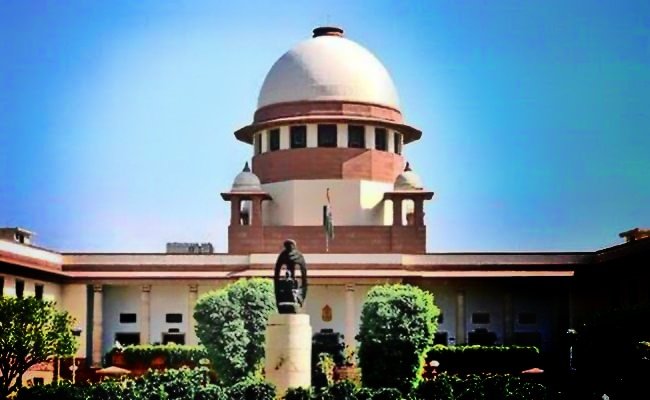
The Supreme Court has refused to interfere with an order passed by the Madras High Court directing a Central Bureau of Investigation (CBI) probe into the purchase of transformers. The apex court stated that it was not inclined to entertain the special leave petition filed against the High Court’s directive and that the investigation should proceed independently.
SC Refuses to Stay Madras HC Order on CBI Probe
The Supreme Court’s decision means that the CBI investigation into the procurement of transformers, as ordered by the Madras High Court, will continue without any hindrance or influence from observations made by the High Court. The apex court’s bench, while disposing of the special leave petition, made it clear that the investigative agency should carry out its duties impartially.
According to details received by The Chenab Times, the case pertains to allegations of irregularities in the purchase of transformers, a crucial component for the state’s power infrastructure. The Madras High Court had previously mandated a CBI inquiry, prompting the current appeal to the Supreme Court.
The specific details of the transformer purchase, including the quantum of alleged financial irregularities or the entities involved, were not elaborated upon in the Supreme Court’s proceedings related to the special leave petition. However, the High Court’s initial order for a CBI probe suggests that there were significant concerns raised regarding the transparency and fairness of the procurement process.
The Supreme Court’s stance on such matters often emphasizes the importance of allowing investigative agencies to function without undue interference. By declining to intervene, the apex court has reinforced the authority of the Madras High Court’s order and signaled its confidence in the CBI’s ability to conduct a thorough and impartial investigation.
The procurement of essential infrastructure components like transformers is a matter of significant public interest, as it directly impacts the delivery of services such as electricity to citizens. Allegations of corruption or impropriety in such dealings can lead to substantial financial losses and affect the operational efficiency of public utilities.
In instances where high courts order CBI probes, the Supreme Court typically reviews such orders to ensure they are based on sound legal reasoning and sufficient grounds. The refusal to stay the order indicates that the Supreme Court found no compelling reason to override the Madras High Court’s directive, at least at this preliminary stage of the appeal.
The implications of the Supreme Court’s decision are that the CBI will now intensify its investigation into the transformer purchase case. The agency is expected to gather evidence, record statements, and examine records related to the procurement process. The outcome of the investigation could potentially lead to further legal proceedings, depending on the findings.
The public sector undertaking responsible for the procurement, likely a power distribution company or a related entity, will now be under scrutiny. Such investigations are crucial for maintaining accountability in public administration and ensuring that taxpayer money is utilized effectively and ethically.
While the Supreme Court did not elaborate on its reasoning for not entertaining the appeal beyond stating its disinclination, such pronouncements often stem from a desire to uphold the findings of lower courts unless there is a clear error of law or fact. The High Court, in its original order, would have likely cited specific grounds necessitating a CBI inquiry, which the Supreme Court did not find sufficient cause to set aside.
This development underscores the robust oversight mechanisms in India’s legal system, where judicial review at multiple levels can address concerns related to administrative actions and potential malfeasance. The independent functioning of investigative agencies, supported by judicial directives, is a cornerstone of ensuring governance standards.
The Tamil Nadu power sector, like many others across the country, relies on timely and cost-effective procurement of equipment to maintain and upgrade its infrastructure. Any deviation from due process in such purchases can have long-term ramifications for the state’s energy security and economic development.
The CBI, upon receiving the go-ahead from the Supreme Court, will likely initiate its inquiry by seeking relevant documents from the concerned authorities. The process may involve examining tender documents, contractual agreements, and financial records to ascertain if there were any anomalies, cartelization, or undue influence in the bidding and selection process for the transformers.
Further developments in the case will depend on the progress of the CBI investigation and any subsequent reports or charges filed by the agency. The Supreme Court’s decision allows the judicial process concerning this matter to move forward as per the directives of the Madras High Court.


The Chenab Times News Desk