


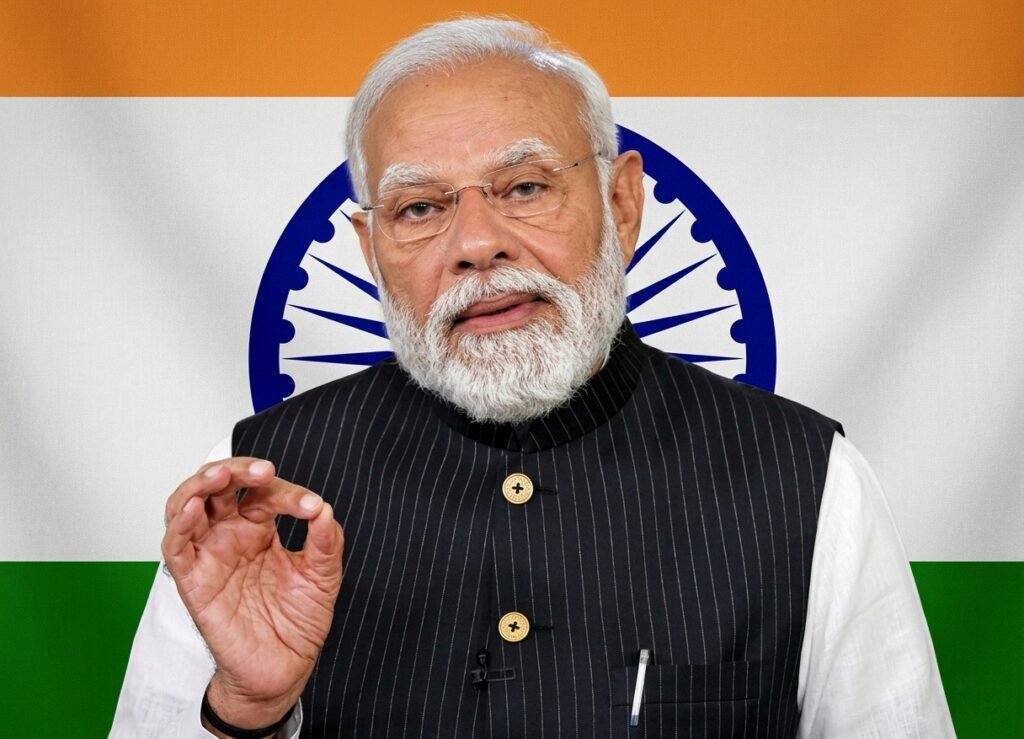
An appeal by Prime Minister Narendra Modi urging citizens to defer gold purchases for approximately one year has generated considerable anxiety among jewellers and consumers in Ludhiana, Punjab. The statement, intended to influence economic sentiment, has reportedly begun impacting market dynamics, leading to concerns about future sales and investment security.
Information was available with The Chenab Times indicating that members of the jewellery trade have been fielding numerous calls from apprehensive customers. This uncertainty reflects a growing unease regarding upcoming purchases, with the Prime Minister’s remarks casting a shadow over the sector.
Anand Sekri, president of the Ludhiana Jewellers Association, highlighted the palpable effect of the appeal. He stated that jewellers are reporting a noticeable decline in customer footfall since the Prime Minister’s comments were made public. While international market forces largely dictate gold prices, Sekri acknowledged that such public statements possess the power to significantly sway consumer sentiment.
The timing of the appeal has particularly concerned residents, especially homemakers with families planning weddings later in the year. One such individual, who requested anonymity, expressed her heightened stress due to the prevailing uncertainty. She emphasized the traditional importance of gold as an investment for Indian brides and noted that her jeweller had advised early purchases due to market volatility. However, she added that a lack of immediate liquidity presents a significant challenge.
Jewellers in the city have observed a general slowdown in demand since April, with some outlets reportedly offering modest discounts in an attempt to stimulate sales. Amit Mehra of Jagan Nath Ram Sahai and Sons, a long-established jewellery business in Ludhiana, reported that while there has not been a drastic immediate impact, the number of panic calls from buyers concerned about potential price fluctuations and availability has increased. He noted that the current price for 24-carat gold is around Rs 1.53 lakh per 10 grams, with current sales closer to Rs 1.51 lakh.
Mehra further observed that amidst global economic uncertainties, many consumers are now favouring the purchase of pure gold as a form of investment rather than ornamental jewellery. This shift in preference underscores a broader trend of seeking tangible assets in times of economic flux.
However, not all traders have reported a significant downturn. Rajan Jain of Nikka Mal Saraf suggested that the reduced customer traffic could be seasonal, coinciding with vacation periods. He stated that there is no immediate cause for panic and that the observed decrease in customers may not be solely attributable to the Prime Minister’s appeal.
Sagar Singla from Jagdish Jewellers in Chandigarh acknowledged the general uncertainty pervading the market. While he noted no immediate direct impact, he cautioned that future developments, such as potential increases in import duties, could lead to price hikes. He refrained from drawing definitive conclusions, emphasizing the fluid nature of the market.
World MSME Forum Condemns Statement
In parallel to the market reactions, the World MSME Forum has publicly condemned the Prime Minister’s statement, raising concerns about its potential adverse effects on small and medium-sized enterprises heavily reliant on the jewellery sector.
Badish Jindal, President of the World MSME Forum, articulated that pronouncements from the nation’s highest leadership can precipitate undue panic and instability in key employment-generating industries. These include not only gems and jewellery but also tourism, hospitality, aviation, and retail trade. Jindal suggested that instead of discouraging domestic consumption in these sectors, the government should prioritize controlling the substantial outflow of foreign exchange resulting from the unchecked import of non-essential and low-cost Chinese products.
The World MSME Forum underscored the significant economic contribution of India’s gems and jewellery industry. It accounts for approximately 7% of the nation’s GDP and around 15% of total merchandise exports. Moreover, the sector provides direct and indirect employment to over 50 lakh individuals, encompassing artisans, traders, manufacturers, and retailers. The forum highlighted that numerous MSMEs across states such as Gujarat, Maharashtra, Punjab, Rajasthan, Tamil Nadu, and West Bengal depend on the health of this industry for their survival.
Jindal asserted that sustainable economic strengthening for India hinges on bolstering domestic manufacturing, enhancing exports, reducing reliance on imports, and fostering consumer and investor confidence, rather than creating an environment of apprehension.


The Chenab Times News Desk