


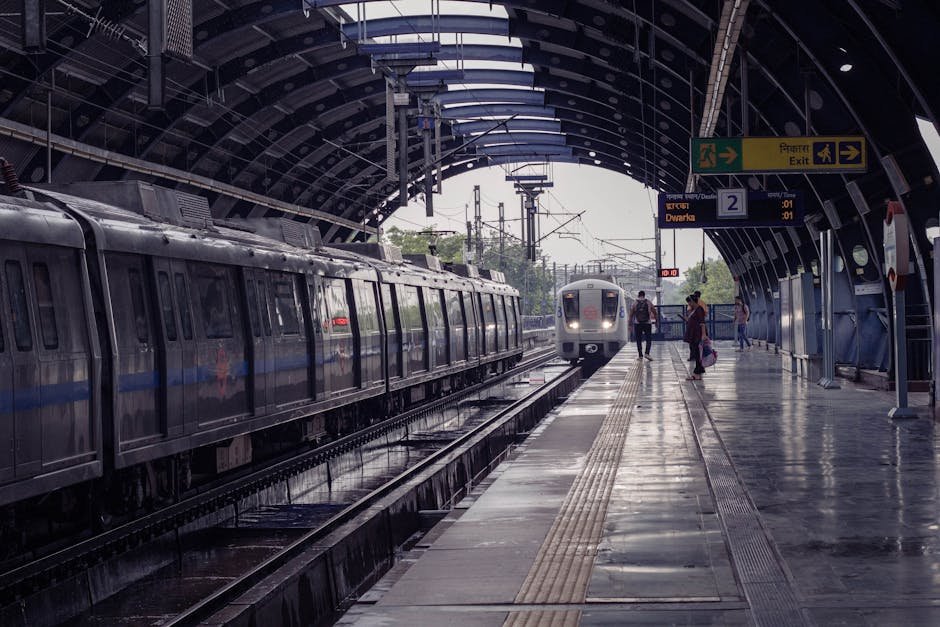
The Delhi Metro Rail Corporation (DMRC) is set to introduce additional metro train trips starting Monday, in response to escalating fuel prices and a concerted effort by the Delhi government to promote sustainable urban mobility. This initiative aims to encourage a greater number of commuters to transition from private vehicles to the public transport network across the Delhi-National Capital Region (NCR).
Information was available with The Chenab Times that the DMRC plans to initially operate 24 extra train trips, utilizing six additional trains, every Monday from May 18. The corporation indicated that further service enhancements on other days will be implemented based on observed passenger demand.
This decision aligns with the Delhi government’s intensified campaigns, such as ‘Monday Metro’ and ‘No Vehicle Day,’ which are designed to foster fuel conservation and reduce the populace’s reliance on petroleum-based transportation. Earlier, Chief Minister Rekha Gupta had appealed to citizens to increasingly embrace public transport and locally sourced products as part of wider strategies for sustainability and economic resilience.
To facilitate a smoother commuter experience, the DMRC is also reinforcing station management and passenger flow systems. This includes the deployment of additional security personnel, the activation of extra ticketing counters, the readiness of spare baggage scanners, and measures to decrease frisking wait times during peak commuting hours. The metro corporation highlighted the critical role of the Delhi Metro as the primary facilitator of urban mobility within the capital, noting its extensive network provides seamless connections to major transit hubs including railway stations, interstate bus terminals, airport terminals, the Namo Bharat Regional Rapid Transit System (RRTS), the Noida Metro, and the Rapid Metro Gurgaon.
The DMRC has provided comprehensive details illustrating the metro’s reach to key commercial centres, office districts, tourist attractions, and educational institutions throughout Delhi-NCR. Prominent locations such as Connaught Place, Chandni Chowk, Hauz Khas, Nehru Place, and DLF Cyber City were specifically identified as being readily accessible via the metro system.
Addressing the challenge of last-mile connectivity, the DMRC reported that services including e-autos, e-rickshaws, bike taxis, cab aggregators, and bicycle rentals are presently operational at approximately 160 metro stations, collectively serving close to one lakh passengers on a daily basis. Furthering the commitment to eco-friendly transportation, the corporation mentioned the recent introduction of hydrogen-powered buses in the Central Vista area, supported by the Indian Oil Corporation Limited, to offer green last-mile connectivity from metro stations to government offices. Additionally, around 1,500 ‘Devi’ buses, operated by the Delhi Transport Corporation, are providing essential feeder services at 52 metro stations.
The DMRC also noted the availability of parking facilities at 126 metro stations, intended to encourage commuters to utilize their personal vehicles for the initial leg of their journey before switching to the metro. A variety of digital ticketing options, including QR code tickets, WhatsApp ticketing, National Common Mobility Cards, and app integrations with major platforms like Paytm, PhonePe, Amazon, and IRCTC, are being actively promoted to streamline ticketing processes, reduce queues, and enhance overall commuter convenience. The organization reiterated its dedication to expanding accessibility, improving multimodal integration, and significantly reducing fuel dependency within the National Capital Region, positioning the Delhi Metro as a pivotal element in India’s sustainable urban transport future.


The Chenab Times News Desk