


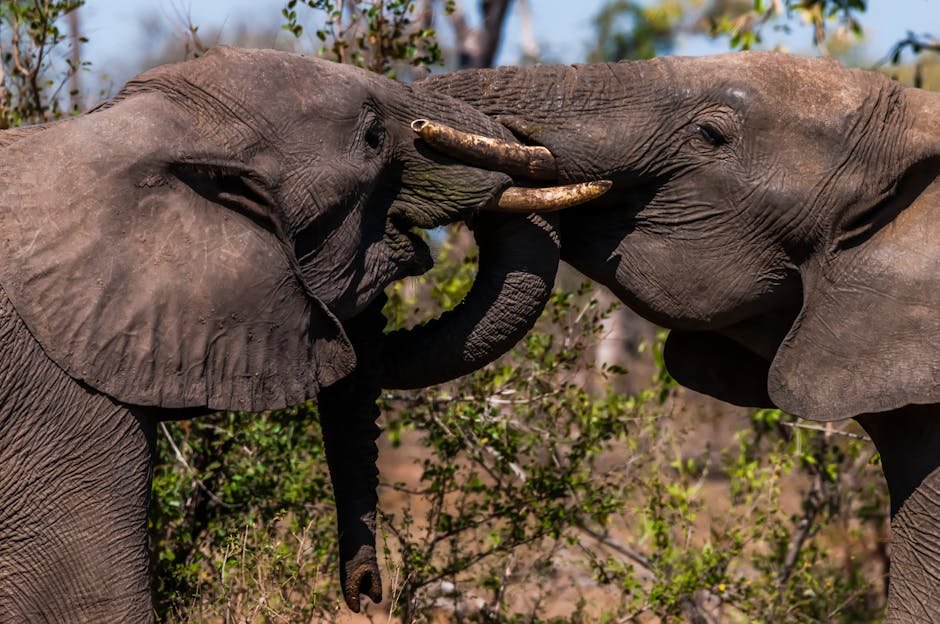
An elephant named Marthanda has died at the Dubare Elephant Camp in Karnataka’s Kodagu district, a day after sustaining severe injuries during a violent clash with another elephant. The incident, which also tragically resulted in the death of a tourist, has prompted a review of safety protocols at the popular wildlife attraction.
The fatal confrontation between Marthanda and another elephant, Kanjan, occurred during a routine bathing session in the Cauvery River. According to reports, the two trained elephants became aggressive, leading to a violent struggle. Despite the efforts of mahouts and forest staff to separate them, Marthanda sustained critical injuries. It was during this struggle that Marthanda lost his balance and fell, trapping a tourist underneath him.
The tourist, identified as 33-year-old Tulasi from Tamil Nadu, was watching the bathing session when the incident took place. She was crushed by the falling elephant and died on the spot. Her husband and child, who were nearby, narrowly escaped the tragedy.
Marthanda, an elephant that was reportedly involved in the Mysuru Dasara celebrations, succumbed to his injuries the following day. The death of both the elephant and the tourist has sent shockwaves through the region and raised concerns about the safety of visitors and the well-being of the captive animals.
In the wake of the incident, Karnataka’s Forest Minister, Eshwar Khandre, expressed his deep shock and ordered a detailed investigation. He also directed officials to implement stricter safety measures at all elephant camps in the state. These measures include mandating a minimum 100-foot safety distance for visitors and prohibiting direct contact with the animals, such as touching, posing for photographs, bathing, or feeding them.
The Dubare Elephant Camp, managed by Jungle Lodges and Resorts, is a significant base for the Karnataka Forest Department’s elephants. It serves as a centre for studying elephant behaviour and offers visitors opportunities for interaction, including bathing and feeding sessions. The camp is situated on the banks of the Cauvery River and is a popular destination for wildlife enthusiasts.
Such clashes among captive elephants are often attributed to factors such as territorial behaviour, stress, or aggression, particularly during certain periods. Forest department officials have begun an inquiry to understand the specific reasons behind this particular incident and are monitoring the behaviour of the remaining elephants at the camp.
The Dubare Elephant Camp has a history of engaging tourists in various activities involving elephants. Visitors can observe and participate in feeding and bathing elephants, and learn about their history, ecology, and biology from trained naturalists. The camp also hosts wildlife, with sightings of sambar, spotted deer, tigers, leopards, wild dogs, gaur, and bears being reported in the surrounding moist deciduous forests.
The recent tragedy has highlighted the inherent risks associated with close human-animal interaction in wildlife tourism. Authorities are now focused on revising standard operating procedures (SOPs) to prevent future occurrences and ensure the safety of both tourists and the elephants under their care.
The incident has also led to calls for greater scrutiny of the management and care of captive elephants, ensuring that their welfare is paramount while maintaining a safe environment for visitors to these popular tourist destinations.
The Deputy Conservator of Forests, Abhishek, noted that while minor clashes among tamed elephants are not uncommon, this incident marks the first time a tourist has died as a result of such an event at the camp.


The Chenab Times News Desk