


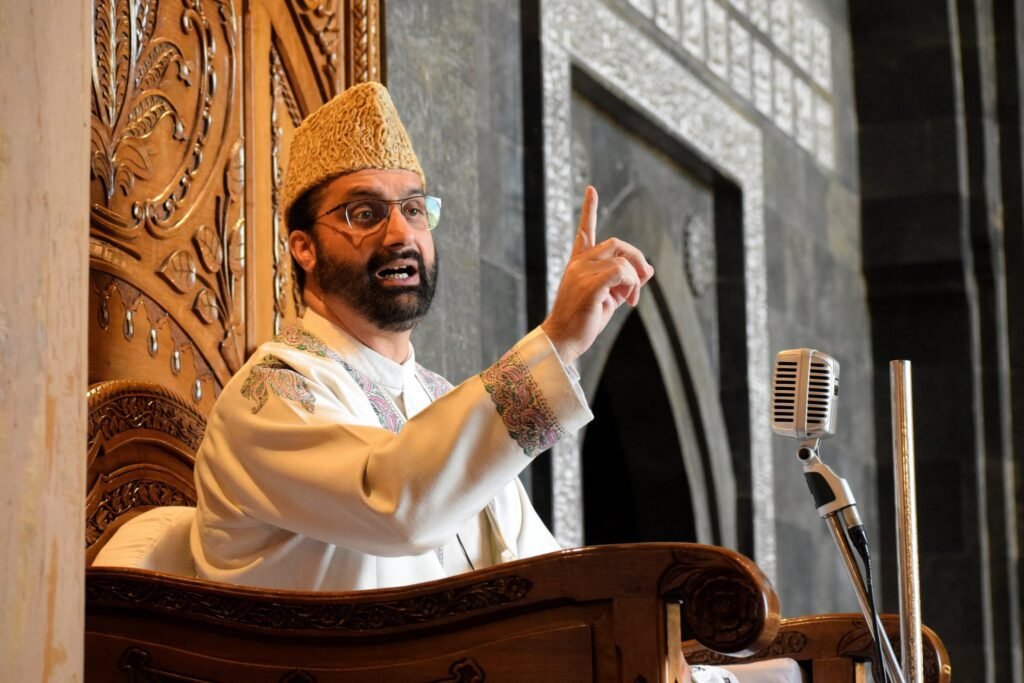
Mirwaiz Umar Farooq has expressed grave concern over a large-scale demolition and anti-encroachment drive in the Sidra area of Jammu, alleging that it has led to the displacement of members of the Gujjar-Bakerwal tribal community and left several families homeless.
According to details received by The Chenab Times, the Mirwaiz described the ongoing demolitions as “very disturbing” in a post shared on the social media platform X. He stated that structures belonging to tribal and nomadic families were razed during what he characterized as enforcement actions by authorities. The operation, he asserted, has resulted in widespread displacement and raised significant questions about humanitarian considerations for vulnerable communities.
Further alleging selective targeting, the Mirwaiz claimed that certain communities are being singled out under the guise of law enforcement. He alluded to reports circulating in public discourse about the alleged registration of First Information Reports (FIRs) against mourners at the funeral of the former Jamaat-e-Islami chief and Islamic scholar Sheikh Ghulam Hassan in Kulgam. These claims remain unverified by independent sources.
The leader stated that actions against nomadic and tribal populations in Jammu, devoid of adequate humanitarian safeguards, could be construed as the “weaponisation of law.” He cautioned that such measures might deepen mistrust and exacerbate the prevailing atmosphere in the region.
Information available with The Chenab Times indicates that anti-encroachment drives in the region are typically conducted by the Forest Department, Revenue Department, and the police. These operations aim to clear alleged illegal structures from state or forest land. The recent drive in Sidra has drawn widespread criticism and protests from various sections of society, particularly those concerned about the impact on the Gujjar-Bakerwal community.
Official statements on similar past operations often highlight the need to reclaim state and forest land that has been encroached upon. However, the current drive has faced scrutiny due to the scale of demolitions and the alleged lack of alternative arrangements for the displaced families.
The Gujjar-Bakerwal community, traditionally nomadic herders, often faces challenges related to land rights and access to grazing areas. Critics of the anti-encroachment drive argue that such actions, especially during sensitive times, disproportionately affect marginalized communities who may lack the legal recourse or resources to challenge demolition orders.
The concerns raised by Mirwaiz Umar Farooq underscore a broader debate about the implementation of law enforcement measures in Jammu and Kashmir, and the importance of balancing development and governance objectives with the protection of the rights and welfare of all communities, particularly the most vulnerable.
The extent of displacement and the specific details of the demolitions are still emerging, with community leaders and activists calling for a thorough review of the process and immediate relief measures for those affected by the Sidra drive.


The Chenab Times News Desk