


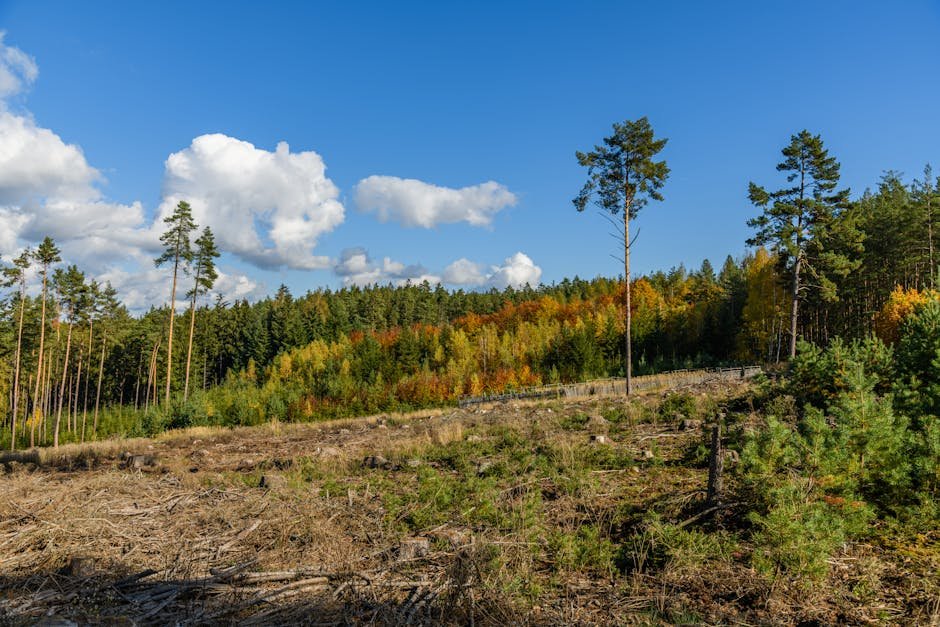
SRINAGAR: Jammu and Kashmir has achieved significant milestones in forest conservation, restoring more than 1,06,023 hectares of degraded forest land and planting approximately 7.46 crore saplings under the Compensatory Afforestation Fund Management and Planning Authority (CAMPA) since the fiscal year 2010-11. These figures were presented during a high-level review meeting chaired by Chief Secretary Atal Dulloo, who emphasized the importance of sustainable forest regeneration and protection.
According to details received by The Chenab Times, the Chief Secretary reviewed the ongoing afforestation and ecological restoration programmes, stressing the need for scientific monitoring and enhanced protection measures for vulnerable forest areas. He directed the Forest Department to expedite the digitisation of forest maps and boundary pillars to improve the demarcation and security of forest land. Furthermore, he advocated for linking contractor payments directly to the survival rates of planted saplings, ensuring accountability and performance-driven outcomes.
The Finance Department was instructed to integrate suitable provisions into future tenders to guarantee accountability and facilitate results-based implementation of forest conservation projects. Officials highlighted a notable decline in the diversion of forest land for non-forestry purposes after 2020, coupled with a substantial increase in the area covered by afforestation and ecological restoration initiatives in recent years.
Additional Chief Secretary (Finance) Shailendra Kumar underscored the necessity of reconstructing missing forest records, drawing parallels with the practices of the Revenue Department, and proposed a system of staggered payments contingent upon plantation survival rates. Sheetal Nanda, Commissioner Secretary for Forests, detailed sustained plantation efforts and confirmed the establishment of a multi-layer monitoring mechanism to ensure effective on-ground implementation of conservation strategies.
The presented data indicated that afforestation and ecological restoration activities, including assisted natural regeneration, have been conducted across 1,06,023 hectares in Jammu and Kashmir since 2010-11. During this period, a total of 746.65 lakh saplings have been planted across various forest divisions within the Union Territory.
Focusing on the financial year 2025-26, approximately 2,952 hectares were treated under different CAMPA components. In the same period, nurseries raised 68.70 lakh saplings, and maintenance efforts were undertaken for over 1.64 crore nursery saplings, indicating a robust focus on future planting initiatives.
The Forest Department also reported the completion of extensive infrastructure development for forest protection and management. This includes over 12.65 lakh running feet of fencing, 19.32 lakh patch sowing and dibbling works, and 37,001 cubic meters of soil and moisture conservation activities. The establishment of 108 water harvesting structures, 27 check dams, and more than 14,940 boundary pillars further supports the efforts to safeguard forest ecosystems.
KS Jayachandran, CEO of CAMPA, observed a significant surge in plantation activities since 2020, with annual planting figures consistently surpassing the 16-year average of 46.60 lakh saplings. In the financial year 2020-21 alone, over 67 lakh saplings were planted, and ambitious targets have been maintained in subsequent years.
The review meeting also provided an update on forest protection infrastructure, with the installation of 374.78 lakh running feet of fencing and 1,47,623 boundary pillars across the Union Territory aimed at enhancing forest protection and accurate demarcation.
Concluding the review, the Chief Secretary urged for continuous improvements in plantation survival rates, reinforcement of monitoring systems, and increased community participation to ensure the long-term ecological sustainability of Jammu and Kashmir’s forests.


The Chenab Times News Desk