


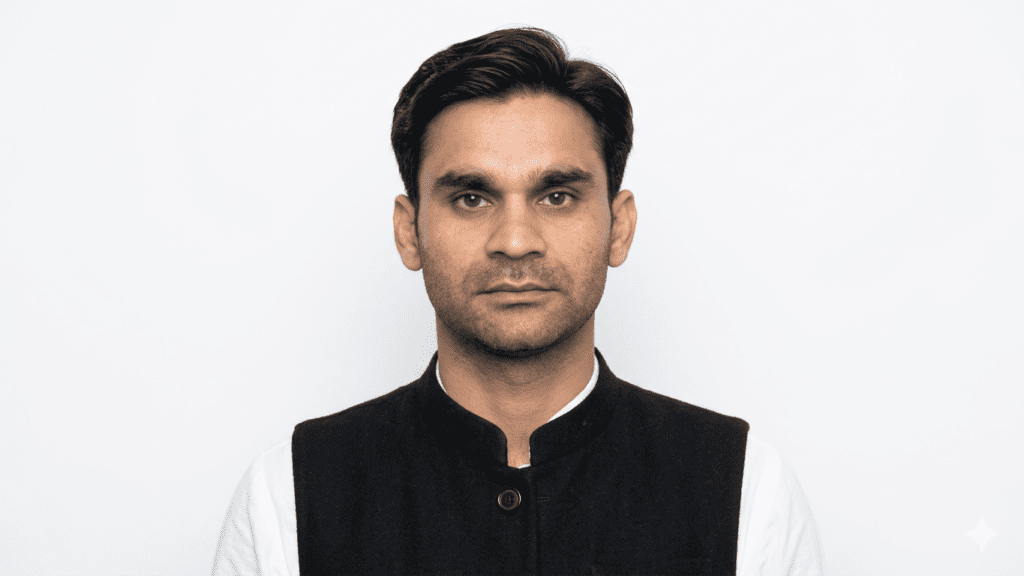
SRINAGAR, May 24: Peoples Democratic Party (PDP) MLA Waheed Para stated on Sunday that the Union Territory of Ladakh has achieved in seven years what Jammu and Kashmir could not accomplish in seven decades, suggesting a valuable lesson for the region.
Information was available with The Chenab Times that Para’s remarks followed the central government’s recent offer of constitutional safeguards to Ladakh. The offer includes proposals for constitutional protections, potentially under Article 371, and the establishment of a legislative body for the region, though discussions are reportedly ongoing and no final agreement has been reached.
Activists from Ladakh have indicated that the government proposed safeguards for the region akin to those under Articles 371A and 371G. They also mentioned an agreement in principle for a governance structure encompassing the entire region, rather than being confined to district councils. The government has reportedly proposed legislative, executive, administrative, and financial powers for Ladakh and has requested a formal draft for consultation with legal and constitutional experts.
Para articulated his observation in a post on the social media platform X. “What Ladakh achieved in 7 years, we failed to achieve in 70. A population of barely 3 lakh persuaded the Government of India, J&K couldn’t. There’s a lesson for Jammu & Kashmir,” he wrote. This statement highlights a perceived disparity in developmental progress and administrative influence between the two Union Territories.
The context of Para’s statement involves the ongoing discussions regarding the future governance and constitutional status of Ladakh. While the central government has made an offer, local stakeholders, including activists and political groups, are engaged in deliberations to ensure adequate protections and representation for the region. The specifics of the proposed safeguards and the legislative body are subjects of active consultation, with a formal draft expected to be shared for expert review.
The assertion by the PDP MLA underscores a broader political discourse within the former state of Jammu and Kashmir, particularly in light of its reorganization into two Union Territories in 2019. The comparison drawn between Ladakh and Jammu and Kashmir points to differing outcomes in securing regional aspirations and developmental frameworks following the constitutional changes. The situation remains dynamic as consultations continue to shape the future administrative and constitutional landscape of Ladakh.


The Chenab Times News Desk