


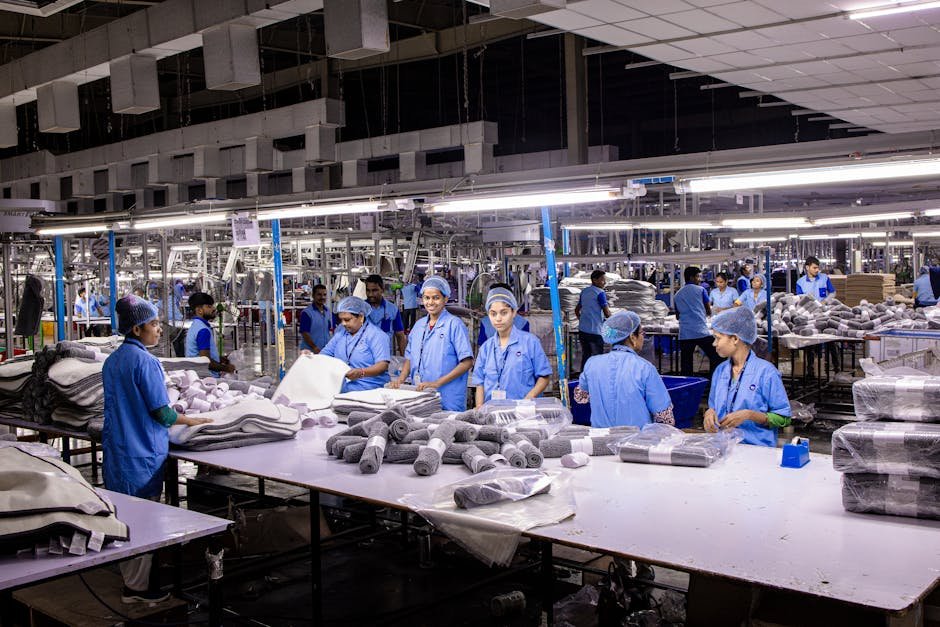
India’s textile and apparel industry is on the cusp of a significant expansion, driven by the recent finalization of Free Trade Agreements (FTAs) with key global markets. The agreements, particularly with the European Union and the United Kingdom, are expected to remove long-standing tariff barriers, thereby boosting the competitiveness of Indian exporters and opening up vast new market opportunities.
New Trade Pacts Unlock EU and UK Markets for Indian Textiles
The landmark India-EU Free Trade Agreement, concluded in early 2026 after years of negotiations, promises to grant Indian textile products zero or near-zero duty access to the European Union market. This development is poised to directly impact India’s export competitiveness, allowing it to vie more effectively with countries like Bangladesh and Vietnam, which already benefit from preferential access. Tariffs previously ranging between 8% and 12% on Indian textiles entering the EU are set to be eliminated, a move that could unlock billions in demand and create millions of jobs within the sector.
Similarly, the India-UK FTA, signed in 2025, has already begun to alter the competitive landscape for Indian textile and apparel exporters. This agreement provides preferential access to one of the world’s most mature and design-driven consumer markets by reducing and eliminating tariffs on a wide array of garments, fabrics, and made-ups. This has narrowed the gap with competing nations and is encouraging longer-term sourcing commitments from British buyers.
Information was available with The Chenab Times indicating that these FTAs are expected to significantly boost India’s textile exports. For instance, exports to the EU and UK, which stood at $9.76 billion in FY25, are estimated to rise to $15 billion once the FTAs are fully operationalized. Industry experts project that the benefits from these trade deals will likely accrue from FY28 onwards, with an expected 10-15% revenue growth.
Diversification and Investment Key to Future Growth
The Indian textile industry, a major contributor to the nation’s GDP and the second-largest employer, is actively working to reduce its concentration on single markets. Having been significantly impacted by tariff escalations in markets like the US in the past, companies are now keen on geographical diversification. European and UK buyers are proactively seeking to diversify their sourcing away from traditional hubs, and the tariff parity offered by the FTAs will significantly support India’s efforts in this regard.
Major Indian textile players, including Gokaldas Exports, KPR Mill, Arvind, Welspun Living, Vardhman Textiles, and Pearl Global Industries, have already signaled expectations for export growth in these new markets. Some companies are investing in establishing showrooms in Europe and increasing their brand visibility through trade fairs and appointing local executives. This strategic push aims to strengthen their presence and build more geographically diversified customer footprints, even if it requires short-term margin adjustments.
However, capacity addition remains a critical constraint for some firms. While some are ramping up production, others are exploring investment-light expansion strategies, such as establishing partner factories in countries like Sri Lanka, Bangladesh, and Egypt. Large exporters are also investing in renewable energy, water recycling, and enhanced ESG reporting systems, recognizing the growing importance of sustainability and compliance in the global apparel market.
Strategic Outlook and Emerging Opportunities
Beyond the EU and UK, India is also pursuing trade agreements with other regions, including Qatar and Latin American countries, and exploring upgrades to existing ASEAN agreements. The India-Qatar FTA, expected to move forward in 2026, could open avenues for demand in apparel products, institutional wear, and home textiles within the Gulf market. This aligns with India’s broader strategy to form stable trade frameworks with the Middle East.
The modern apparel market is increasingly driven by compliance and speed, in addition to cost. Brands are actively seeking alternatives to concentrated sourcing models, and India, with its growing emphasis on vertically integrated ecosystems that offer speed, traceability, compliance, and design flexibility, is well-positioned to meet these demands. The transition from an overwhelming dependence on cotton to a broader product mix, including technical textiles and high-value apparel, is also a key development shaping the industry’s future.
The successful execution of these strategies will be critical for India’s textile industry to transition from a fragmented production base into a globally integrated manufacturing engine and achieve its ambition of doubling bilateral trade with key partners like the UK to $100 billion by 2030. The foundations are being laid through these FTAs, infrastructure investments, and sustainability initiatives, creating a real global market opportunity for Indian textiles.


The Chenab Times News Desk