


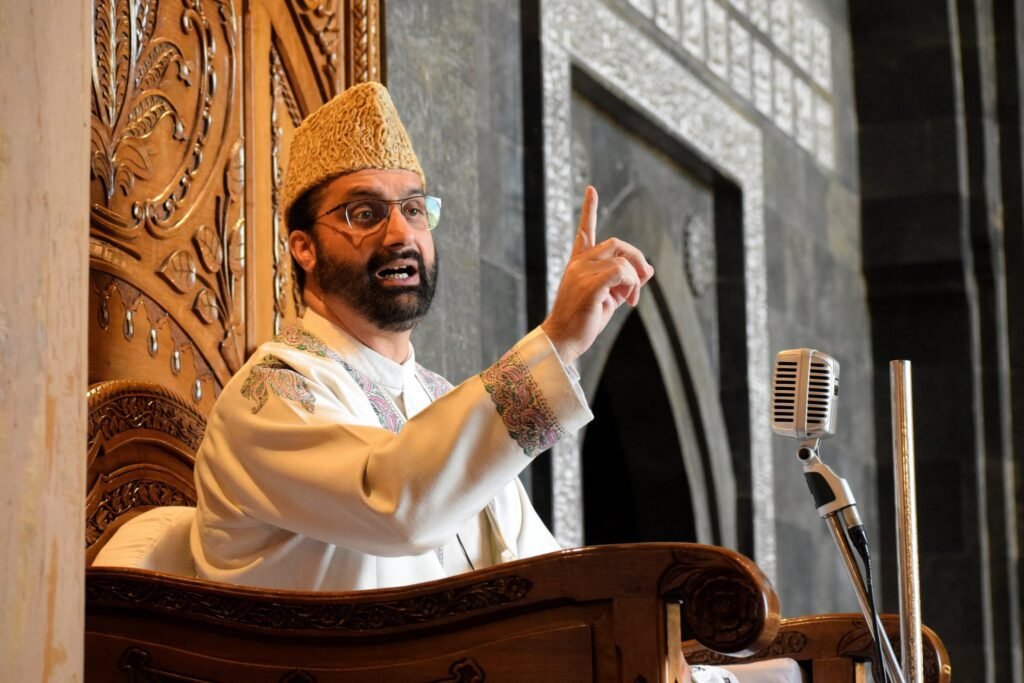
Authorities in Srinagar have once again denied permission for Eid prayers at the historic Eidgah ground and Jama Masjid in the old city, extending restrictions at the two prominent religious sites for the eighth consecutive year. The decision, taken amid ongoing security and administrative measures surrounding major religious congregations, has drawn sharp criticism from religious leaders.
The Chenab Times has learned that Mirwaiz Umar Farooq, a prominent religious figure, was placed under house arrest on Eid day and prevented from leaving his residence to offer prayers. He stated via a social media post that Muslims in Kashmir have been consistently denied the opportunity to offer Eid prayers at these two significant religious locations for eight successive years.
The Mirwaiz expressed his dismay, noting that his own movement was restricted through house arrest on the celebratory occasion of Eid. He highlighted that the community had been “denied the right to offer Eid prayers at the historic Eidgah/Jama Masjid.” He further stated that on this revered occasion, Muslims in Kashmir were greeted with barricades and other forms of curbs, leading to a situation where Eid in the region was increasingly observed under a climate of restrictions and security controls rather than communal worship.
Describing the situation as deeply distressing, the Mirwaiz alleged that worshippers are routinely confronted with locked gates and other measures during the festive period. He characterized these restrictions as a “systematic assault” on religious identity, dignity, and fundamental rights.
The religious leader also voiced concerns regarding the long-term impact of these prolonged restrictions on younger generations. He pointed out that many children were growing up without experiencing Eid prayers at Eidgah, a tradition that has been a significant part of the region’s cultural and spiritual fabric for generations. This, he stated, has deprived the youth of forming crucial cultural and spiritual associations with Eid gatherings.
Mirwaiz Umar Farooq reiterated his stance that faith cannot be suppressed through force, emphasizing that the religious identity of the people of Kashmir remains firmly rooted. He asserted that no authority could erase the spiritual connection that the community shares with Eidgah, Jama Masjid, and other religious institutions that hold deep historical and cultural significance for the region.
The repeated denial of access to these revered prayer sites for Eid celebrations has become a recurring point of contention, raising questions about religious freedom and the management of public spaces during significant religious observances in the valley.


The Chenab Times News Desk