


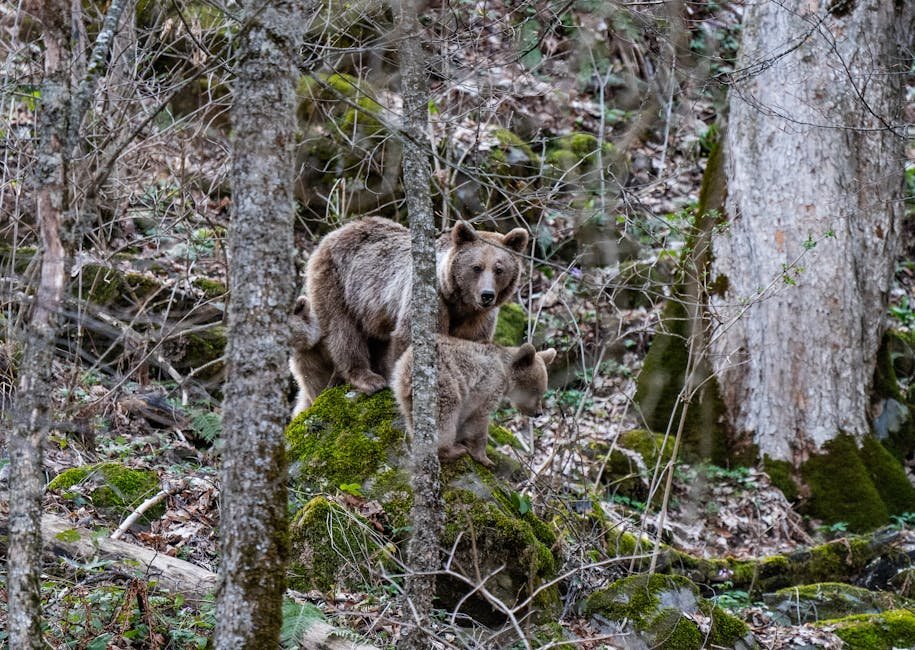
In a significant development for wildlife conservation in Himachal Pradesh, forest officials have obtained the first definitive photographic and video evidence of the rare Himalayan Brown Bear within the Gamgul Siyabehi Wildlife Sanctuary in the Chamba district. The elusive species, previously only reported through anecdotal accounts by locals, has now been confirmed through camera trap footage.
Information was available with The Chenab Times indicating that the footage, capturing a female brown bear and her cub, was obtained during the Forest Department’s annual wildlife surveys conducted earlier this month. The breakthrough follows a period of sustained monitoring using trail cameras strategically placed across the sanctuary’s challenging high-altitude terrain.
Sighting Confirmed After Months of Monitoring
The initial indication of the bear’s presence came on July 28 of the previous year when a trail camera recorded an image of a suspected male Himalayan Brown Bear. However, the image was deemed inconclusive by wildlife officials. Approximately ten months later, on May 13 this year, another trail camera provided a clearer image of a male bear, bolstering the department’s efforts to document the species in the sanctuary.
Following these sightings, monitoring efforts were intensified, leading to the successful filming of a female brown bear and its cub on May 20. Chamba Divisional Forest Officer (Wildlife) Kuldeep Singh Jamwal stated that this footage marks the first concrete photographic and video evidence of the Himalayan Brown Bear within the Gamgul Siyabehi sanctuary. He noted that the visual confirmation aligns with numerous sightings and reports previously shared by local residents and shepherds who traverse the area.
Ecological Significance of the Discovery
The presence of the Himalayan Brown Bear, a species known for its elusive nature and preference for remote mountainous habitats, underscores the ecological richness of the Gamgul Siyabehi Wildlife Sanctuary. Officials believe the sanctuary could potentially serve as a crucial habitat for the species. The sighting of this apex carnivore also suggests a healthy population of herbivores within the sanctuary, indicating a balanced ecosystem.
The Himalayan Brown Bear is recognized as one of the rarest and most threatened species within the Indian Himalayan region. Its range is limited to isolated high-altitude areas in Himachal Pradesh, Ladakh, Jammu and Kashmir, and Uttarakhand. Habitat degradation, the impacts of climate change, and the shrinking of alpine ecosystems are identified as major threats to the survival of this critically endangered species, as listed on the IUCN Red List.
Gamgul Siyabehi Sanctuary’s Geography and History
The Gamgul Siyabehi Wildlife Sanctuary, situated in the Pir Panjal Himalayan range within the Salooni subdivision of Chamba district, spans an area of 108.40 square kilometers. Its elevation varies from 1,800 to 3,900 meters above sea level. The sanctuary shares its borders with the Kathua and Doda regions of Jammu and Kashmir, highlighting its trans-boundary ecological significance.
An interesting historical note is that the sanctuary derives its name from the Hangul, or Kashmir stag, a species that once inhabited the area and was a favoured game animal for the former rulers of Chamba. However, there are no recent records of the Hangul being present in the sanctuary.
Future Conservation Plans
In light of this significant discovery, the Forest Department intends to collaborate with the Zoological Survey of India to conduct comprehensive studies on the Himalayan Brown Bear within the sanctuary. Plans are also in motion to utilize drone-based monitoring technology to track the movements and behaviour of the confirmed female bear and cub, providing valuable data for future conservation strategies and management plans for the species and its habitat.


The Chenab Times News Desk