


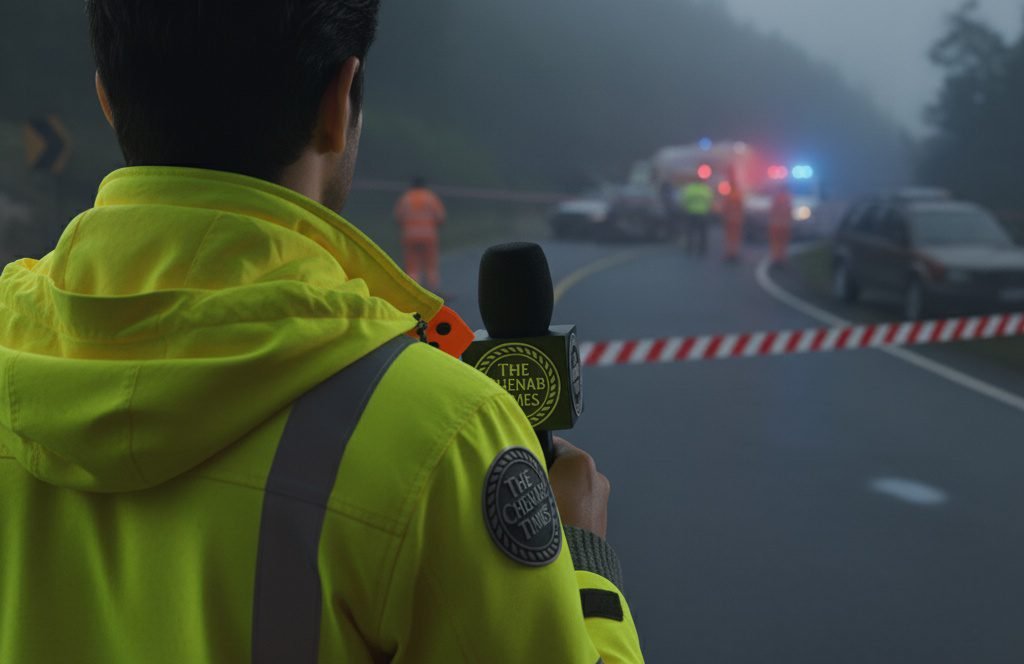
A paraglider made an emergency landing on the busy Kullu-Manali National Highway near Katrain, rekindling serious concerns over the safety standards of adventure sports in the Kullu Valley.
Information was available with The Chenab Times that the paraglider had departed from the Dobhi launch site but was compelled to descend onto the highway due to unexpected strong winds. The precise date of the incident remains unconfirmed.
While the pilot and passenger emerged from the incident without injuries, the event underscores the inherent risks associated with operating in adverse weather conditions. This is not an isolated occurrence; the Kullu region has seen a concerning number of similar incidents, many resulting in significant injuries or fatalities, often attributed to negligence by operators and non-compliance with weather advisories.
Recent years have witnessed several tragic events. In January 2025, a tourist from Hyderabad lost his life near Raison following a sudden gust of wind that caused his paraglider to crash. In February 2024, another tourist from Telangana died after an apparent mid-air incident at Dobhi, with reports suggesting the operator may have failed to properly secure the passenger’s harness. In a separate incident, a tandem paraglider was blown into a tree at Dhalpur by a strong wind, necessitating a rescue operation by the fire brigade. Furthermore, in December 2025, a tourist experienced a fall of approximately 80 feet at the Garsa site, reportedly due to equipment failure.
The recurring nature of these accidents has prompted Kullu authorities to suspend operations at multiple sites due to persistent safety violations. The frequency of these crashes points to systemic deficiencies in the oversight of adventure tourism activities within the region.
A significant shortage of personnel within the Tourism Department has resulted in insufficient monitoring, allowing numerous pilots to operate without the required licenses and potentially using substandard equipment. Experts and government officials have consistently advocated for the implementation of stringent safety protocols and the establishment of a permanent regulatory framework to govern these activities.
The recent emergency landing on the Katrain stretch of the national highway serves as the latest stark reminder that with the escalating popularity of adventure tourism, the enforcement of rigorous safety measures is paramount. These measures are not merely a suggestion but a critical necessity for safeguarding lives and upholding the region’s reputation as a secure destination for adventure enthusiasts.
The Kullu district, a popular hub for paragliding and other adventure sports, has long attracted tourists seeking thrilling experiences. However, the increasing number of accidents has cast a shadow over its appeal, prompting calls for a comprehensive review of safety regulations and their enforcement. The incidents highlight a gap between the growing tourism industry and the capacity of regulatory bodies to ensure compliance.
Advocates for stricter regulations point to the potential for catastrophic outcomes when safety protocols are compromised. They emphasize the need for mandatory training, regular equipment checks, and clear guidelines for pilots regarding weather conditions. The current situation, characterized by a lack of adequate manpower and oversight, creates a fertile ground for negligence, putting both local operators and visiting tourists at risk.
The Directorate of Tourism in Himachal Pradesh has previously announced measures to address safety concerns, including the introduction of mandatory registration for paragliding operators and pilots. However, the consistent occurrence of accidents suggests that these measures may not be fully implemented or are insufficient to curb the safety lapses. The reliance on existing manpower for monitoring diverse adventure activities across multiple locations appears to be a significant bottleneck.
Industry stakeholders also acknowledge the need for improved safety but often cite the economic implications of stringent regulations. Striking a balance between promoting adventure tourism, which contributes significantly to the local economy, and ensuring the safety of participants remains a critical challenge for the state government.
The incident on the national highway is expected to intensify pressure on the authorities to take decisive action. Experts suggest that a robust regulatory body with adequate powers to inspect, license, and penalize errant operators could be a viable solution. Furthermore, public awareness campaigns could also play a role in educating tourists about the risks involved and the importance of choosing certified and safety-conscious operators.
The long-term viability of Kullu as a premier adventure tourism destination hinges on its ability to address these safety concerns effectively. The recent emergency landing serves as a critical juncture, demanding immediate and comprehensive action to prevent future tragedies.


The Chenab Times News Desk