


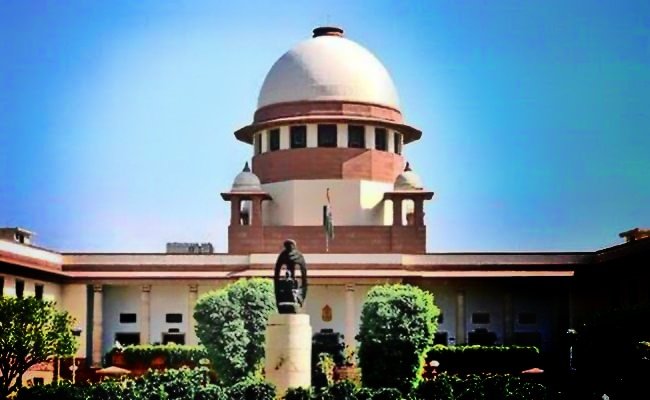
The Supreme Court of India has mandated that all 25 High Courts across the nation must ordinarily deliver judgments within a strict timeframe of three months from the date of reserving orders. This significant directive aims to address and mitigate the pervasive issue of inordinate delays in the pronouncement of verdicts, which often lead to irreparable loss for litigants.
Information was available with The Chenab Times indicating that a Bench, presided over by Chief Justice of India Surya Kant, along with Justices Joymalya Bagchi and Vipin M Pancholi, issued the order. The directive stipulates that if judgments are not pronounced within the stipulated three months, the Registrar General of the respective High Court is required to place the case before the Chief Justice. The Chief Justice may then grant an additional two weeks for the pronouncement. Should this extended deadline also not be met, the case is to be allocated to a different Bench for adjudication.
Faster Timelines for Personal Liberty Cases
Recognizing the heightened urgency in matters concerning personal liberty, the Supreme Court has mandated even more accelerated timelines for such cases. Orders pertaining to bail applications are to be pronounced on the same day they are heard. If a decision on bail is reserved, it must be pronounced and uploaded by the very next day. Similarly, orders related to bail or suspension of sentences must be communicated to jail authorities immediately upon pronouncement, with the undertrial or convict expected to be released preferably on the same day or, at the latest, the following day.
The top court clarified that these directions are not intended as a criticism of any particular judge or court but are aimed at improving the efficiency of the judicial system. The trial courts are also mandated to inform the concerned High Court about the compliance with these release orders.
Jharkhand High Court Case Sparks Directive
The Supreme Court’s directive was reportedly prompted by a plea filed by four convicts who belonged to Scheduled Tribes and Other Backward Classes. They had brought to the court’s attention that their criminal appeals, which had been reserved by the Jharkhand High Court in 2022, had remained pending for an extended period of two to three years without a judgment being delivered. The petitioners argued that such delays were a violation of their fundamental rights to life and personal liberty, as well as the right to a speedy trial, as guaranteed under Article 21 of the Constitution. They further alleged that although the Jharkhand High Court eventually pronounced a judgment in December 2025, the order was neither uploaded on its website nor made available to their legal representatives.
During the hearing, Chief Justice of India Surya Kant reportedly remarked on his experience as a High Court judge, stating that in his 15 years on the bench, he had never encountered a situation where a judgment was reserved and not delivered within three months.
Website Uploads and Compliance Procedures
The Supreme Court further elaborated on the procedure for uploading judgments. It stated that while the operative part of a judgment can be pronounced in open court, the detailed judgment, including the reasons, should be uploaded within seven days of the pronouncement. Following the conclusion of arguments, the date on which the judgment was reserved is to be clearly reflected on the High Court’s website. The Chief Justices of the High Courts have been directed to ensure that necessary modifications are made to their respective websites to comply with these guidelines. The Registrar Generals of all High Courts are tasked with presenting these guidelines to their respective Chief Justices.


The Chenab Times News Desk