


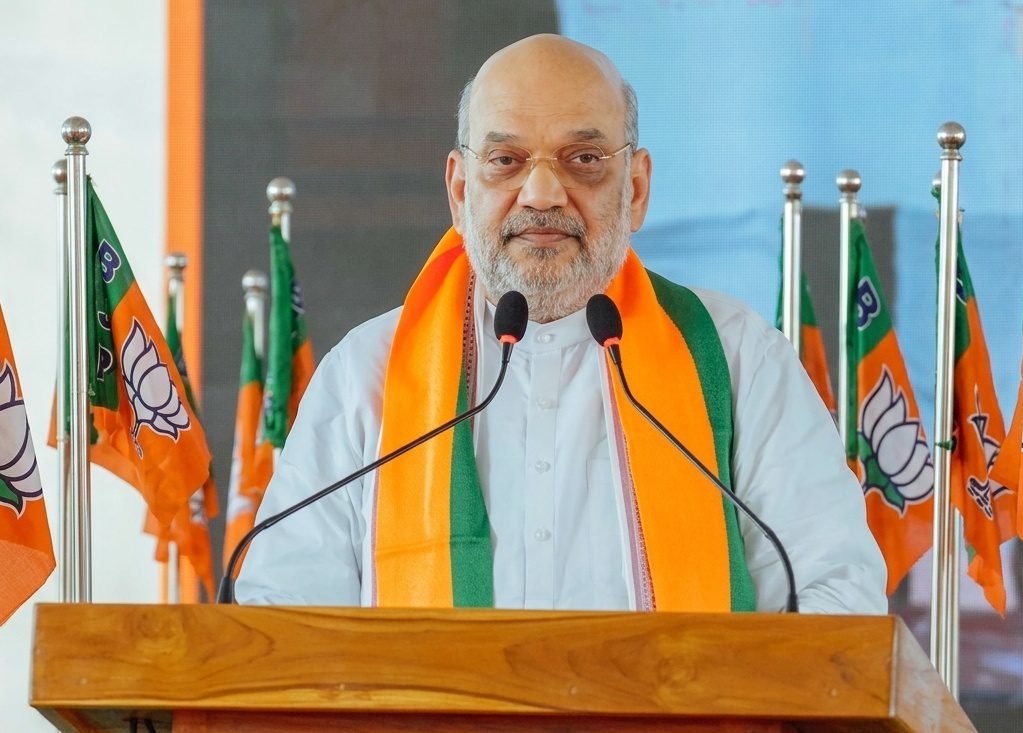
Union Home Minister Amit Shah has identified demographic changes in India’s border districts as the most significant challenge facing the nation, urging strict monitoring and reporting of these developments. He emphasized the need for administrations in these sensitive areas to develop standard operating procedures for identifying infiltrators and mitigating threats posed by drones and narcotics.
The Chenab Times has learned that the Union Home Minister made these remarks while chairing a security review meeting in Bhuj, Gujarat, a district situated along the India-Pakistan border. The meeting, held on Friday, was attended by Gujarat Chief Minister Bhupendra Patel, Deputy Chief Minister Harsh Sanghavi, senior state officials, and District Magistrates and Superintendents of Police from Kutch, Vav-Tharad, and Patan districts.
Shah stated that demographic shifts in border regions present the most serious challenge and directed district magistrates to ensure rigorous oversight and regular reporting of such changes. This directive follows an announcement earlier in the week by the Union Home Minister regarding the formation of a high-level committee tasked with assessing demographic changes across India resulting from illegal immigration and other non-natural causes, with the objective of proposing countermeasures.
During the review session, Shah stressed the imperative of adopting a zero-tolerance policy towards unauthorized encroachments within a 0 to 15-kilometer belt along the international border. He also underscored the importance of maintaining a close watch on potential centers of radicalization in these border areas.
The Union Home Minister also commented on the phenomenon of reverse migration in border areas, attributing it to the establishment of industrial units and viewing it as a positive development. He urged a unified effort involving all levels of administration, from police stations to village revenue officials, to ensure the deportation of all existing illegal infiltrators.
Furthermore, Shah called for the establishment of Security Coordination Groups in each border district. These groups would comprise representatives from the Border Security Force (BSF), Coast Guard, Income Tax Department, Enforcement Directorate (ED), and managers of prominent local banks. The responsibility for the effective implementation of income tax laws, anti-money laundering regulations, and customs laws was explicitly assigned to the District Magistrate, Superintendent of Police, and the Inspector General (IG) of the Border Range.
He also highlighted the necessity of maintaining stringent vigilance over hawala transactions, financial dealings, mule accounts, shell companies, suspicious vehicle movements, and Goods and Services Tax (GST) collections in the border districts. Agencies involved in combating financial crimes must be kept informed about developments in these areas, and the Income Tax Department, in conjunction with the Reserve Bank of India (RBI), should conduct extensive survey campaigns, Shah advised.
Considering Kutch’s proximity to the International Maritime Boundary Line (IMBL), the Home Minister emphasized the need to prioritize coastal security and ensure effective coordination with the Indian Coast Guard.
Shah reiterated that the ‘Vibrant Villages’ initiative, coupled with ensuring 100 percent saturation of all Central and State government schemes in border villages, is crucial. He observed that border fencing, robust maritime border security, and the strong political will demonstrated by the state government have significantly transformed Gujarat’s security landscape, leading to a complete cessation of infiltration and smuggling activities along the border.


The Chenab Times News Desk