


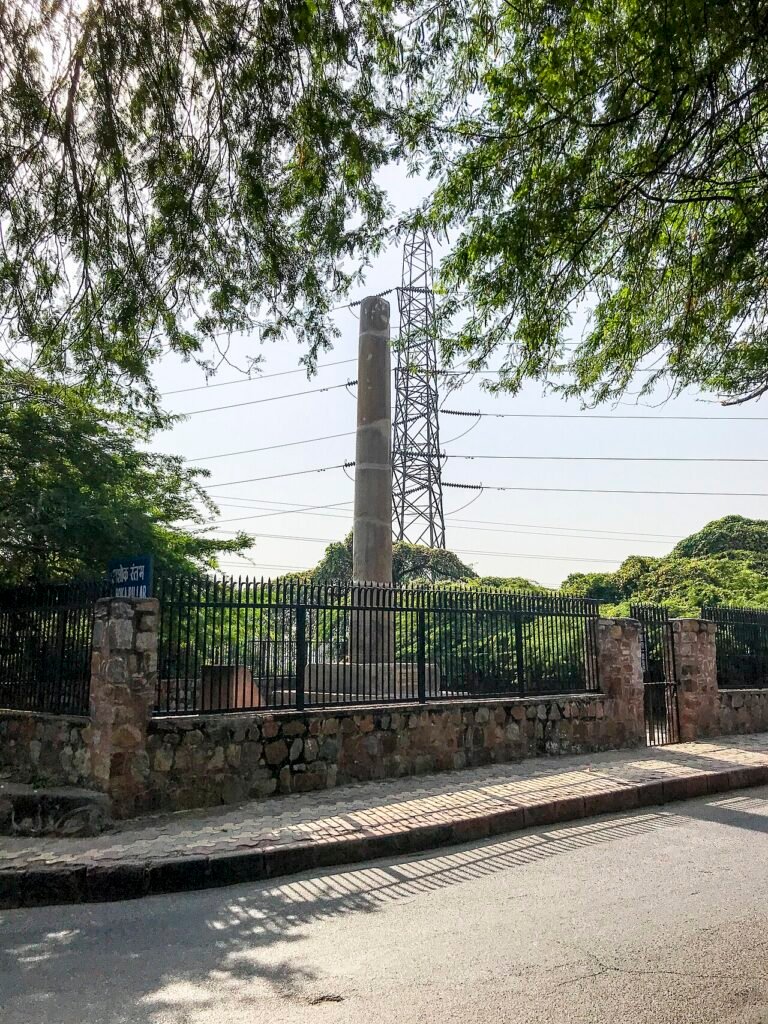
New Delhi: Delhi Lieutenant Governor Taranjit Singh Sandhu has given his approval for the reconstitution of the Ridge Management Board (DRMB). This move aims to strengthen the protection and preservation of the Ridge, an ecologically vital area often referred to as the ‘green lungs’ of the national capital. The reconstituted board will function as an integrated, multi-agency regulatory body, as mandated by a Supreme Court order, to streamline environmental surveillance and eliminate administrative silos.
The Ridge, which represents ancient remnants of the Aravalli range, plays a significant role in Delhi’s green cover, contributing to ecological balance and climate resilience. The primary mandate of the reconstituted DRMB will be the absolute ecological balance and protection of this vital ecosystem. This will be achieved through a combination of senior secretariat leadership and the expertise of prominent environmental experts.
Structure and Mandate of the Reconstituted Board
The reconstituted Delhi Ridge Management Board will be headed by the Chief Secretary of the Delhi government. Its members will include the Vice-Chairman of the Delhi Development Authority (DDA), an Inspector General of Forests rank officer from the Ministry of Environment, and a senior officer from the Ministry of Housing and Urban Affairs. The heads of the Municipal Corporation of Delhi (MCD) and New Delhi Municipal Council (NDMC) will also serve as members. Additionally, the technical and regulatory enforcement aspects will be overseen by the Director General of the Central Public Works Department (CPWD), the Joint Commissioner of Delhi Police, and the Principal Secretaries of the revenue and environment departments. The Principal Chief Conservator of Forests of the Delhi government has been appointed as the member-secretary to manage ground-level execution.
The DRMB’s reconstitution is in line with a Supreme Court directive that emphasized the need for statutory backing for effective protection of the Ridge. Previous iterations of the board, formed through executive orders, lacked enforceability and suffered from overlapping jurisdictions. The new statutory framework, established under Section 3(3) of the Environment (Protection) Act, 1986, grants the DRMB binding authority to act against encroachments, regulate land use, and oversee afforestation efforts.
A specialized standing committee will operate concurrently under the reconstituted board. This committee will be tasked with handling rapid-response environmental interventions. It will be headed by a nominee from the Central Empowered Committee (CEC), with the Principal Chief Conservator of Forests, Delhi, serving as its member-secretary. This structure aims to ensure swift and effective action on environmental matters concerning the Ridge.
Integrated Approach to Ridge Preservation
The Ridge is owned by the Delhi Development Authority (DDA), while its maintenance is the responsibility of the Environment and Forest Department of the Union Territory government. Various agencies, including the MCD, NDMC, Revenue Department, and Delhi Police, are responsible for enforcement to protect the area. The reconstituted board is designed to create an inter-agency platform that will enhance environmental surveillance and address the historical issue of administrative silos that have previously hampered conservation efforts.
Non-government members have also been included to integrate sustainable global methodologies and drive data-centric public participation and microflora enrichment strategies. Arvind Madhav Singh from the Centre for Sustainable Green Economy will serve as a non-government member, bringing global best practices to ridge preservation. Malvika Kaul will focus on data-centric public engagement and microflora enrichment initiatives.
The Supreme Court has emphasized that without a statutorily backed authority, the effective protection of the Ridge’s ecology would remain unattainable. The Court has stressed the importance of a holistic approach to green cover, noting that while Delhi’s greenery is crucial, other states should not be overlooked. The reconstituted DRMB, with its statutory powers and multi-agency representation, is expected to bridge these governance gaps and reinforce the protection of Delhi’s most vital natural landscape.
The Ridge spans approximately 7,777 hectares across four zones in Delhi: Northern, Central, South-Central (Mehrauli), and Southern. Despite its ecological significance, only a fraction has formal protection under the Forest Act, and experts have long cautioned about encroachments, particularly in the southern Ridge, which require more decisive enforcement. The strengthened board is anticipated to facilitate more robust action against illegal constructions, prevent land-use changes, and promote the ecological restoration of degraded patches.


The Chenab Times News Desk