


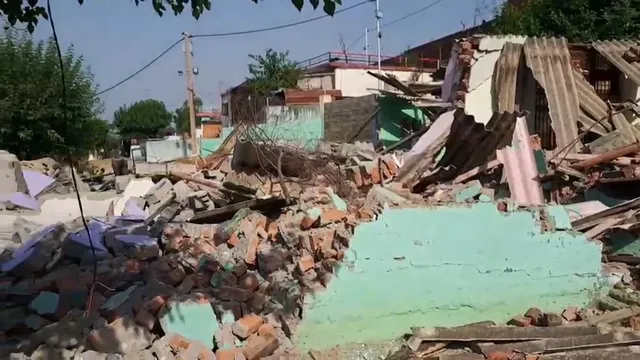
In Sidhra, on the outskirts of Jammu, forty tribal families woke up at 4 AM in May 2026 to find bulldozers at their doors. Not metaphorical bulldozers. Real ones. By breakfast, thirty-two to forty homes had been reduced to rubble. No prior notice. No hearing. No rehabilitation plan. Just machines, officials, and the sound of walls coming down while children watched.When a large structure is brought down, a lot of dust is kicked up. The families standing in that dust at 4 AM were not collateral damage. They were the point.
The families were Gujjar-Bakerwal nomads communities whose ancestors grazed these valleys long before any of today’s administrators were born. A joint operation of the Forest Department, Revenue Department, and J&K Police carried out the demolition. The families subsequently filed a complaint alleging violations of the SC/ST (Prevention of Atrocities) Act, 1989, and the Forest Rights Act, 2006, laws specifically designed to protect these communities. However, it appears, those laws do not operate at 4 AM.
The Blame Game
What followed the demolitions was, in its own way, as revealing as the demolitions themselves.
Chief Minister Omar Abdullah stayed silent for four days. When he finally spoke on May 22, his explanation was careful: the bulldozer wasn’t deployed on his orders, the officer responsible wasn’t his appointee, and the whole episode was, he suggested, a conspiracy to embarrass the elected government. Lieutenant Governor Manoj Sinha, for his part, denied issuing any orders either.
So: the LG didn’t order it. The CM didn’t order it. The officer was following procedure. And forty families were rendered.
This is the defining feature of J&K’s current style governance — a divided structure where the elected government and the centrally appointed LG share power in ways designed to produce exactly this outcome: action without accountability. When something goes wrong, the blame travels in a perfect loop and lands nowhere. The families, meanwhile, land on the street.India’s politics has increasingly perfected this architecture of unaccountability,that is, action without an author, consequence without a cause. The demolition needs no signed order. It only needs a system designed to ensure that when the dust settles, there is no one left to answer for it.
If there was any remaining ambiguity about how the administration views dissent on this issue, it was removed on June 1, 2026. Talib Hussain, Chairman of the All Tribal Coordination Committee and a prominent tribal rights activist was arrested. His offence was protesting the demolitions. The charges levied against him are: obstructing a civil servant and attempt to injure.
The message is clear enough. Losing your home is not a crime. Objecting to it is. Talib Hussain is also known for his role in the active justice campaign for Kathua Rape and Murder case victim Asifa. It makes his arrest, to many observers, carry a significance beyond this single incident.
A National Playbook
The Sidhra demolitions did not happen in isolation. They are part of a pattern documented across India with uncomfortable consistency. In June 2024, approximately 1,800 structures were demolished in Uttar Pradesh, including over 1,100 homes in Lucknow’s Akbar Nagar, framed officially as eco-tourism redevelopment. Amnesty International documented 128 targeted demolitions between April and June 2022 across Assam, Delhi, Gujarat, Madhya Pradesh, and Uttar Pradesh, rendering over 617 people homeless. In each case, the pattern holds: notices skipped, rehabilitation absent, Muslim and tribal communities disproportionately affected.
The Supreme Court, in November 2024, condemned bulldozer demolitions as violations of constitutional principles. The bulldozers kept rolling.
In Jammu itself, this is not new. In January 2022, the Jammu Development Authority demolished the home of Saif Ali and his daughter in Paloura village. The 2026 Sidhra operation is the same playbook, four years later. The selectivity becomes harder to ignore when placed alongside what the bulldozers have not touched. Sheikh Shakeel, an advocate, has many a time pointed out that senior BJP figures, including Kavinder Gupta and another BJP legislator, are themselves in possession of land whose legal status is contested. The bulldozers have not visited them at 4 AM.
What Is Actually at Stake
India’s Constitution, under Article 21, guarantees the right to life which courts have consistently interpreted to include the right to shelter. The Forest Rights Act exists precisely to prevent the kind of dispossession the Gujjar-Bakarwals have experienced. The SC/ST Atrocities Act exists to hold officials accountable when they target protected communities. None of these protections functioned at 4 AM in Sidhra. A democracy’s quality is not measured in its laws alone, but in whether those laws apply equally and consistently to those with the least power to resist. When tribal families lose their homes overnight and the activist who protests gets arrested, when two institutions spend a week blaming each other while forty families sleep in the open, something has failed. Not accidentally but systematically.
The Peela-Panja is not without eyes. It looks through and through and knows full well which/whose structure is to turn into rubble. The bulldozer doesn’t need a signed order. It needs something more durable: a political culture where certain lives are pre-designated as rubble. In thirty-plus years since Ayodhya, that culture has not receded; it has only found new addresses. Sidhra is one of them. An honest reckoning is still pending. Like the rubble of demolished homes, accountability must not be allowed to simply go missing.
(The views and opinions expressed in this article are the author’s own and do not necessarily reflect those of The Chenab Times.)


Majid Zareem is an independent researcher with a master’s degree in history.