


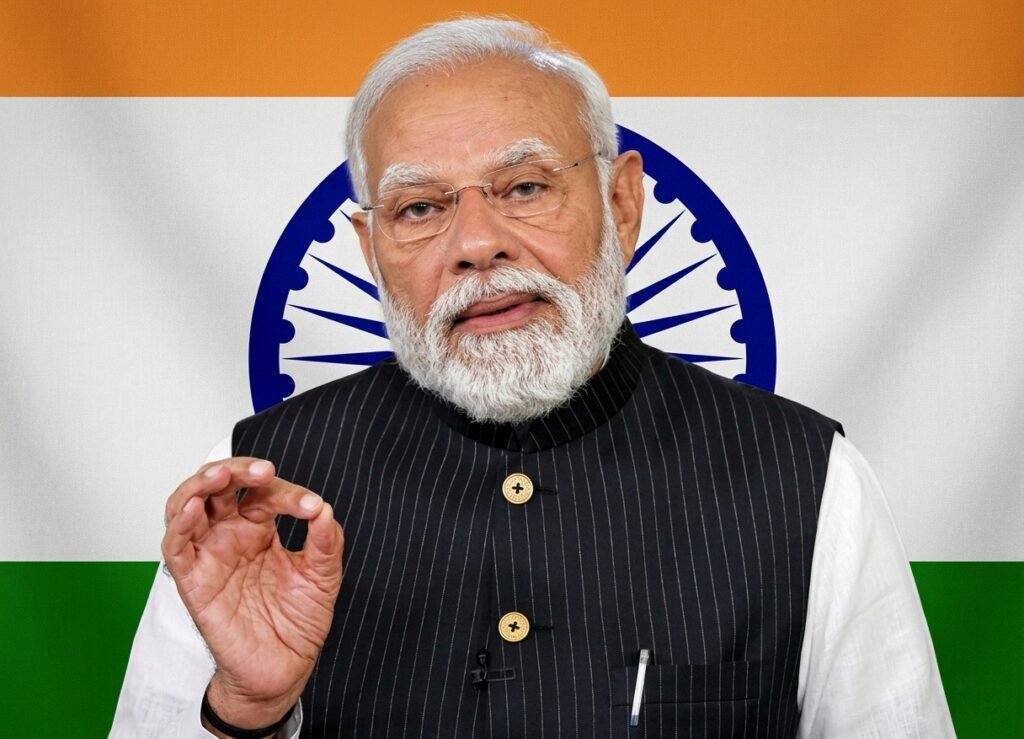
Union Minister Dr. Jitendra Singh stated on Sunday that the twelve years of the Narendra Modi government have reshaped India into an aspirational nation characterized by opportunity, innovation, and self-reliance. He asserted that advancements in governance reforms, the widespread adoption of technology, and citizen-centric policies have fundamentally altered how Indians perceive their future prospects.
Chenab Valley Minister Outlines Growth Trajectory
Information was available with The Chenab Times that Dr. Jitendra Singh, reflecting on Prime Minister Narendra Modi’s 4,399 days in continuous service as an elected Prime Minister, detailed significant achievements over the past decade. He noted the remarkable growth of India’s space economy, which is currently valued at approximately $9 billion and is projected to expand to around $45 billion within the next seven to eight years, as the nation progresses towards its goal of becoming a developed country by 2047. The startup ecosystem has also witnessed substantial expansion, growing from around 350-400 startups in 2014 to over 2.3 lakh currently, generating approximately 24-25 lakh jobs. Notably, nearly half of these startups are situated in Tier-II and Tier-III cities, and 35-39 percent are led by women.
Dr. Singh highlighted some of the government’s foundational reforms that signaled a shift towards a governance model centered on citizens. He pointed to the elimination of the requirement for gazetted-officer attestation for documents, allowing self-attestation instead, as a pivotal step demonstrating trust in citizens, particularly the youth. The abolition of interviews for various government recruitment categories was also cited as a measure to reduce opportunities for nepotism, discretion, and malpractice, thereby strengthening merit-based selections and fostering confidence that success is attainable through ability and hard work.
Psychological Transformation and Rise of Aspirational Culture
The Minister emphasized that the most profound change over the past 12 years has been psychological, in addition to procedural, marked by the emergence of a new aspirational culture. “The change of mindset that has happened in the last 12 years under Prime Minister Modi is one of the biggest hallmarks,” he stated. “The kind of aspirational surge that has happened — ‘I can also do it’ — was not there earlier.” This shift, he observed, is evident in the increasing number of civil services toppers emerging from small towns and non-metropolitan backgrounds, which reflects the democratization of opportunity through technology, transparency, and fair competition.
Dr. Singh linked India’s scientific accomplishments to this broader national transformation. Referencing the Chandrayaan missions, he explained that the government has cultivated an environment where citizens increasingly identify with national scientific achievements, viewing innovation as a collective national endeavor. He recalled Prime Minister Modi’s encouragement of scientists after setbacks and his celebration of their successes, which has helped normalize the idea that failure is an integral part of innovation and progress. The successful lunar south pole landing, he added, has significantly boosted public interest in science, building upon earlier discoveries from Indian lunar missions that identified evidence of water molecules on the Moon.
Institutional Reforms and Future Outlook
Highlighting institutional changes, Dr. Singh noted that the Modi government has opened strategic sectors like space and portions of the nuclear ecosystem to private participation, ending decades of limited access. These sectors, traditionally operating with significant restrictions, are now integrated with industry, entrepreneurs, and startups. This policy shift, according to the Minister, has broadened career opportunities, accelerated innovation, and aligned India’s scientific framework with global best practices. Initiatives such as Viksit Bharat underscore a broader focus on benchmarking India’s progress against international standards rather than solely relying on domestic comparisons.
Furthermore, Dr. Singh asserted that welfare delivery mechanisms have evolved towards universal and transparent implementation. He cited housing and other welfare programs where benefits are distributed without discrimination based on caste, religion, or any other affiliation, thereby fostering greater trust in public institutions and governance systems. Looking forward, Dr. Singh articulated that India’s development trajectory will necessitate deeper public-private collaboration, enhanced participation from women and youth, continued expansion in emerging sectors such as space, nuclear energy, and quantum technologies, and strict adherence to global standards of performance and innovation. The government’s enduring objective, he maintained, extends beyond mere economic growth to the cultivation of an empowered and aspirational society poised to contribute to the vision of a developed India by 2047.


The Chenab Times News Desk