


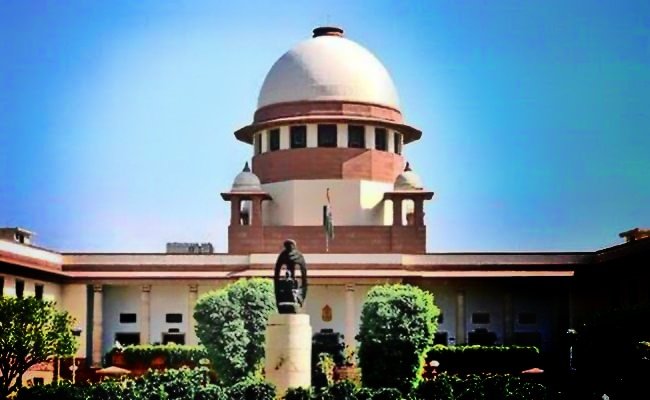
NEW DELHI: A court-appointed amicus curiae has urged the Supreme Court to issue directives to the Municipal Corporation of Delhi (MCD) to provide an affidavit detailing surveys conducted and actions taken against illegal and unauthorized constructions within the national capital. This urgent plea follows the recent collapse of an allegedly illegally constructed five-story building in Delhi’s Saidulajab area, which resulted in six fatalities and at least 14 injuries.
The amicus curiae, senior advocate Ajit Kumar Sinha, submitted a status report on June 4, highlighting that the Saidulajab building tragedy underscores a broader issue of rampant illegal constructions and alleged failures in regulatory enforcement. According to municipal records cited in the report, violations at the Saidulajab site were first noted in 2012, with further bookings in 2015 for additional floors. Despite these recorded violations, the report alleges that no effective enforcement measures were implemented, allowing construction to continue, including the addition of fourth and fifth floors shortly before the building’s collapse.
The amicus contended that the Municipal Corporation of Delhi (MCD) failed to fulfill its statutory obligations by not taking decisive action to prevent the continued construction and alleged complicity of officials. The report suggests that despite multiple bookings for unauthorized construction, the building continued to be developed, leading to the tragic incident.
The Supreme Court has previously expressed serious concern over widespread violations of building regulations and the perceived failure of municipal authorities to prevent unauthorized constructions. On March 25, a bench comprising Justices Ahsanuddin Amanullah and R Mahadevan, while hearing a matter originating from Tamil Nadu, had directed a pan-India inquiry into the misuse of residential properties and illegal land-use conversions. This broader directive aims to address systemic issues contributing to such violations across the country.
The court has consistently emphasized a strict approach towards illegal constructions. In a recent order, the Supreme Court stated that unauthorized constructions must be demolished, emphasizing that leniency should not be shown. Justices J B Pardiwala and R Mahadevan reiterated that individuals who disregard the law should not be permitted to seek regularization after constructing properties without authorization, asserting that such structures have “no way out” other than demolition. The court stressed that judicial discretion must be guided by legal expediency and that courts are bound by statutory limitations, with justice to be rendered strictly in accordance with the law.
The apex court has also noted that many state governments have enacted regularization acts based on impact fees, which may not adequately address the core issue of illegal construction. The court’s stance is that enabling the regularization of such structures could foster a culture of impunity, undermining the rule of law. The need for a firm stance is driven by the courts’ duty to uphold the law and ensure public well-being.
The issue of illegal constructions in Delhi has been a recurring subject before the Supreme Court. In previous instances, the court has ordered demolition of illegal structures in various parts of the city, including Okhla Village and Shalimar Bagh, upholding road-widening projects and clearance of encroachments. The court has also questioned the authorities’ intent in regularizing unauthorized colonies, emphasizing that no area can be allowed to operate without the rule of law. The Supreme Court has previously ordered a halt to construction in unauthorized colonies that do not conform to building bye-laws and has called for the establishment of special task forces to remove encroachments.
The amicus curiae’s current plea seeks to ensure that the MCD actively surveys and takes appropriate action against illegal constructions, bringing greater accountability to the municipal body in preventing such violations and ensuring public safety.


The Chenab Times News Desk